Thank you for having such an engaging presentation today!

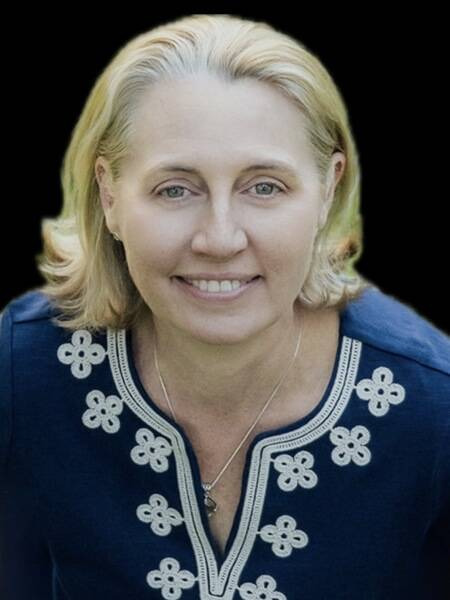
Maureen Healy
Internationally Renowned Educator, Author of "The Emotionally Healthy Child" and Social & Emotional Learning Expert
Profile Links
Fee Range
Please contact us for pricingTravels From
San Francisco, CA, US
Maureen Healy
Biography
"I do what I do because I want to see more children grow up happier." Maureen Healy
Social and emotional expert
Maureen is an educator, award-winning author, and leader in the field of children's emotional health. Her best-selling book, The Emotionally Healthy Child, has a preface from His Holiness the Dalai Lama (New World Library, 2018) and gives adults the ideas they need to nurture positive emotional health in today's children. Her prior book, Growing Happy Kids, focused on cultivating confidence and notably won several awards. She also regularly blogs at Psychology Today, which has reached millions of adults worldwide.
Unique about Maureen is her global background teaching and counseling children on the how of becoming emotionally healthy. She's even lived at the Base of the Himalayas in 2007 and taught Tibetan refugee children. In subsequent years, Maureen has spoken across Europe, Asia, and the Americas helping adults gain a fresh perspective and positive strategies. In 2017, Maureen co-founded the "World Happiness Summit" for parents, teachers, and professionals wanting to know the how of children's emotional health.
Complimenting Maureen's practical experience, she is traditionally trained in the field of child development and positive psychology. She holds a BA and MBA from Clark University in Worcester, MA and completed her Ph.D. coursework in child clinical psychology from Fielding Graduate University in Santa Barbara, CA. Additionally, she's authored social and emotional learning (SEL) curriculum for K-8 students, which has been implemented in several independent schools.
Maureen's wisdom and practicality has also been featured on TV, Radio and across all media outlets such as: Disney's "The Fatherhood Project" with Hank Azaria, Scholastic, Parents Magazine, PBS, Martha Stewart Living Radio and television such as the CW's "San Diego Living" as well as "Happier TV" with Tal Ben-Shahar. Her insight into how to help today's children grow up healthier and happier is why audiences love her, and she gets the highest ratings repeatedly.
Maureen Healy
Featured Videos
Current: ABC San Francisco
Time 04:39
More Videos From Maureen Healy
Maureen Healy
Featured Keynote Programs
The Shared Anchor
Co-Regulation to Self-Regulation
Telling an upset student to "calm down" has a 0% success rate. However, showing them how to calm down by actively co-regulating with them yields profoundly positive outcomes. Moving a student from co-regulation to true independent self-regulation is complex, but with the right strategies, children can develop the self-awareness needed to make constructive choices.
As students advance through elementary, middle, and high school, their academic and social worlds become increasingly complicated — meaning our ability to support them needs to level up, too.
What Participants Will Learn:
• The Borrowed Calm Framework: Demystifying the neurobiology of stress and exploring practical calming tools for teachers, parents, and professionals.
• The First 30 Seconds: Crucial, immediate strategies to effectively respond to a highly emotional or overwhelmed student.
• De-escalation Over Confrontation: Proven techniques to defuse a meltdown or conflict without escalating power struggles.
• The Internal Anchor: How to help students build a lifelong "toolkit" of self-regulation strategies tailored to their specific age and needs with consideration of particular traits from perfectionism to worry, as examples.
The Joy Advantage
Re-Energizing School Culture for Student & School Success
In an era of rising burnout and complex classroom dynamics, a joyful school environment isn't a luxury—it’s the engine of academic achievement and educator retention.
This transformative keynote moves beyond basic "feel-good" platitudes to deliver a research-backed, highly practical framework filled with ideas and approaches that educators can implement immediately. Drawing on insights from positive psychology and modern educational leadership, this presentation shows how prioritizing joy directly sharpens cognitive performance, reduces anxiety, and reignites a passion for learning in both students and staff without adding to an already overwhelming plate.
Audiences leave inspired and equipped with actionable tools to transform their school culture from the inside out. Some takeaways include:
• Micro-practices for Joy: Walk away with concrete, practical micro-practices that require minimal prep time but yield an immediate, positive shift in classroom climate and staff morale. Technology discussed too.
• The Neuroscience of Joy: Discover how emotional well-being directly drives memory, problem-solving, and academic performance.
• Re-Energizing Classroom Engagement: Dynamic strategies to transform static lessons into curious, interactive learning experiences.
• Cultivating Authentic Belonging: Actionable ways leadership and staff can build a school culture where every student and educator feels valued.
Student Resilience
The Productive Struggle
Resilience is not as an innate trait a child has or doesn't have, but as a skill to be developed, through safe supported exposure to challenges.
• The "Action Mindset" over Rescue: Shifting from "lawnmower” tactics (clearing all obstacles) to becoming a supportive sounding board. Kids build resilience when they are allowed to navigate minor failures.
• The "Power of Yet" in Action: Practical ways to reframe academic or social setbacks. It teaches kids that frustration isn't a sign that they lack ability; it's a sign that their brain is actively growing.
• Strategies: Evidence based strategies that build (or repair) resiliency can help students (and adults) form a resilient mindset, as well as deploy tactics in the moment to persevere and bounce back from challenges.
• When Bouncing Back is Hard: Adults are given scripts and practices to help the persistently challenged student persevere, as well as decide when to seek additional support. Chronic stress and worry discussed.
Participants walk away with the latest research and most effective strategies to help students (and themselves) bounce back from challenges in the classroom, at home or in the community.
From Attention to Mastery
The Science of Individual Learning Pathways
Children do not come off an assembly line, nor do they process the world in a single, predictable line. They learn in a myriad of ways—through movement, observation, deep immersion, trial and conversation. In today’s world, our core role as parents and educators is not to force every child into the exact same mold, but to serve as guides who help them discover the specific pathway that unlocks their potential.
In this engaging keynote, Maureen integrates cognitive neuroscience with the lived realities of today's neurodiverse children. By breaking down how the brain handles attention, focus, encoding, and retrieval, this presentation reveals why traditional, one-size-fits-all environments often fail non-linear thinkers—and offers a clear framework for building environments where every child can thrive.
Some key highlights include:
• Pathway Finders: Why our primary responsibility is observing how a child naturally accesses information, shifting our role from managers of compliance to architects of opportunity.
• The Neuroscience of Learning: A clear, accessible breakdown of how the brain navigates Attention, Focus, Encoding, and Retrieval—and where the process breaks down when we ignore a child's natural processing style.
• Understanding Neurodiversity: How variances in executive function, sensory processing, and working memory impact learning entry points—and why these differences represent unique cognitive styles rather than inherent deficits.
• De-coupling Intelligence from Pace and Format: Practical wisdom on separating a child's true cognitive capability from arbitrary metrics like processing speed or single-format testing.
• Cultivating Sustained Focus in a Fragmented World: Actionable strategies to strengthen a child's attention span, reduce cognitive overload, and build durable pathways for long-term memory retrieval.
Maureen Healy
Featured Books
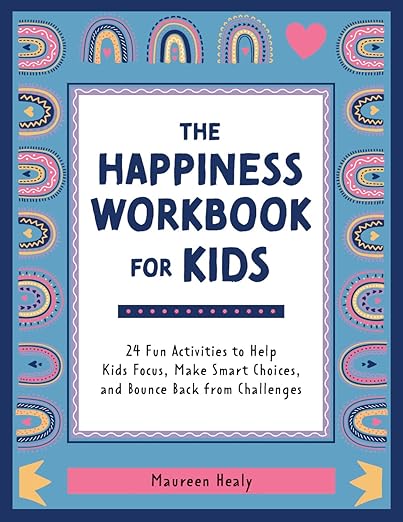
The Happiness Workbook for Kids: 24 Fun Activities to Help Kids Focus, Make Smart Choices, and Bounce Back from Challenges
by Maureen Healy
"Maureen has provided an important antidote to the difficult times so many of our kids are going through these days. The activities in this workbook are both enjoyable and beneficial, can increase happiness as well as resilience" - Tal Ben-Shahar, author and lecturer
In this insightful yet easy-to-read workbook, Maureen Healy teaches kids how to become happier despite the everyday obstacles, frustrations, and big emotions that often challenge their ability to make good decisions. With the tools inside, children will learn how to constructively express their emotions, bounce back from challenges, and move toward happier life experiences.
Intended for elementary and middle school-aged children, this workbook simplifies complex ideas so children can:
- Cultivate self-awareness
- Build emotional health and well-being
- Strengthen resilience and self-reliance
- Develop habits of happiness
- Make smart choices (even with tough emotions!)
By harnessing the awesome power of happiness, this book will help kids recognize how smart, strong, and capable they are of creating their happiest life.
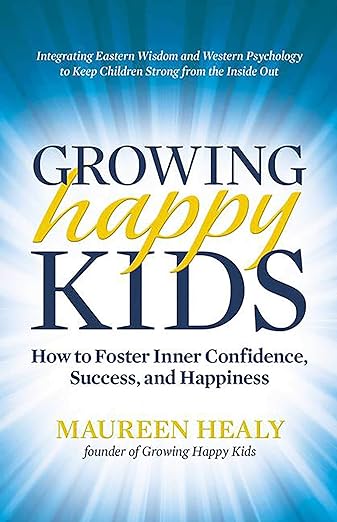
Growing Happy Kids: How to Foster Inner Confidence, Success, and Happiness
by Maureen Healy
Winner of Nautilus Book Award in Parenting & FamilyEvery parent wants his or her child to be happy and grow into a productive, fulfilled adult . . . and according to parenting expert Maureen Healy, the secret to that success is in providing a foundation of inner confidence. Parents and teachers know that confidence and inner strength are important attributes, but in an era where self-worth is often measured by possessions and attractiveness, most have no idea how to model true inner confidence for their kids or how to help them cultivate it. Real power--or inner confidence--is necessary to overcome obstacles, pursue our unique dreams, and be truly happy.
Maureen Healy, a spiritual teacher with twenty years of experience as a child development expert, literally traveled the world from the Bronx to the base of the Himalayas to learn the connection between inner confidence and lasting happiness, and she shares that wealth of knowledge in Growing Happy Kids. Combining her Buddhist training, her background in child psychology, and the latest scientific research, Maureen shares her revolutionary model that defines inner confidence and cultivates a child's sense of optimism and connection. She explores each part of her system, which she called The Five Building Blocks of Confidence, with the mind of a scientist, yet the softness of a real parent who wants to raise strong, happy children. By using those building blocks--biology, beliefs, emotions, social, and spiritual--parents, teachers, and anyone who touches the life of a child can gain the skills necessary to foster happy kids who are strong, self-reliant, and confident.
"In Growing Happy Kids, Maureen Healy has given us rich and valuable tools to assist us in honoring and supporting our children in building their self-confidence and helping them become happier. It is a MUST read for all parents, educators, and people who care."
--Edwene Gaines, author of The Four Spiritual Laws of Prosperity
"Drawing on her own extensive research and experience, Maureen Healy wisely leads parents and caregivers into the heart of awakening and activating the innate confidence with which every child is born. This is a book that parents will read over and over again."
--Michael Bernard Beckwith, author of Spiritual Liberation: Fulfilling Your Soul's Potential

The Emotionally Healthy Child
by Maureen Healy
Winner of Nautilus Book Award in Parenting & Family
While growing up has never been easy, today's world undeniably presents kids and their parents with unprecedented challenges. The upside, cites Maureen Healy, is a widespread acknowledgment that emotional health, resilience, and equilibrium can be learned and strengthened. Three simple steps are key ― Stop, Calm, and Make a Smart Choice. While not always easy, these steps are powerful and Healy shows readers exactly how to implement them. Children move from acting out or shutting down, experiencing frequent physical symptoms such as head and stomach aches or hurting themselves or others, to recognizing they are being triggered, feeling their emotions, and using strategies to respond from a calmer place. As adults learn to model these skills, both adults and children become freer to do and be their best.
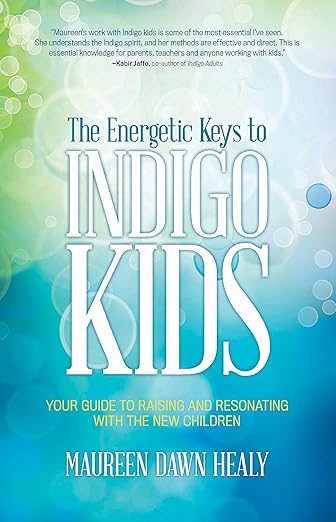
The Energetic Keys to Indigo Kids
by Maureen Healy
In The Energetic Keys to Indigo Kids, Maureen Healy tackles the subject of indigo children from a whole new vantage point: energy. Aimed at healers, stay-at-home moms, and parents who are struggling to understand the unique qualities of their indigo children, the book covers such topics as:
- How indigo energy works
- How indigos heal
- The keys to indigo success
You will learn to see indigos from an energetic perspective—how they think, how they make decisions, what they need, how they heal, and what triggers them the most—as well as how to get them back on track, prevent meltdowns, and, ultimately, see them succeed.
The Energetic Keys to Indigo Kids is a groundbreaking book that reveals how these new children operate in the world. You’ll learn more about your child’s energetic system, including how his/her chakras operate differently. Along with this insightful information, Maureen also provides practical tips based on her real-life work with indigo kids worldwide. She shares how to help them manage their energy better, heal from emotional upheavals more completely, and create more harmony in their lives.
Maureen shares real stories of her clients, their experiences and how they found more success with their highly sensitive, stubborn, and even defiant indigo kids.
Maureen Healy
Featured Reviews
Maureen Healy
Featured Articles & Resources
Speaker Wins 2014 Nautilus Book Award
We are proud to announce that Maureen Dawn Healy recently won the 2014 Nautilus Book Award for her book "Growing Happy Kids: How to Foster Inner Confidence, Success and...
Topics:
Education Motivation
The Highly Sensitive (and Stubborn) Child
Over the past few months, I have been happily working with parents from around the globe especially regarding their stubborn children. One of the moms, Maggie, explained her...
Raising "Media Healthy" Children
Just yesterday, a mother called me about her daughter Delia. Delia, age 8, was voted off of her classroom lunch table. Apparently all of her "friends" had been watching reality...
Frequently Asked Questions
Quick answers to some of the most common questions about booking Maureen Healy for your event.
How do I book Maureen Healy for my event?
Booking Maureen Healy with Premiere Speakers Bureau is a streamlined 4-step process:
- Availability Check: Contact us with your event date and budget to verify if your desired speaker is available.
- Hold Date: We place a temporary "hold" on the speaker's calendar while you finalize internal approval.
- Contracting: We issue a contract outlining the fee, cancellation policy, and event expectations.
- Logistics: Once signed, our event management team handles all travel booking, itinerary, and AV requirements.
Why should I partner with Premiere Speakers Bureau rather than contacting speakers directly?
Partnering with Premiere Speakers Bureau provides a comprehensive safety net for your event that direct booking cannot match. You get the same speaker for the same price, but with a dedicated team with over 30 years of event experience handling contracts, logistics, and are prepared for any emergency. We know what it takes to run an excellent event.
What makes Premiere Speakers Bureau unique compared to other agencies?
Premiere Speakers Bureau distinguishes itself by having over 30 years of experience while partnering with more than 35,000 events. PSB has also built a streamlined, fully online process that makes booking a speaker, handling travel and payments extremely easy for anyone looking to plan a speaker led event.
How does Premiere Speakers Bureau's 'Zero Cost Service' model work?
Premiere Speakers Bureau operates on a 'Zero Cost Service' model for event planners. Our services—including research, booking, and logistics—are always free to the client. The speaker covers our commission from their standard honorarium as payment for our role in marketing and managing their engagements.
How are speaker fees structured, and what is typically included?
A speaker's fee typically covers the keynote presentation, a pre-event planning call, and standard customization. Travel expenses are usually billed separately.
What are the standard policies for speaker travel and expenses?
Travel expenses are negotiated during contracting. We generally recommend a flat travel fee for simplicity, though we also offer line-by-line invoicing when preferred. PSB ensures these expenses adhere to professional standards, and our Event Portal allows for easy tracking and invoicing.
Maureen Healy's Featured & Related Topics
Find Similar Speakers International






Popular Speakers

Deion Sanders
Pro Football Hall of Famer, Two-Time Super Bowl Champion and Coach

Dr. Jessica Kriegel
CEO Advisor and Doctor of Leadership, Best-selling Author

Brett Culp
Award-winning documentary filmmaker helping leaders and teams rediscover clarity, courage, and connection in times of transformation
Ryan Leak
Inspiring Workplace Cultures Rooted in Values, Passion and Risk-Taking

Alex Weber
Be Unstoppable! with Leadership & Performance Expert, American Ninja Warrior, & Acclaimed Author

Dr. Ben Carson
Former US Secretary of Housing and Urban Development / Conservative Political Thought Leader / Renowned Pediatric Neurosurgeon
Kim Bearden
Best Selling Author, Co-founder at Ron Clark Academy, and National Teacher Hall of Fame; Organization Culture / Climate and Communication Specialist
Daymond John
Founder/CEO of FUBU, Presidential Ambassador for Global Entrepreneurship, Star of ABC's Shark Tank and CEO of The Shark Group