Thank goodness for speakers like you who actually become a part of the meeting team. Your attitude, the way you stuck around and spent time with participants, offering to pitch in & help if WE needed anything ... truly you were a meeting planner's dream.

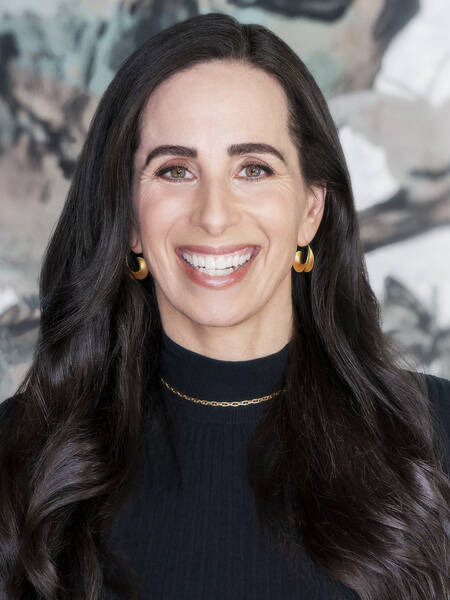
Juliet Funt
High Energy Global Speaker, Advisor to the Fortune 500 on Surviving the age of Never Enough
Profile Links
Fee Range
Please contact us for pricingTravels From
Atlanta, GA, US
Juliet Funt
Biography
Featured in top media outlets such as Forbes, CNBC, Fast Company, and NPR, Juliet Funt is a globally renowned keynote speaker, tough-love advisor to the Fortune 500, founder and CEO of the efficiency training firm, Juliet Funt Group. Juliet is the author of A Minute to Think, nominated for the Next Big Idea Club curated by Malcolm Gladwell, Adam Grant, Susan Cain, and Dan Pink. She is an evangelist for freeing the potential of companies by unburdening their talent from busywork, and she has brought her powerful concepts to Spotify, National Geographic, Anthem, Vans, Abbott, Costco, Pepsi, Nike, Wells Fargo, Sephora, Sysco, and ESPN.
Juliet Funt
Featured Videos
Current: The Fire Story
Time 03:14
More Videos From Juliet Funt
Juliet Funt
Featured Keynote Program
The De-Selection Advantage
Why having 151 “priorities” is killing your execution, and how to fix it
Organizations are not failing from a lack of ambition. They are being crushed by an excess of it.
Most leaders, in their drive to achieve, treat work like a pie-eating contest, where the goal is always MORE. More initiatives, more meetings, more metrics, more work about work. Volume becomes the measure of true commitment. But the result of “more” is not always momentum. It is often fragmentation, decision fatigue, and execution that slows to a crawl while teams heroically absorb the weight.
This paradigm is broken, and it’s expensive. In more than twelve years of research across industries, the Juliet Funt Group has proven that employees report spending 23% of their time on low-value work, at a cost of $1,000,000 annually for every 50 people. Much of this wasted payroll cascades down from over-planning at the top, in the form of too many different priorities and projects. Nobody wins. Execution slows. The best people burn out or check out.
The skill that we pretend to have, but do not, is that of de-selection. Teams orchestrate stop-start-continue exercises but never actually stop anything. But there is a way out of this vice grip of intensity, and it’s not even complex. All that is required is the decision to shift the goal from volume to value.
In this signature keynote, Juliet Funt introduces the Reductive Mindset: a practical operating philosophy for leaders who want to protect the work that actually produces results. With humor, precision, and examples drawn from real organizations, she shows why complexity gets rewarded, why excess gets normalized, and most importantly, how to fix these issues.
Over the course of 60 minutes, Juliet Funt takes us on a 5-Stage Journey from fragmented to focused:
• Less Fatigue: reclaim the vitality needed to take the next step
• Less Volume: the overflowing pile of low-value work finally shrinks
• Less Drift: time-waste and distractions are vanquished
• Less Email: because it’s become everyone’s primary mission
• Less Meetings: so there is time to do actual work
Audiences leave with a concrete framework for evaluating commitments, cutting low-value activity, and recovering the decision quality that overload destroys. This talk lays a clear and simple path to doing what matters most every day.
The highest-performing leaders are often the ones most willing to stop, remove, and reduce. In a business environment addicted to accumulation, the ability to cut with intelligence is not a soft skill, but a competitive advantage.
Juliet Funt
Featured Book

A Minute to Think: Reclaim Creativity, Conquer Busyness, and Do Your Best Work
by Juliet Funt
“You’re going to want to share copies of this book with your overbooked friends and colleagues, but before you do, take some time to read it yourself. Funt’s wisdom around making space is priceless.” —Seth Godin, author of The Practice
Do you wish you could stop the mayhem of work and life and just take a minute? Do you sense you could contribute more if there were a little more room in the day? Does busyness deprive you and your burnt-out team of the oxygen your talents need to catch fire?
Many have felt that way, yet taking a pause has seemed impossible—until now.
In A Minute to Think, Juliet Funt, a globally recognized warrior in the battle against busyness, provides a powerful guide that will give you the permission, framework, and specific direction you need to do the following:
- Regain control of your overloaded, caffeinated, inbox-worshiping workday
- Liberate yourself and your teams from burnout and busywork
- Reclaim creativity and focus despite the chaos around you
- Bring thoughtfulness into designing your next work norms
- Tame the beast of email and escape the mire of meetings
- Find your precious minute to think
You’re not alone in your yearning for freedom from constant reactivity. The global workforce today is so fried that it belongs in the food court of a county fair. We’re relentlessly behind the curve, dousing fires everywhere, and our 3 a.m. insomnia provides the only unscheduled thinking time of the day.
What we need reinserted in our lives is the missing element of white space—short periods of open, unscheduled time that, when recaptured, change the very nature of work. White space is the stepping back, the strategic pause, the oxygen that allows the sparks of our efforts to catch fire. White space has the power to radically—and simply—reinvent the way we approach work in this maxed-out, post-COVID 21st-century world.
With Juliet’s memorable stories, easy-to-use tools, and razor-sharp instruction, she carves for us an escape route from the overwhelming amount of low-value tasks and the daily avalanche of e-mails, meetings, decks, and reports. Using research, client stories, and a relatable voice, Juliet shows all of us how to reclaim time for thinking and make room for what truly matters. Whether you are an individual trying to build a more sane and humane flow of daily work, a team that wants new levels of efficiency and effectiveness, or an entire organization changing your culture toward thoughtfulness, this book will lead you there.
Juliet Funt
Featured Reviews
Juliet Funt
Featured Articles & Resources
3 Ways To Make The Most Of Your Vacation
It’s so important to make your vacation an actual vacation, so we asked Juliet Funt, CEO of White Space At Work,, to provide three quick tips to make the most of your...
Topics:
Motivation
Juliet Funt knows what Event Planners go through..... she was one! [VIDEO]
SGMP 2012 Keynote from The Audition Studio on Vimeo.
Juliet Funt gets it! She fully understands what meeting planners can go through on the day of an event. As...
Frequently Asked Questions
Quick answers to some of the most common questions about booking Juliet Funt for your event.
How do I book Juliet Funt for my event?
Booking Juliet Funt with Premiere Speakers Bureau is a streamlined 4-step process:
- Availability Check: Contact us with your event date and budget to verify if your desired speaker is available.
- Hold Date: We place a temporary "hold" on the speaker's calendar while you finalize internal approval.
- Contracting: We issue a contract outlining the fee, cancellation policy, and event expectations.
- Logistics: Once signed, our event management team handles all travel booking, itinerary, and AV requirements.
Why should I partner with Premiere Speakers Bureau rather than contacting speakers directly?
Partnering with Premiere Speakers Bureau provides a comprehensive safety net for your event that direct booking cannot match. You get the same speaker for the same price, but with a dedicated team with over 30 years of event experience handling contracts, logistics, and are prepared for any emergency. We know what it takes to run an excellent event.
What makes Premiere Speakers Bureau unique compared to other agencies?
Premiere Speakers Bureau distinguishes itself by having over 30 years of experience while partnering with more than 35,000 events. PSB has also built a streamlined, fully online process that makes booking a speaker, handling travel and payments extremely easy for anyone looking to plan a speaker led event.
How does Premiere Speakers Bureau's 'Zero Cost Service' model work?
Premiere Speakers Bureau operates on a 'Zero Cost Service' model for event planners. Our services—including research, booking, and logistics—are always free to the client. The speaker covers our commission from their standard honorarium as payment for our role in marketing and managing their engagements.
How are speaker fees structured, and what is typically included?
A speaker's fee typically covers the keynote presentation, a pre-event planning call, and standard customization. Travel expenses are usually billed separately.
What are the standard policies for speaker travel and expenses?
Travel expenses are negotiated during contracting. We generally recommend a flat travel fee for simplicity, though we also offer line-by-line invoicing when preferred. PSB ensures these expenses adhere to professional standards, and our Event Portal allows for easy tracking and invoicing.
Popular Speakers

Ryan Leak
Inspiring Workplace Cultures Rooted in Values, Passion and Risk-Taking

Earvin “Magic” Johnson
Five-Time NBA Champion, Entrepreneur

Alex Weber
Be Unstoppable! with Leadership & Performance Expert, American Ninja Warrior, & Acclaimed Author

Dr. Ben Carson
Former US Secretary of Housing and Urban Development / Conservative Political Thought Leader / Renowned Pediatric Neurosurgeon

Candy Valentino
Founder, investor, WSJ Best-Selling Author and Serial Entrepreneur

Ron Clark
"America's Educator", NYTimes Best Selling Author, Disney's American Teacher of the Year, and Founder of the Ron Clark Academy

Deion Sanders
Pro Football Hall of Famer, Two-Time Super Bowl Champion and Coach

Kim Bearden
Best Selling Author, Co-founder at Ron Clark Academy, and National Teacher Hall of Fame; Organization Culture / Climate and Communication Specialist