

Danny Lange
VP of BI+AI, Google
Profile Links
Fee Range
Please contact us for pricing
Danny Lange
Biography
Dr. Danny B. Lange is the Vice President of Business Intelligence and Artificial Intelligence (BI+AI) at Google. As an industry thought-leader in the field of AI, he brings a wealth of expertise to drive innovative, AI-powered solutions and strategies at one of the world's leading tech organizations.
Before joining Google, Danny served as Vice President of AI and Machine Learning at Unity Technologies, where he was instrumental in driving the company's AI initiatives. He led the creation of a central data team and spearheaded the development of ML-Agents. His work in generating synthetic data redefined Unity's approach to computer vision and robotics, enhancing model accuracy and understanding.
Prior to Unity, as Head of Machine Learning at Uber, Danny led the development of a state-of-the-art machine learning platform - Michelangelo - significantly enhancing Uber's services worldwide through the power of AI. His influence on the AI industry is also evidenced by his role as the General Manager of Amazon Machine Learning, a key player in the AI industry, where he was responsible for the overall strategy and product development.
Beginning his professional journey as a Computer Scientist at IBM Research, Danny also served as a Principal Development Manager at Microsoft, leading a product team focused on large-scale machine learning solutions for big data. Danny holds a Ph.D. in Computer Science from the Technical University of Denmark.
With an impressive career across various industry giants, Dr. Lange continues to shape the future of Business Intelligence and AI. His inspiring thought leadership, combined with his contributions to AI research and application, are not only influencing industry practices but also nurturing the next generation of BI and AI enthusiasts.
Danny Lange
Featured Keynote Programs
When Code Is Nearly Free
AI and the Collapse of the Product–Engineering Boundary
AI-assisted development has crossed from novelty to table stakes. With 60–100% of code now machine-generated at many companies, the codegen percentage is fast becoming a vanity metric: generation is cheap, while spec quality, verification, and integration are the new bottlenecks. The deeper shift is happening upstream. When code is nearly free to produce, the product layer becomes the constraint — and the boundary between the product lifecycle (discovering, specifying, prioritizing, and validating what to build) and the software lifecycle collapses. The line between deciding what to build and building it is blurring, forcing CTO and CPO functions toward a merge, whether they like it or not.
This session maps that convergence, then turns to the harder problem: converting AI-infused products into business value. We'll take on the genuinely unsolved pricing question (seat vs. usage vs. outcome), measurement that stands up to investor scrutiny, model-provider risk and the build/buy/wait calculus, proprietary data as the durable moat now that models are commoditizing, the AI-native talent profile, and governance for an agentic world.
Goldman Sachs portco CEO AI Academy.
Session 1: AI in the Boardroom — From Buzzword to Business Advantage
AI is no longer a technology project — it is a leadership responsibility. This session gives CEOs the fluency and confidence to lead the AI conversation rather than delegate it. We trace AI's evolution through three ages (predictive, generative, and agentic), explore the strategic imperatives each creates, and then shift to the personal: how CEOs can use AI as a cognitive partner for decision-making, strategy stress-testing, and executive productivity. The session closes with a live workshop where participants use AI to pressure-test their own strategic priorities — the same way a skeptical board director would.
Session 2: Building Your AI Roadmap — From Awareness to Action
Session 2 moves from understanding AI to acting on it. Anchored by a first-hand case study of AI transformation at Uber — from hand-crafted rules to algorithmic mastery — participants learn what it actually takes to shift an organization from human-designed heuristics to AI-led optimization. The bulk of the session is hands-on: CEOs brainstorm lighthouse AI projects for their own businesses, prioritize them on an impact-vs-feasibility matrix, and leave with a concrete, scoped initiative they can take back to their teams.
Session 3: The AI-Augmented Organization — Building the Enterprise That Can Execute
The final session tackles the hardest question: why do almost all companies invest in AI, yet fewer than 5% capture substantial value from it? Drawing on research from McKinsey and BCG, and live case studies from Klarna, Korn Ferry, and Ipsos, we show that the gap is not technological — 70% of AI value comes from people, not algorithms. The session covers five pillars of organizational AI readiness (leadership, culture and talent, data and process, governance, and operating model), with particular depth on workforce transformation, the shift from human-in-the-loop to human-on-the-loop oversight, and what it takes to move AI initiatives from perpetual piloting to production at scale.
Frequently Asked Questions
Quick answers to some of the most common questions about booking Danny Lange for your event.
How do I book Danny Lange for my event?
Booking Danny Lange with Premiere Speakers Bureau is a streamlined 4-step process:
- Availability Check: Contact us with your event date and budget to verify if your desired speaker is available.
- Hold Date: We place a temporary "hold" on the speaker's calendar while you finalize internal approval.
- Contracting: We issue a contract outlining the fee, cancellation policy, and event expectations.
- Logistics: Once signed, our event management team handles all travel booking, itinerary, and AV requirements.
Why should I partner with Premiere Speakers Bureau rather than contacting speakers directly?
Partnering with Premiere Speakers Bureau provides a comprehensive safety net for your event that direct booking cannot match. You get the same speaker for the same price, but with a dedicated team with over 30 years of event experience handling contracts, logistics, and are prepared for any emergency. We know what it takes to run an excellent event.
What makes Premiere Speakers Bureau unique compared to other agencies?
Premiere Speakers Bureau distinguishes itself by having over 30 years of experience while partnering with more than 35,000 events. PSB has also built a streamlined, fully online process that makes booking a speaker, handling travel and payments extremely easy for anyone looking to plan a speaker led event.
How does Premiere Speakers Bureau's 'Zero Cost Service' model work?
Premiere Speakers Bureau operates on a 'Zero Cost Service' model for event planners. Our services—including research, booking, and logistics—are always free to the client. The speaker covers our commission from their standard honorarium as payment for our role in marketing and managing their engagements.
How are speaker fees structured, and what is typically included?
A speaker's fee typically covers the keynote presentation, a pre-event planning call, and standard customization. Travel expenses are usually billed separately.
What are the standard policies for speaker travel and expenses?
Travel expenses are negotiated during contracting. We generally recommend a flat travel fee for simplicity, though we also offer line-by-line invoicing when preferred. PSB ensures these expenses adhere to professional standards, and our Event Portal allows for easy tracking and invoicing.
Danny Lange's Featured & Related Topics
Find Similar Speakers Artificial Intelligence



Popular Speakers

Ron Clark
"America's Educator", NYTimes Best Selling Author, Disney's American Teacher of the Year, and Founder of the Ron Clark Academy

Kim Bearden
Best Selling Author, Co-founder at Ron Clark Academy, and National Teacher Hall of Fame; Organization Culture / Climate and Communication Specialist

Deion Sanders
Pro Football Hall of Famer, Two-Time Super Bowl Champion and Coach

Dr. Ben Carson
Former US Secretary of Housing and Urban Development / Conservative Political Thought Leader / Renowned Pediatric Neurosurgeon

Candy Valentino
Founder, investor, WSJ Best-Selling Author and Serial Entrepreneur

Dr. Jessica Kriegel
CEO Advisor and Doctor of Leadership, Best-selling Author
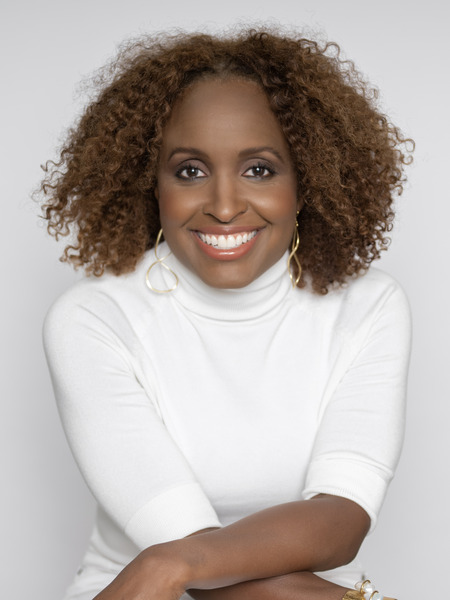
Valorie Burton
Best-Selling Author, President and CEO of The Coaching and Positive Psychology (CaPP) Institute, Personal and Executive Coach and International Speaker

Liz Bohannon
Top 1% VC-Backed Female Founder & CEO and Bestselling Author of Beginner’s Pluck: Build Your Life of Purpose & Impact Now