
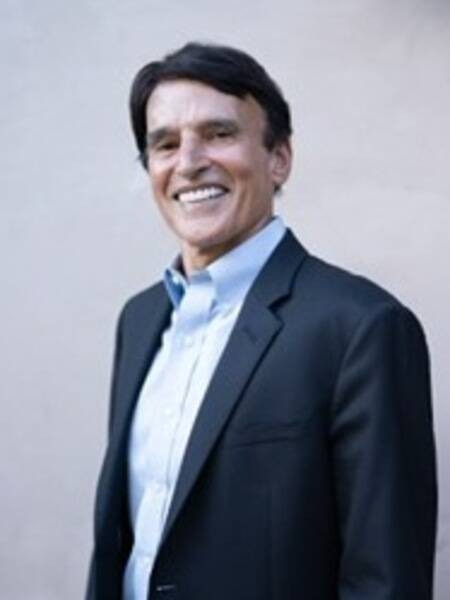
Robert Pearl MD
Healthcare Leader, Author, Educator, Columnist and Podcaster
Profile Links
Fee Range
$30,000
Robert Pearl MD
Biography
Dr. Robert Pearl served as CEO of The Permanente Medical Group and Co-CEO for Kaiser Permanente for 18 years. During his tenure, he led 22,000 physicians and 103,000 staff, overseeing the nationally acclaimed care of more than 10 million Kaiser Permanente members on the east and west coasts.
Named one of Modern Healthcare’s 50 most influential physician leaders, Pearl is an advocate for the power of integrated, prepaid, technologically advanced and physician-led healthcare delivery. More than 80,000 readers subscribe to his newsletters on healthcare, including his widely read Monthly Musings on American Healthcare.
Pearl is a clinical professor of plastic surgery at Stanford University School of Medicine and a faculty member at the Stanford Graduate School of Business, where he teaches courses on strategy and leadership and lectures on information technology and healthcare policy.
His latest book, ChatGPT, MD: How AI-Empowered Patients & Doctors Can Take Back Control of American Medicine, debuted as an Amazon top new release and bestseller in 2024, with all profits benefiting Doctors Without Borders. He is also the author of Mistreated: Why We Think We’re Getting Good Healthcare—And Why We’re Usually Wrong, a Washington Post bestseller that provides a roadmap for transforming American healthcare, as well as Uncaring: How the Culture of Medicine Kills Doctors and Patients, which earned the prestigious Kirkus star.
Dr. Pearl is a Forbes healthcare contributor and a “Top Voice” on LinkedIn, where he publishes the popular newsletter Breaking the Rules of Healthcare. He hosts two podcasts, Fixing Healthcare and Medicine: The Truth, with over 200,000 listeners and routinely appear in the top 10 rankings for health podcasts. As a healthcare and technology expert, Pearl has been featured on CBS This Morning, C-SPAN, MSNBC, NPR, and in TIME, AP, USA Today and Bloomberg News. He has published more than 100 articles in medical journals and contributed to numerous books.
A frequent keynote speaker at healthcare and medical technology conferences Pearl has addressed the Commonwealth Club, the World Healthcare Congress, the Institute for Healthcare Improvement’s National Quality Forum and the National Committee for Quality Improvement (NCQA).
Board certified in plastic and reconstructive surgery, Pearl received his medical degree from the Yale University School of Medicine, followed by a residency at Stanford University.
From 2012 to 2017, Pearl served as chairman of the Council of Accountable Physician Practices (CAPP), which includes the nation’s largest and best multispecialty medical groups, and participated in the Bipartisan Congressional Task Force on Delivery System Reform and Health IT in Washington, D.C.
Robert Pearl MD
Featured Keynote Programs
Five Audacious Changes That Would Save Hundreds of Thousands of Lives Annually and Lower Costs by More Than 20%
Dr. Pearl begins this talk by having the audience think back a decade about healthcare. And then gets them to consider/tell him what is different today than in the past. Unless the audience obtained coverage through Medicaid or the individual exchange (rarely the people in the audience) the answer is "nothing".
Dr. Pearl then discusses disruption and the threats that exist and recommends alternatives:
1. The first is to close half of the hospitals in the United States and convert some of them to 24-hour ERs. We are in a vicious cycle where low volume hospitals and services drive up costs and produce unnecessary utilization. In this part, Dr. Pearl talks about all of the operational efficiencies possible and the success that his team achieved in Kaiser Permanente when he was a CEO at lowering utilization to half of the national average while making Kaiser Permanente the leader in quality based on the NCQA evaluations.
2. Ask an organization like Leapfrog to define the volumes per procedure a surgeon must do and not pay doctors who fail to meet them. Not only does low volume lower quality, but it raises costs since physicians who "dabble" rarely take the time to improve performance. The example Dr. Pearl uses is total joints in which we went from a 3-day average length of stay to 60% of the procedures being done as an outpatient.
3. Eliminate the 30% of procedures that add no value through a rigorous set of second opinions and centers of excellence.
4. Provide "concierge" primary care to every patient. The mathematics is hard to explain in one line, but by investing about 1% of the total health care spend in primary care expansion, there is a 10% reduction in hospital, drug and specialty costs. Dr. Pearl uses various primary care groups with whom he has worked with as examples.
5. Use technology including video, AI and smartphone embedded algorithms to help every patient get the same level of excellence in care regardless of where they live. Dr. Pearl uses specific example of what he has done to bring in consultative and specialist expertise from hundreds of miles away, to allow continuous patient monitoring when they are at home and identify patients on medical/surgical units who today seem fine but tomorrow will deteriorate and require ICU admission. By addressing their problems before they happen, mortality and cost are decreased by 75%.
Depending on the group, Dr. Pearl closes with a call to action – either specific to a medical group, insurance organization, purchaser or lay audience. For health care professions, the point is change now or regret it later. For patients, it recognizes all that you are failing to receive and begin to demand it. For each point, there are stories and interesting research that engage the listener and cause them to leave with enthusiasm about what is possible.
Other Speaking Topics
Healthcare speaker and former CEO of The Permanente Medical Group, Dr. Robert Pearl offers a fascinating transparent look at the American healthcare system as he reveals why we receive surprisingly little value for the tremendous amount of money we spend as a nation and patients. He gets to the heart of what truly needs to change in healthcare – the way we perceive it and the way it is delivered. Motivated by the death of his own father which was caused by miscommunication among physicians, Dr. Pearl presents a hopeful and viable proposal that includes restructuring our health care system and introducing technologies that will give us better clinical outcomes while reducing errors and costs.
Dr. Pearl speaks frequently on the intersection of American healthcare, business and policy. Popular themes include:
• Americans spend the most money on healthcare, yet our quality outcomes lag most industrialized nations: Why?
• How does the context of American healthcare distort the perception and alter the behavior of doctors and patients?
• What are the four pillars that will transform the future of our healthcare system?
Robert Pearl MD
Featured Books

Uncaring - How The Culture Of Medicine Kills Doctors & Patients
by Robert Pearl MD

Mistreated - Why We Think We're Getting Good Healthcare--And Why We're Usually Wrong
by Robert Pearl MD
Frequently Asked Questions
Quick answers to some of the most common questions about booking Robert Pearl MD for your event.
How do I book Robert Pearl MD for my event?
Booking Robert Pearl MD with Premiere Speakers Bureau is a streamlined 4-step process:
- Availability Check: Contact us with your event date and budget to verify if your desired speaker is available.
- Hold Date: We place a temporary "hold" on the speaker's calendar while you finalize internal approval.
- Contracting: We issue a contract outlining the fee, cancellation policy, and event expectations.
- Logistics: Once signed, our event management team handles all travel booking, itinerary, and AV requirements.
Why should I partner with Premiere Speakers Bureau rather than contacting speakers directly?
Partnering with Premiere Speakers Bureau provides a comprehensive safety net for your event that direct booking cannot match. You get the same speaker for the same price, but with a dedicated team with over 30 years of event experience handling contracts, logistics, and are prepared for any emergency. We know what it takes to run an excellent event.
What makes Premiere Speakers Bureau unique compared to other agencies?
Premiere Speakers Bureau distinguishes itself by having over 30 years of experience while partnering with more than 35,000 events. PSB has also built a streamlined, fully online process that makes booking a speaker, handling travel and payments extremely easy for anyone looking to plan a speaker led event.
How does Premiere Speakers Bureau's 'Zero Cost Service' model work?
Premiere Speakers Bureau operates on a 'Zero Cost Service' model for event planners. Our services—including research, booking, and logistics—are always free to the client. The speaker covers our commission from their standard honorarium as payment for our role in marketing and managing their engagements.
How are speaker fees structured, and what is typically included?
A speaker's fee typically covers the keynote presentation, a pre-event planning call, and standard customization. Travel expenses are usually billed separately.
What are the standard policies for speaker travel and expenses?
Travel expenses are negotiated during contracting. We generally recommend a flat travel fee for simplicity, though we also offer line-by-line invoicing when preferred. PSB ensures these expenses adhere to professional standards, and our Event Portal allows for easy tracking and invoicing.
Robert Pearl MD's Featured & Related Topics
Find Similar Speakers Health Care Technology


Popular Speakers

Jon Acuff
One of INC's Top 100 Leadership Speakers, New York Times Bestselling Author of Soundtracks, Finish and Do Over
Ron Clark
"America's Educator", NYTimes Best Selling Author, Disney's American Teacher of the Year, and Founder of the Ron Clark Academy

Liz Bohannon
Top 1% VC-Backed Female Founder & CEO and Bestselling Author of Beginner’s Pluck: Build Your Life of Purpose & Impact Now

Kim Bearden
Best Selling Author, Co-founder at Ron Clark Academy, and National Teacher Hall of Fame; Organization Culture / Climate and Communication Specialist

Candy Valentino
Founder, investor, WSJ Best-Selling Author and Serial Entrepreneur

Earvin “Magic” Johnson
Five-Time NBA Champion, Entrepreneur

Dr. Ben Carson
Former US Secretary of Housing and Urban Development / Conservative Political Thought Leader / Renowned Pediatric Neurosurgeon

Dr. Jessica Kriegel
CEO Advisor and Doctor of Leadership, Best-selling Author