Lisa has the winning combination you look for in a keynote speaker. She is insightful, engaging and energetic. She was the top rated speaker at two Google events and inspired our audience to start an innovation revolution.

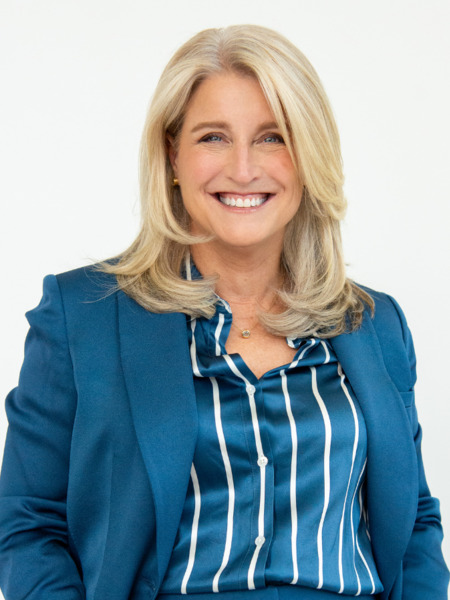
Lisa Bodell
CEO, FutureThink; Bestselling Author, Why Simple Wins
Profile Links
Fee Range
Please contact us for pricingTravels From
New York, NY, US
Lisa Bodell
Biography
As epic change tests us daily, every leader and organization must urgently create new capacity – to adapt, to think, and to act on the work and priorities that actually matter. Easier said than done. People are drowning in the work of work and leaders are handcuffed by conflicting expectations and other hurdles. To meet this challenge, Lisa Bodell, the globally recognized authority and bestselling author of Why Simple Wins and Kill the Company, helps organizations fix what’s broken with work and leadership – the things that get in the way of building capacity and thriving in this environment.
Using her expertise, organizations and leaders are eliminating unnecessary complexity, restoring clarity, and creating the capacity leaders and teams need to perform, innovate, and thrive. Lisa is a trusted, non-threatening disruptor who shows organizations how to stop reacting to chaos and start redesigning how work actually gets done. She also helps leaders reclaim focus, lead with clarity, and replace burnout with momentum – so leadership becomes real again, not performative.
Lisa is the founder and CEO of FutureThink, a global innovation and simplification firm that partners with organizations such as Google, Netflix, Pfizer, SAP, AT&T, Citigroup, and the U.S. Department of National Intelligence. Since founding FutureThink in 2003, she has helped organizations challenge outdated models, eliminate friction, and simplify work in ways that drive speed, engagement, and sustained performance.
A bestselling author known for challenging the status quo while making change feel practical and human, Lisa encourages leaders to stop fixing people to do more work – and start fixing work to better fit people. Through powerful stories, interactive experiences, and real-world tools like “Kill a Stupid Rule,” she helps organizations turn clarity into action.
Lisa’s passion for simplicity is deeply personal. Raised in a family environment marked by instability and unpredictability, she learned early how to survive chaos – skills that fueled her success but eventually led to burnout. That experience shaped her belief that the answer isn’t learning to manage chaos, but eliminating it altogether. This perspective resonates strongly with leaders navigating relentless change and impossible expectations.
A sought-after keynote speaker ranked among the world’s Top 50, Lisa delivers high-impact talks that inspire leaders to lead with clarity, courage, and focus. Her work spans leadership transformation, simplification in times of upheaval, and reimagining innovation in an AI-powered world – always emphasizing that technology should amplify human thinking, not replace it.
Lisa began her career at Leo Burnett after earning her business degree from the University of Michigan, where she learned to merge strategic rigor with bold ideas. She has taught innovation at American University and Fordham University, delivered a popular TED talk, and serves on advisory boards including the World Economic Forum’s Global Agenda Council and the Association of Professional Futurists.
Lisa Bodell doesn’t just talk about change – she helps organizations fix what’s broken, simplify what matters most, and build leaders and cultures ready for the future.
Lisa Bodell
Featured Videos
Current: 2026 Speaking Reel
Time 01:46
More Videos From Lisa Bodell
Lisa Bodell
Featured Keynote Programs
Unleash the Power of Simple
How to Eliminate Chaos, Reclaim Control, and Win in the Age of AI
The relentless volume and velocity of change is exhausting. Layered on top is AI, which means more tools, more options, more expectations. And that’s the trap: Bolt AI onto broken processes and you don't fix the problem – you just speed up the bad work. The real path forward isn't about more technology. It's about simplifying first, so humans can lead and AI can support.
When people are overwhelmed by complexity and the path forward isn't clear, the easy answer is learning to tolerate it better. But the goal isn't endurance – it's to eliminate the problem. Lisa Bodell shows organizations why simplicity is no longer a "nice to have" – it's the foundational strategy to reclaim focus, eliminate noise, and create the space where both teams and technology can actually flourish.
Lisa's passion for simplicity is personal. Raised in a home filled with instability and unpredictability, she learned early how to survive chaos and create clarity when everything was unclear. That skill propelled her corporate success, but it also led to burnout. It wasn't until she realized she didn't need to manage chaos – she needed to eliminate it – that everything changed.
Backed by more than 25 years of global experience and compelling case studies from organizations like Netflix,AT&T, and Pfizer, Lisa shares the practical tools and mindset shifts that help organizations simplify how work gets done without sacrificing results. Through humor, interactive polling, and unforgettable storytelling, Lisa challenges leaders to stop reacting and start shaping the work – and culture – they truly want.
Key Takeaways:
• Practical tools to help people focus on what matters most.
• Why adding AI to complex work amplifies problems instead of solving them.
• Real-world examples of how simplification drives speed and innovation.
• A call to action: stop fixing people to work harder – fix work to work better, then let AI amplify what's great.
Igniting Innovation
AI-Enabled, Human-Led
In too many organizations, teams are stuck in the comfort of the status quo. We’re moving faster than ever, surrounded by powerful AI tools – but spending less time thinking than ever. That’s the real risk. AI doesn’t replace thinking; it exposes whether we’re doing any at all.
The challenge isn’t a lack of technology. It’s a lack of curiosity, courage, and clarity. Many of the processes designed to drive innovation actually suppress it, reinforcing existing behaviors instead of challenging them. When AI is layered onto these systems without intention, it simply accelerates what already exists.
This keynote is an inspiring call to rethink how we approach change. It reframes AI not as a shortcut or crutch, but as a thinking partner – one that helps humans question assumptions, explore new possibilities, and make better decisions. True innovation starts by changing how people think, not just what tools they use.
Drawing on insights from Kill the Company and Why Simple Wins, Lisa Bodell shows how to reignite the most underused human capabilities in organizations: curiosity, creative problem-solving, and judgment – and then amplify them with AI in practical, responsible, and unexpected ways.
This is not a passive keynote. Through live, interactive moments, participants transform the room into a real-time innovation lab – challenging assumptions, stress-testing ideas, and uncovering new opportunities together. Attendees leave inspired and equipped, ready to think more bravely about change, growth, and transformation.
“AI doesn’t replace our thinking – it supports it. It gives us the chance to think bigger, challenge faster, and imagine more boldly than ever before.”
Key Takeaways:
• AI’s blind spot: it amplifies thinking, it doesn’t replace it?
• How to reignite curiosity and creative problem-solving at work.
• Using AI as a safe provocateur, not a replacement for judgment.
• Practical human-centered techniques to drive innovation immediately.
• A clearer, braver mindset for leading change in an AI-powered world
Let Leaders Lead
It’s Time to Fix What’s Broken
In this talk, Lisa Bodell tackles a truth many leaders feel but seldom say out loud: Expectations have multiplied, clarity has disappeared, and leaders are being asked to do everything for everyone – at the expense of real performance.
The urgent work of transforming organizations amid unprecedented change can’t happen if leaders have to navigate systems so complex and contradictory that even the best of them are burning out. We tell them to be bold, then drown them in process. We demand fast decisions, but require consensus. We celebrate courage, only when it’s comfortable. This isn’t leadership; it’s performance art.
The pendulum swung from command and control to endless accommodation – creating an impossible situation for leaders that won’t get organizations to the future fast enough. Lisa lays out a refreshing balance for leaders – the kind that pairs support with standards, empathy with performance, and humanity with results. When leaders are empowered to lead boldly, they don’t just elevate themselves – they elevate everyone around them.
It’s time to burn down the models that no longer work – and finally let leaders lead. “The future belongs to unapologetic leaders who prioritize clarity over complexity, purpose over politics, and action over appearance,” she says.
“The future belongs to unapologetic leaders who prioritize clarity over complexity, purpose over politics, and action over appearance.”
Key Takeaways:
• Inspires leaders to lead with clarity, boldness, and simplicity.
• Understand why leadership feels impossible – and how to fix it.
• Real-world stories of leaders who simplified, clarified, and took back control.
• How clarity, focus, and boundaries lead to higher performance and engagement.
• Practical shifts that drive productivity gains and execution speed.
• Tactical tools to cut through noise and lead with focus.
• The permission to stop performing and start actually leading.
Post-Keynote Breakouts
Fireside Chat with Senior Leadership
After the keynote, keep the energy and focus alive with a powerful 30-minute fireside chat featuring Lisa Bodell and a senior leader from your organization. This session creates a platform for leadership to engage in an honest discussion about what holds the organization back and what must change – culturally, behaviorally, or structurally. Lisa facilitates a provocative, no-fluff discussion that bridges keynote insights with your company’s real challenges. The second half of the session opens up to the audience for live Q&A – giving people the opportunity to ask bold questions, surface concerns, and hear candid reflections from the top. It’s equal parts inspirational and actionable – and a dynamic way to model change from the top down.
Simplification Tactics Workshop
Ready to make simplification stick? This highly engaging 45–60 minute workshop is the perfect way to activate Lisa Bodell’s keynote content with immediate, tangible next steps. Each participant receives a personal deck of 50+ simplification tactics – proven approaches that remove daily friction, streamline work, and accelerate decision-making. Lisa facilitates a rapid-fire “tactic swap” across tables, encouraging people to share favorites, discover new ideas, and commit to the first action they’ll take. After the exchange, Lisa guides a high-energy, full-room discussion to uncover the most frequently chosen tactics and clusters them into key themes – whether it’s killing unnecessary meetings, shifting approval processes, or cutting low-value reports. From there, she dives deep with real examples and activation strategies tailored to your audience. Participants leave with new ideas, a customized plan, and a renewed commitment to doing work that actually matters.
Kill a Stupid Rule Workshop
If you want to spark bold thinking and real results fast, this session delivers. Based on one of Lisa’s most iconic tools, Kill a Stupid Rule is a fast-paced, interactive workshop where teams identify and challenge the outdated rules, bloated processes, and unnecessary work holding them back. In small groups, participants brainstorm all the “stupid rules” they’d love to eliminate – then plot them by ease of elimination and potential impact. With Lisa’s expert facilitation, groups vote on the top candidates, share insights across teams, and leave with a clear path to act. The session can be customized from 45 to 75 minutes depending on group size and time available. Whether used as a breakout or full-room experience, this session generates immediate ideas, energy, and action – and gives leaders a replicable tool to drive change long after the event ends.
Activate AI Like a Boss: A Leader’s Playbook for Getting Your Team On Board, Moving and Winning with AI
AI isn't going to replace your team. But a team that knows how to use AI will replace the one that doesn't. Most organizations know they need to become AI-native. What they don't know is how to get their people there – genuinely, not grudgingly. Leaders have issued the mandate. But the gap between "we need to embrace AI" and "here's exactly how we do that" is where momentum dies and quiet resistance takes root.
As CEO of FutureThink, Lisa Bodell didn't just study AI adoption – she led it, using her own team as a live case study. What she discovered wasn't a technology problem. It was the absence of a clear, human-centered approach to getting started.
In this session, Lisa shows leaders how to start small and visible, picking the right first use cases: low-stakes, high-annoyance work everyone is glad to hand off, so early wins build trust faster than any town hall. She lays out a strategic roadmap for mapping work into what to automate, what to keep human-led, and what to protect as distinctly human. She unpacks the language, rhythms, and practices that build genuine momentum and make adoption stick; showing that the leaders who win won't be the ones who moved fastest; they’re the ones who brought their people with them.
Lisa Bodell
Featured Books
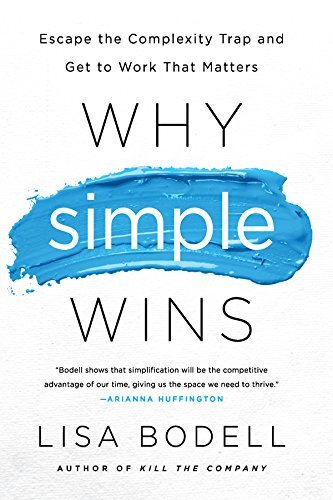
Why Simple Wins
by Lisa Bodell
Imagine what you could do with the time you spend writing emails every day. Complexity is killing companies' ability to innovate and adapt, and simplicity is fast becoming the competitive advantage of our time. Why Simple Wins helps leaders and their teams move beyond the feelings of frustration and futility that come with so much unproductive work in today's corporate world to create a corporate culture where valuable, essential, meaningful work is the norm. By learning how to eliminate redundancies, communicate with clarity, and make simplification a habit, individuals and companies can begin to recognize which activities are time-sucks and which create lasting value. Lisa Bodell's simplification method has several unique principles: Simplification is a skill that's available to us all, yet very few leaders use it. Simplification is the right thing to do--for our customers, for our company, and for each other. Operating with simplification as our core business model will make it easier to be respectful of each other's time. Simplification drives culture, and culture in turn drives employee engagement, customer relations, and overall productivity.
This book is inspired by Bodell's passion for eliminating barriers to innovation and productivity. In it, she explains why change and innovation are so hard to achieve--and it's not what you might expect. The reality is this: we spend our days drowning in mundane tasks like meetings, emails, and reports. These are often self-created complexities that prevent us from getting to the meaningful work that truly matters. Using simple stories and techniques, Why Simple Wins shows that by using simplicity as an operating principle, we can eliminate the busy work that puts a chokehold on us every day, and instead spend time on the work that we value.
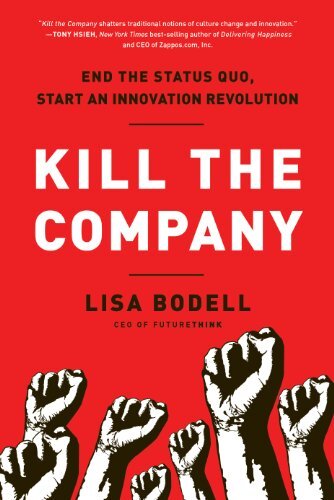
Kill the Company: End the Status Quo, Start an Innovation Revolution
by Lisa Bodell
In the ever-changing world of business, we've arrived at a point where process has trumped culture, where the race toward efficiency has made us complacent and unable to reach our potential. Stuck in the land of status quo, we've forgotten how to think. And the very structures put in place to help businesses grow are now holding them back. It's time to Kill the Company. This book is a call to arms: to start a revolution in how we think and work. But instead of more one-size-fits-all change initiatives forced upon employees, we need to embrace smaller, positive behavioral changes that create ripple effects throughout the organization. Thinking can no longer be exclusive to the creative team or lead strategists. Rather, a culture of curiosity must be fostered among the ranks to shake up our standard practices, from unproductive meetings to go-nowhere strategic planning. This revolution can and will awaken our ability to think, and ultimately, to innovate and grow. In Kill the Company, innovation specialist Lisa Bodell urges companies to shift the mindset from business as usual to the company of the future, to move from what she calls “Zombies, Inc.” to “Think, Inc.” This involves both risk and trust: to allow all employees the opportunity and environment to be curious and inquisitive—even challenging and provocative when the situation calls for it. Too often, this type of behavior is seen as threatening, says Bodell, who has actually been told by CEOs that they discourage employees from thinking. In step with the call to Kill the Company, is a plea to kill fear, complacency, and the all-too-familiar answer from our leaders: “I can't be bothered with your (perhaps brilliant) idea.” In the end, readers of Kill the Company will have a full sense of how much riskier it is to stay here in the status quo than to break out and think.
Lisa Bodell
Featured Reviews
Lisa Bodell
Featured Articles & Resources
PAST: Lisa Bodell | 6/12
Topic
Stop Meeting and Start Collaborating
You’re working from home and want to better engage your team – but how? Learn the top 3 ways to collaborate and make remote...
Topics:
Virtual Presentation
Frequently Asked Questions
Quick answers to some of the most common questions about booking Lisa Bodell for your event.
How do I book Lisa Bodell for my event?
Booking Lisa Bodell with Premiere Speakers Bureau is a streamlined 4-step process:
- Availability Check: Contact us with your event date and budget to verify if your desired speaker is available.
- Hold Date: We place a temporary "hold" on the speaker's calendar while you finalize internal approval.
- Contracting: We issue a contract outlining the fee, cancellation policy, and event expectations.
- Logistics: Once signed, our event management team handles all travel booking, itinerary, and AV requirements.
Why should I partner with Premiere Speakers Bureau rather than contacting speakers directly?
Partnering with Premiere Speakers Bureau provides a comprehensive safety net for your event that direct booking cannot match. You get the same speaker for the same price, but with a dedicated team with over 30 years of event experience handling contracts, logistics, and are prepared for any emergency. We know what it takes to run an excellent event.
What makes Premiere Speakers Bureau unique compared to other agencies?
Premiere Speakers Bureau distinguishes itself by having over 30 years of experience while partnering with more than 35,000 events. PSB has also built a streamlined, fully online process that makes booking a speaker, handling travel and payments extremely easy for anyone looking to plan a speaker led event.
How does Premiere Speakers Bureau's 'Zero Cost Service' model work?
Premiere Speakers Bureau operates on a 'Zero Cost Service' model for event planners. Our services—including research, booking, and logistics—are always free to the client. The speaker covers our commission from their standard honorarium as payment for our role in marketing and managing their engagements.
How are speaker fees structured, and what is typically included?
A speaker's fee typically covers the keynote presentation, a pre-event planning call, and standard customization. Travel expenses are usually billed separately.
What are the standard policies for speaker travel and expenses?
Travel expenses are negotiated during contracting. We generally recommend a flat travel fee for simplicity, though we also offer line-by-line invoicing when preferred. PSB ensures these expenses adhere to professional standards, and our Event Portal allows for easy tracking and invoicing.
Lisa Bodell's Featured & Related Topics
Find Similar Speakers Entrepreneurs







Popular Speakers

Candy Valentino
Founder, investor, WSJ Best-Selling Author and Serial Entrepreneur

Brett Culp
Award-winning documentary filmmaker helping leaders and teams rediscover clarity, courage, and connection in times of transformation

Dr. Jessica Kriegel
CEO Advisor and Doctor of Leadership, Best-selling Author

Ron Clark
"America's Educator", NYTimes Best Selling Author, Disney's American Teacher of the Year, and Founder of the Ron Clark Academy

Liz Bohannon
Top 1% VC-Backed Female Founder & CEO and Bestselling Author of Beginner’s Pluck: Build Your Life of Purpose & Impact Now

Ryan Leak
Inspiring Workplace Cultures Rooted in Values, Passion and Risk-Taking

Dr. Ben Carson
Former US Secretary of Housing and Urban Development / Conservative Political Thought Leader / Renowned Pediatric Neurosurgeon

Jon Acuff
One of INC's Top 100 Leadership Speakers, New York Times Bestselling Author of Soundtracks, Finish and Do Over