Transcript for Heather Hansen Interview on the Beyond Speaking Podcast
Heather Hansen discusses her move from a trial attorney to a keynote speaker and business advisor. She shares insights from her 20-year law career, emphasizing the importance of advocacy over mere storytelling in influencing and persuading audiences. Heather also touches on utilizing differences as strengths, understanding and employing empathy in communication, and teaching advocacy skills to various professionals including military veterans.
Podcast Episode · Beyond Speaking · Apr 30, 2024 · 22m
Heather: You know, when I tell people I used to be a trial attorney, they'll say, I should have been a trial attorney. I like to argue. And that's nice, but it's not what we do most of the days. You know, the closing argument's very short. Most days we ask questions. We ask questions of some witnesses to build connections. We ask questions of other witnesses to embarrass them or to knock their credibility down. And so for people in sales, customer service leaders, ask questions about what people's perspectives are.
Intro: Welcome to the Beyond Speaking Podcast from Premiere Speakers Bureau, featuring in-depth conversations with the world's most in-demand keynote speakers.
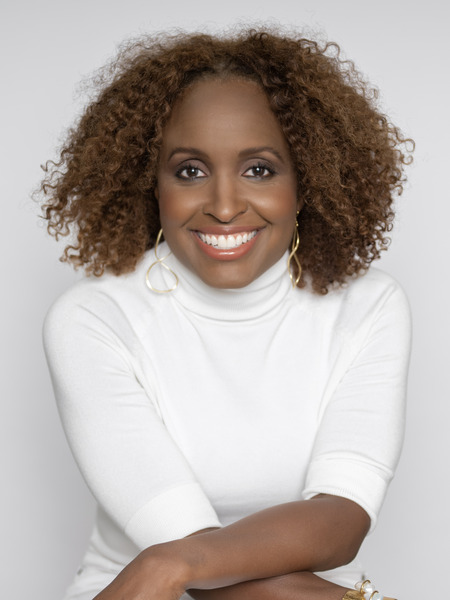
Brian: Hi, I'm Brian Lord, president here at Premiere Speakers Bureau, and your host of the Beyond Speaking Podcast. Our guest today is Heather Hansen. She's a business advisor, a best-selling author, and a keynote speaker. She was a trial attorney for 20 years, and now she combines her experience in the courtroom with her psychology degree and her time as a TV host to help audiences across the world build belief in their leadership, their products, and themselves. I've personally booked her for groups really focusing for me personally on sales and customer service. I know she does all types of things, but got great reports from them.
And so Heather, thank you so much for joining us here on the Beyond Speaking podcast.
Heather: It is my pleasure, Brian.
Brian: So how did you get into this? I know that's it's a bit of a switch from twenty year attorney, you know, doing trials and everything else to going and speaking to groups on customer service or whatever it may be. How did you make that switch from one to the other? And why?
Heather: Well, it's a whole lot more fun to speak in front of audiences who actually want to be there than juries who are like, God, get us out of here. So I did a lot of speaking in front of juries for over 20 years. And that led to, I was defending doctors in medical malpractice cases. It led to a lot of speaking to doctors' associations. And that's actually what led to my TV work, when someone saw me speaking at a meeting and asked if I would ever want to do TV.
But I love speaking to the doctors' associations because it wasn't confrontational. It wasn't antagonistic. It was the opportunity for me to share some of the tools that I teach my clients. And that's what sort of led to a bigger and bigger and bigger speaking career.
Brian: Funny, because you hear these speakers be like I used to talk to like hormonal teenagers. For you, speaking it's the worst audience, and so you've got a jury is the worst audience. So if you can hone your skills there maybe that's just something, you know, they have all these speaker training things and have them in front of a jury just those 12 or however many people and they just couldn't like it.
Heather: They don't smile at you, you know, it's a very serious thing. And they don't know what they're, they, meaning the jury, they don't know what they're allowed to do, and you're not allowed to get too close. It's a very different endeavor. And that's actually something that I had to work at to get a little bit more playful with the audience and all of that. And in the years that I've been doing it, I mean, I just love it so much. It's so nice to have people laugh with you and be able to play a little bit with the audience. I like to really engage with them. And I think a little bit of that is because I couldn't for so long.
Brian: That's nice. You can just kind of get away with it there. And I guess I always love little fun stories. Was there ever like the worst jury you've ever had or somebody who is just the craziest person, the craziest audience member as a jurist?
Heather: I mean, I've had some pretty crazy cases. You know, defending doctors when their patients sue them can get emotional, and scary, and sad, and all of the things. But one of the things that I say is the dirty little secret of trial law is, in almost every case, Brian, almost every single case, and this is 20 years, at least one juror falls asleep during trial.
And it's like this awkward thing where the other, like they're snoring, the other jurors know the person is sleeping, the court reporter or the court prior, the officer will go over with a little glass of water and nudge the person awake to give them the water. And usually that keeps them awake for another hour or so before they doze off again. I mean it can be boring, but
Brian: You just hope it's the other attorney that that happens too, not you.
Heather: Well, and I often talk about this in my work because it's very rare to have a female attorney. I can count on one hand the number of times that there was another woman in the courtroom. And I had an advantage because my voice sounded different. So my voice would often wake them up because they'd be like, wait, there's some different noise in this room. And I would take advantage of that.
And I talk about that as an advocate, you want to take advantage of your differences. And that's what I would get right in with the evidence I wanted them to hear while they were awake. So yeah, you can take advantage of those differences.
Brian: That's right. Heather wakes him up and then attorney Bob just puts him to sleep. So as an advocate, define this for us just because it's a little bit different. You know, to you, what is an advocate?
Heather: So advocating is building belief. You know, if you're advocating for something, you want people to believe in it. You want to, I often say when you communicate, you share perspectives. When you advocate, you change them. So you are changing someone's perspective. You're building belief. And ultimately, you're asking for what you want in a way that makes you likely to get it. So we advocate every day. Every time that you ask for something, you're advocating for that thing.
Every time you publicly support something, like I love Ted Lasso, even though it's over, I wish it never ended. I advocate for Ted Lasso a lot. And you advocate every day too. You advocate for your kids to eat their broccoli. You advocate for your team to make a change. You advocate for your clients to go with a specific speaker or go with a specific location for a meeting. We're all advocating. It's just that it's a skill that no one has really taught the specifics of until now.
Brian: And one of the things you point out too is there's kind of like three things. There's like knowledge, and there's storytelling, there's advocating. And so storytelling is huge, like a highly requested thing. How is this different and needed in addition to that?
Heather: So one of my lines is facts tell, stories sell, but advocates win. Because you're so right. Storytelling is huge right now. And that means that everyone has their story. And that also means that you and your competitor have competing stories. Or if you're a leader, you have the story that this change is phenomenal, but the people you're leading have the story in their head that this change is going to be terrible.
And so when there are competing stories, like in the courtroom, it's the person who knows how to put energy behind their story, to tell their story with evidence that supports their story and with empathy and the right kind of empathy that actually will win over the hind the minds and the hearts and the pocketbooks of the people that they want to influence.
Brian: How do you kind of build that? Because it's those three different things. Like I think the first two are still really important. We kind of got to know your product. You have to know how to tell a story. How do you build up those two things first?
Heather: Well, I often talk about the facts part, facts are everywhere, but turning facts into evidence that support your contention or the thing you want to do is really all about knowing the people that you are advocating to, which I call your jury, anyone that you want to influence and persuade. Because, you know, there's a line that says facts are the ingredients and evidence is the meal. So if a lime is the facts, you need to know how your people want to eat a lime. Because otherwise they're never going to get it down. So do they like margaritas? Do they like key lime pie? Do they like ceviche?
And so you really need to know your audience. How are they going to best accept these facts and turn them into evidence? And it's similar to storytelling. What story is most going to resonate with this group of people? And maybe, you know, in the courtroom, I would often have 12 very different people. You may need to touch on a bunch of different ways to tell the story or to share the facts so that it becomes evidence. But the more that you can know the people that you are advocating to, the more effective you're going to be as an advocate.
Brian: So let's say you're an event planner, and let's say she's trying to get her committee or whoever it may be, some executives to pick a certain hotel or a specific speaker, Heather Hansen, or whatever it might be. How do you start that persuasion? Like if you're trying to say, okay, I've just started here, been here like a month or two, whatever, how do you start to build up your evidence in your case and become an advocate to say to pick where you want your team to go?
Heather: So you want to look at the committee and say, you know, these people on this committee, do they like stories or do they prefer graphs and data and documents and research? Or are they a group of people that like all of these things? And then you want to put together your evidence.
You might create a graph of the price differential between these different locations. How far are these different locations from good restaurants? If you know a couple of people on the committee are foodies, and there's an amazing restaurant just down the street from one of the locations that you're advocating for. You throw that in.
I often encourage people to provide the evidence, and I'm putting that in quotes, ahead of time. So say you're going to have the pitch meeting with the committee to say this is the place I think you should choose, and this is the person I think you should choose. Maybe send them something phenomenal about that restaurant or about the location ahead of time.
And same thing with the speaker. If you know, for example, that your committee has a lot of members from Massachusetts, and you Heather Hansen's from Massachusetts. Maybe you indicate that she grew up there as well. So you really want to know your people. So what's going to resonate with them, what's going to speak to them, and then give them the stuff that's going to allow them to make a connection.
Brian: How does that switch from sort of storytelling to advocacy? Because I still want to make sure we kind of get into that thing because you're storytelling is well known. Advocacy is a little bit different.
Heather: Yeah, so storytelling, most of the time with stories, you're not also getting into the evidence, the research, the information that backs up the story. Storytelling is very emotional. And we do tell stories in the courtroom all the time, but it's also looking at the evidence and saying this makes it better, makes the story more supported. Because there are some people who prefer to have, for example, peer-reviewed research studies or a lot of data.
I gave a talk this morning to a group of pathologists. Stories are always going to touch them because the human brain is drawn in by stories, but they also like the research, the data. They like pictures and specific types of pictures. So it's storytelling, sort of to the nth degree, you know, sort of just giving it that little bit of boost.
And the other big piece of it is being very specific with the storytelling. This is a story that will resonate with this group, as opposed to just the story that I want to tell. So with the pathologist, when I was talking to them, I tell a story from the courtroom. I told them a story about a case that involved a pathologist. That story is going to resonate with them so much more thoroughly than the story of me advocating for my nieces, which is another story that I share, or the story of me advocating for an orthopedic surgeon, which I might tell in a group of athletes, because a lot of athletes have dealt with orthopedic surgeons.
So it's really creating and knowing your audience and having enough cognitive empathy to make your evidence, your facts, and your stories speak to that audience.
Brian: Mm-hmm. What's the difference? I'm glad you brought that up. I know in your TED talk, you talk about the difference between cognitive and effective empathy. Can you explain those things and how that factors into advocating?
Heather: Yeah, it's a really important difference that I don't think we talk about enough. And Daniel Coleman, who's at Harvard, is one of the premier voices in empathy. So affective or emotional empathy is feeling what the other person feels. Cognitive empathy is seeing what they see. And sometimes we don't need the emotional part of empathy.
So in the courtroom, for example, I actually ended up in the emergency room at one point in my career because I felt my clients' anxiety, fear, pain, and my stress hormones went bananas and I had an allergic reaction. That's not helping her and it's not helping me and it's not helping the jury I have to advocate to. So feeling what someone else feels has its place, but not every place.
But seeing what they see always helps. So if I can see what the doctor sees when they walk into the courtroom, I can say you're going to see me talking to opposing counsel. It doesn't mean I'm not on your side. It means I'm trying to build that relationship so that we can actually make deals and come to agreements about scheduling.
And then I want to see the world from the jury's perspective. In my cases, Brian, I represented doctors. I never in 20 years had a doctor on the jury that was, you know, they would get out or the other side would object and say that they were biased. So every one of my juries was all patients. So they all saw the world from a patient's perspective. Cognitive empathy allowed me to see what they saw, so I could speak to what they saw with my stories and my evidence and advocate for a different perspective. And that really takes that cognitive empathy.
Brian: So where did you start? Was there a certain point in your journey as a trial lawyer where you're like, I need to make this switch? When was that light bulb moment for you?
Heather: Well, I had a psychology degree, which is kind of unusual for lawyers. So I was aware of the psychology of jurors. And I always love jury selection because I would look at things like, this is back in the day before Kindles and all the online stuff, but like what book are they carrying? And what does that tell me about their personality and what's interesting to them?
But as I went through my career and we got to talk to some of the juries afterwards and really seeing how a different jury with the exact same facts, because sometimes if you have a mistrial, you have to retry the case with a new jury, they come to totally different conclusions. And so it really does depend on who's in there.
And then I got certified in dispute resolution to do mediations and negotiations. And I saw even more that if you can see things from the other's perspective or ask the right questions to get that perspective, you have so much more influence and you're so much more persuasive with the people around you.
Brian: So sort of stepping in the shoes of somebody who is in sales or customer service or something like that, how can they develop those things and start, you know, tomorrow Wednesday, they walk into the office, how can they or start online? How are they able to apply this to what they're doing?
Heather: One of the first things that I recommend is questions. You know, when I tell people I used to be a trial attorney, they'll say, I should have been a trial attorney. I like to argue. And that's nice, but it's not what we do most of the days. You know, the closing argument's very short.
Most days we ask questions. We ask questions of some witnesses to build connections. We ask questions of other witnesses to embarrass them or to knock their credibility down. And so for people in sales, customer service leaders, ask questions about what people's perspectives are. Ask questions about what they see. In my keynotes, I share some of my favorite questions.
One of them is very simple. Tell me what you want me to know about this event. Tell me what you want me to know about this problem. Tell me what you want me to know about your day, your products, your challenges that my product can meet. It's a very open-ended question that allows the person to actually tell you what they want you to know, as opposed to maybe what you think you want to know. So asking those questions gives you that perspective that then you get to frame your facts into evidence and your stories into proof.
Brian: Hmm. I mean, that is interesting, like a way to take it and get there. What are some of the stories you've heard from people in those industries when they kind of switch that perspective and start asking that way?
Heather: Well, they start to talk about their pain most of the time. You know, like I get up in the morning and I dread turning on this software that your competitor sells me because it's so complicated and just logging in is a problem. Well, now I know that with my software, part of the selling point is how easy it is to get in there. You know, my clients really want a speaker who's different from what we've had in the past. Well, now I know I need to find one of the more unusual topics or the more unusual speakers.
That line, Brian, I actually got. So I'm a host at the Law and Crime Network, which it's like court TV. We just stream trials. And Judge Rosemary Aquilina was the judge in the Larry Nasser hearings. He was a gymnast doctor who was accused of molesting all of these women. And at the beginning of that trial that we covered, only a few women intended to come forward and they weren't going to show their names and faces. But by the end of the week, over a hundred women came forward.
And I attributed it to that question. Judge Aquilina asked that question of every woman. She didn't say, Why are you here? She didn't say, Tell me what I need to know. She said, Tell me what you want me to know. And they all told her totally different things about how it had impacted them physically, emotionally, athletically, monetarily. And that allowed the women to feel seen and heard.
So for your salespeople, your customer service people, your leaders. You want people to feel seen and heard by you because when they do, they will believe in you. And when they believe in you, they'll advocate for you. And then everybody wins.
Brian: That's great stuff. Well, you know, one of the things you mentioned at the beginning of the interview was that you were one of the very few women who were trying cases in that. What advice do you have for women who maybe find themselves in a field or an industry where they're a bit more of a rarity?
Heather: Yeah, it's hard, right? It's challenging and it's an advantage. I can tell you my voice was an advantage, as I mentioned earlier. My approach was an advantage. I like people and I do have a strong sense of empathy. And we once had a deposition where the opposing attorney said to his client, Heather is not your friend. You think she's your friend. And it wasn't like I was trying to be some sneak, but it was just my way that was different from the way of the other attorneys.
And so for any woman who's listening who is in that role, look for where your differences can be an advantage instead of looking for where they're a disadvantage, because often what you see is what you get.
Brian: Yeah, that is really interesting. Like, like I have a daughter who I've got three daughters, but one specifically who a lot of times finds herself competing in these academic competitions where she's the only girl. And so I'm like, well, you can just you've got this advantage. You may see things a little bit differently. So I love that.
And the name of your book and your podcast, The Elegant Warrior, I kind of like the juxtaposition about how that comes up. So where did that come about and why do you think you're great at delivering from that platform?
Heather: Yeah, it's so the book was written. And in the courtroom, we call the stories that we tell about court war stories, and we call the rooms we prepare war rooms. And I am a warrior in the courtroom. But at the same time, it was very important to me that even if I had to take the other side's story, I would never take their dignity. And that's that elegance piece. And it's always riding a tightrope between the two.
And so I think that a lot of women and people in general want to ride that tightrope. And so that book, that's how the book was named and the podcast. The podcast is now in a season called How to Advocate. So it's like a subseason of the Elegant Warrior.
But the Elegant Warrior brand is a brand that has really resonated with a lot of people, men and women. And I actually work with younger girls. I do some pro bono work with Dress for Success, but I also do pro bono work with military veterans who resonate with that phrasing as well.
Brian: Yeah. So what is your work with military veterans?
Heather: So I work with veterans and their spouses to get back into the workforce. So how do they advocate for themselves to get jobs, to get opportunities, to get support? And it's a lot of fun to work with them. I feel very strongly about that work, and to be able to help them to actually get those opportunities or get those jobs is something that I take great pride in.
Brian: So I think you've always got to have a lot of boldness to do the things you're doing, being a rarity where you were in the courtroom. Where do you think all that came from initially to be able to go out and do that?
Heather: I think it's, you know, it reminds me of the Jane Feckelberg song, it's breeding and it's training, and it's something unknown. So, like, you know, a part of it's breeding. My parents and my grandmother, on my maternal side, worked. She was a social worker, and this was in a time when very few women worked. So I think I always saw that as something, and I was brought up that way.
So it's genetics, training, and then just something in me, because trying cases takes a lot of fortitude. That's part of the reason I sort of have done that, been there, done that, and now I'll have a totally different career. But I don't know, maybe a little bit crazy.
Brian: That's a bit of crazy good to have sometimes. Well, Heather, thank you so much for joining us here on the Beyond Speaking podcast. For those of us who are watching or listening, make sure you can go to Heather Hansen at premierespeakers.com to check out a lot more of her information. And then make sure to subscribe, rate, and review this podcast.
So, Heather, thank you so much for being a guest here on the Beyond Speaking Podcast. We really appreciate it.
Heather: Thank you so much, Brian.
Outro: Thank you for joining us for the Beyond Speaking Podcast. To learn more about today's guests, visit PremiereSpeakers.com. Make sure to subscribe and leave a review wherever you listen.