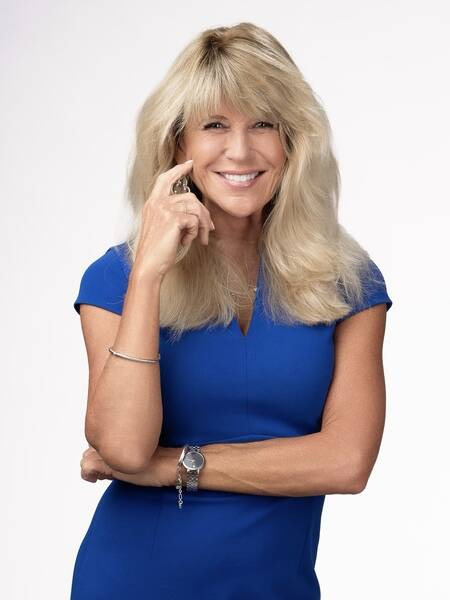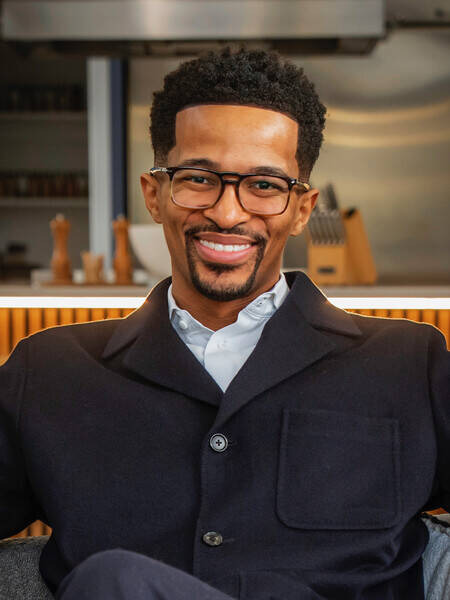
Transcript for Rebekah Gregory Interview on the Beyond Speaking Podcast

In this powerful interview, Rebekah Gregory shares her story of surviving the Boston Marathon bombing and how she turned her trauma into a mission to help others. As the founder of “Rebekah’s Angels,” she provides mental health support to families and children facing trauma. Rebekah also discusses her new podcast, where she shares stories of resilience and healing. This inspiring interview highlights the strength it takes to overcome adversity and find purpose through pain.
Podcast Episode · Beyond Speaking · Oct 22, 2024 · 17m
Rebekah: When the bomb went off, it was just absolute chaos. And we didn't know what had happened at the time, but I remember being thrown back and I could only lift my head. And I was trying to search frantically around, trying to figure out what was going on. And I saw that my left leg was on fire, my bones were laying next to me on the sidewalk. I was in a pool of my own blood. There were nails, BBs, ball bearings, everything that these brothers packed into these pressure cooker bombs.
Not only that, but people's body parts were not even attached to them anymore. And so it was a true war scene. And it changed my life completely. And so you can imagine what it did to my five-year-old son to experience that.
Intro: Welcome to the Beyond Speaking podcast from Premiere Speakers Bureau, featuring in-depth conversations with the world's most in-demand keynote speaker.
Brian: Hi, I'm Brian Lord, your host of the Beyond Speaking Podcast, and today we have Rebekah Gregory, who is quite the amazing person. The host of the Rebecca Gregory Show, new podcast, and the founder of Rebecca's Angels. And then also most well known probably for being a survivor of the Boston Marathon bombing, who has inspired people all around the country and I'm sure all around the world as well. So Rebekah, thank you for coming on the show.
Rebekah: Thank you for having me. This is awesome.
Brian: I know. So we've worked together for six years now, which is hard to believe. And so what I'd like to do today is for you to share some of your story. So we'll talk about some of the other things first, but once we finish talking about your story. So kind of bring us back to the day. How did you get to Boston for that day? You're not from Boston originally, but how did you get to Boston that day and just kind of walk us through.
Rebekah: I'm not from Boston and people know that when I open my mouth, they're like, Are you a Bostonian? And then I start talking, they're like, not with that accent. But it was my twenty-sixth birthday weekend, my first time ever in the city of Boston.
And I had gone up to watch a friend of ours who was running in the Boston Marathon and I had brought my five year old son along with me, and I joke all the time, everyone asked if I was running and I say no way. I was on the sidelines eating chocolate covered pretzels, wondering why anyone would ever run twenty six point two miles for fun.
But it was a great weekend and I remember just how contagious the atmosphere was and standing on the seventeen mile marker and then making our way closer to the finish and we were making our way through this enormous crowd and I all of a sudden started thinking, Why in the world did I bring my kindergartner to a marathon of half a million people? And we're just, you know, trying to get to the spot and we got to the finish line and we were right in the middle of the action. We could see everyone cross and just the looks on their faces. It was so amazing.
And my son Noah had gotten really, really bored. And so he starts tugging on my clothes. Mom, Mom, when are we gonna leave, mom? And I'm like, what am I gonna do? I don't know when we're leaving. And if I'm honest, I was pretty bored at this point too, because there's only so many runners you can watch cross a finish.
But I told him, I said, Buddy, why don't you sit down on my feet and play in the rocks like you're a scientist? And there were no rocks. We were on asphalt. But to a five year old that was a cool thing to do. And so Noah took his place on my feet with his back up against my shins and that's exactly where my little boy was when a bomb in a backpack went off three feet behind us.
Brian: Wow. And so obviously that is a huge shock and we've heard about it now, but at the time, you know, obviously that was something no one was really expecting. Take us through what happened next for you. So the bomb goes off, your son's in front of you, what happens next?
Rebekah: So when the bomb went off, it was just absolute chaos. And we didn't know what had happened at the time, but I remember being thrown back and I could only lift my head. And I was trying to search frantically around trying to figure out what was going on. And I saw that my left leg was on fire, my bones were laying next to me on the sidewalk, I was in a pool of my own blood, there were nails, BBs, ball bearings, everything that these brothers packed into these pressure cooker bombs.
Not only that, but people's body parts were not even attached to them anymore. And so it was a true war scene and it changed my life completely. And so you can imagine what it did to my five year old son to experience that.
Brian: Was he right beside you then or where was he?
Rebekah: So since Noah was sitting on my feet, I took everything in the back of the legs, the torso in the left hand, because the backpack was placed three feet behind us. So I essentially acted as a human shield for him and miraculously Noah had a cut to his bone on his right leg that they were able to stitch up. He had a piece of shrapnel grazed the back of his head, so he has a little bald spot. But he was out of the hospital in five days and had I been on the ground for two minutes longer I would have lost my life.
Brian: Wow. What do you think attributed to you know, just two minutes is such a small amount of time. Why do you think you're able to survive?
Rebekah: So I look back on that day and I obviously see the horror and the tragedy that it was, but I also see how many amazing parts there were to it. The first responders and the innocent civilians that rushed in to save us, not knowing if a third or a fourth or a fifth bomb was getting ready to go off, they just wanted to help. I think that is just, those are angels that were there that day.
And then all of the major trauma hospitals being located within a certain mile radius so that we could all get off the street into a major hospital. And not only that, but they had a bomb drill the year before. So they were as prepared for this as they possibly could be without even knowing what was gonna happen.
Brian: Wow. And so then you're so you're taking him to a hospital in Boston and one thing I was kind of shocked to find out about is that just down the hall was one of the brothers, one of the bombers.
Rebekah: So during the shootout when the brother, the remaining brother, had gotten injured, and I believe that after they captured him off the boat, they took him to the hospital, and it happened to be the same hospital where I was and where many of the other survivors were. So every time I was wheeled down to surgery, we would have to pass the room of one of the guys that did this in the first place. So there were guards there and it was the time that my mom said she became really angry because every time I was being wheeled down for another operation, she was having to look at the room of the person that did this.
Brian: Yes. How did you deal with that?
Rebekah: I think I'm appreciative for pain meds at that time because they tried to keep us as comfortable as possible. And so it really wasn't something that I could process fully. I mean, you have to think about it. My life went from extremely ordinary to waking up in a Boston hospital, a completely unfamiliar place, to FBI agents in my room questioning me about the events of the Boston Marathon bombing and then saying, by the way, the guy that did this is right down the hall from you. It's just like, how do you process that? Even now, seven years later, to look back on all of the events that have happened, it's like, that's really been my life? Holy cow. Like, just crazy.
Brian: What kind of support system did you have through this? I know you mentioned your mom earlier.
Rebekah: I had an incredible support system through this and I think that's been the most important thing because you know when at first I had a hard time dealing with everything. When I first woke up my mom had to take a picture of my legs to show me that they were still there. And I just couldn't believe what was going on and what I was hearing. But the minute that I started to feel sorry for myself was the minute that my little boy was walking into my hospital room and visiting me.
And so I knew right then and there I had to be strong. And I had to be strong for the people that loved me and counted on me. So my mom was there the very first day. And it's scary because she tells this story about going into the ICU room and looking for me in the bed and then going to the doctor and saying, please, please take me to my daughter because there's no way that this young woman laying in this bed is her. And so my mother didn’t recognize me in the aftermath of it.
Brian: Wow, that's incredible. And so you're moving along through this, and you're it's not just a physical recovery, but it's also sort of the mental side, but also the legal side. So I know you were actually, believe it or not, I think two years later you were actually here in Premiere's offices when the verdict was handed down. What part did you play in the trial?
Rebekah: So I wanted nothing to do with the trial at first. And the US attorney, they came to me in my rehab room of all things. So they didn't take my leg right away. We did a process called limb salvage for about a year and a half where I had so many different surgeries and I was in a bed or in a wheelchair on 37 different medications just to make it throughout the day.
And finally I said, Enough is enough. You know, sometimes we have decisions that we have to make in life to get us to that next chapter. And for me, it was cutting out something that I called a bad boyfriend. It was like a bad boyfriend. I needed to get it out of my life for good. And it was really important to do that. So my amputation happened and then I went to rehab and I was learning how to be an amputee.
And all of a sudden the US attorney and an FBI agent's in my rehab room going, by the way, we need you to come to Boston and we need you to testify in the trial of this remaining bomber. And I'm like, What? No, you got the wrong person. I'm not going anywhere. But the more I thought about it, I realized that if I could say something that would potentially help the jury in making their final decision and the judge, then that was a responsibility that I had to do that.
And so I went to Boston and I testified and I tried to get the bomber to look at me because I wanted him to know that even though I was walking in up on a prosthetic leg that he didn't defeat me and that I was gonna live my life the best way that I could. And he would never look at me. And that kind of bothered me.
But the amazing thing is that I got to go back to Boston and give a victim impact statement. And I Googled, this is a real story. I Googled what is a victim impact statement because I had never been part of a federal trial before. This was not real life. And so it said it was a statement that was made, to determine right before the judge made his final verdict.
And I told the US attorney, I said, I'll give you a victim impact statement, but I'm not gonna give him any more satisfaction for what he's done. Because we watched him lean back in his chair and crack jokes with his attorney and fiddle with his pencil and not even stand up for the jury on, I believe, the second day of the trial. So it's like this guy doesn't care. He's not remorseful.
So why would I go in there and tell him that he ruined my life? I'm not gonna do it. So they made me go last out of about twenty-two people, and I got up in front of him and it was so powerful because that's the moment that he looked at me and we locked eyes and I said, I was asked to give a victim impact statement, but in order to do that, I would have to be someone's victim, and I'm not yours, and I'm not your brother's. And I went on to say that this one act of hate that stretched a couple hundred feet was, we've now seen an act of love that stretched hundreds of thousands of miles and that no one was gonna remember their names. What they were gonna remember is what the people have gone on to do and accomplish in spite of having prosthetics or losing loved ones and everything like that.
Brian: And one of the things that you've done that's amazing is you've taken that pain and those difficulties and turned them, like many others, into something amazing. And one of those is Rebekah's Angels. So can you tell me about that?
Rebekah: Rebekah's Angels is our purpose. I fully believe that with all of my heart. When I was trying to figure out life after the bombing, because it's easy to talk about the physical, but a lot of people won't talk about the emotional. And that's where the true scars are. Now I can walk through this physical journey all day, even though it's so hard and difficult, but it's nothing compared to what we have gone through mentally.
And I remember when I was on the way home from the hospital after fifty six days of being there initially my mom put me in her van, I had to be wheeled and put in and I thought every single car on the road was gonna get us, that they were gonna run into us, that people were trying to attack us and it was just this crazy thing because I had been confined in these four blank walls and it was a security blanket almost in the hospital. And it wasn't until getting out that I realized the aftermath and what PTSD really looks like.
And not only that, but I got home and the very first thing that my little boy said to me was, Don't worry, mom, we're never leaving this house again. And so his innocence was stripped away from him that day. And it led me to one of the most important Google searches of my life and trying to find help for not only me, but for my son. And what I learned is that there were so many other children and families out there that were suffering with their own traumatic experiences and not getting the help that was afforded to Noah and I.
And so I wanted to change that. And I felt like it was giving our tragedy and all of the horrible stuff that we had been through more purpose than we could ever imagine. And so we created Rebecca's Angels and we provide that mental health treatment funding for children and their families that are experiencing something like what we went through in our own lives.
Brian: Do you have any sort of good success stories from that?
Rebekah: We have so many success stories. My gosh, it's just been tremendous. We launched in 2018. Our goal last year was to help fifty children, and we really focus on generational trauma too. So we not only want to provide therapy for the child, but every single person in the household. So we get one application. Well, that's four different people. And so we ended the year with like I think sixty something families last year and then this year our goal was a hundred and I already have thirty five applications sitting on my desk at home as we speak and that's you know four people average on each one of those. So we're gonna be well over a hundred this year, that's for sure.
Brian: And the coolest thing and one of the reasons why you're in town here in Nashville is because of your new podcast, the Rebecca Gregory Show. So what is that like? What's that experience been like so far?
Rebekah: It's been a wild ride. I have an incredible producer, Mike Segovia, and we've just had so much fun with it. But it's really just an extension of the hope that we're trying to give to people. Because, you know, I say all the time, the majority of us will never get blown up by a bomb at a marathon, but every single person has life blow up in their face. And the more that we are able to talk about the most vulnerable parts of our lives, the more connected we feel.
And I feel like every single person is trying to do the same thing at the end of the day. We're trying to get through this life the best way we know how and you know love our friends and our families and just become successful and hopefully give back. And so this is a way for us to showcase that and just talk to people and interview incredible people about their stories, but also their rock bottom moments. You know, what made people who they are today because I feel like you really are made and you grow and learn in your toughest tragedies. I know that I have grown and learned so much in the last seven years and I am who I am now based on everything that I've been through.
Brian: What's one of the things that you like to bring out? So I'm kinda jumping, you were saying that, you know, you have such a serious story. Yes. But you use humor a lot. So what's one of the big ways that you use humor?
Rebekah: Well, my biggest way to use humor is to name my leg. Her name is Felicia because I was laying in a bed, I'll never forget. When I saw that quote, I wish I had Felicia's life. She's always going somewhere. And it was at the time of my life where I was completely wheelchair or bedbound and on all kinds of medication. I said, when I get my amputation, I'm never gonna stop. And her name's gonna be Felicia because we're gonna go and we're gonna do all kinds of things.
And so a particular part of the podcast is called Storytime with Felicia. Because there's so many crazy things that happen when you're an amputee that are just, I mean, first of all, embarrassing, but hilarious too. Like my daughter's three, sh I can't tell you the number of times I've found cereal in my leg because Felicia's hungry. Just crazy things.
Brian: That's crazy. Well well thank you so much for coming on and sharing your story with us and continuing to inspire others. So Rebekah, thank you so much for coming on.
Outro: Thank you for joining us for the Beyond Speaking podcast. To learn more about today's guests, go to PremiereSpeakers.com. Make sure to leave a review and subscribe wherever you listen.