3 Lessons on Creativity from a Bestselling Author

By Herbert Lui:
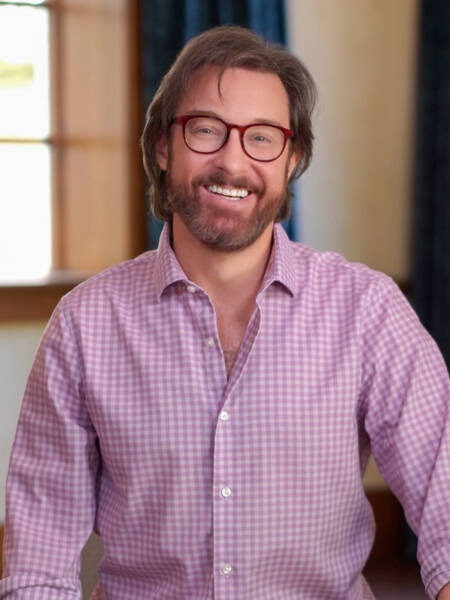
Author Neil Pasricha is familiar with loss. He writes, “I lost my best friend to suicide and my wife to divorce…in the same week. And then there were my own demons—the hang-ups, anxieties, and bouts of self-doubts that plagued me from adolescence.”
Amidst all this, Pasricha found a way to be happy. He’s even written a book on the topic, entitled The Happiness Equation. His Ikigai—the reason he wakes up in the morning—is to “Help people live happy lives.”
His latest book is a collaboration with his readers entitled, Our Book of Awesome. Pasricha displays his craft of turning little moments of the day into awesome, happy, ones (for your consideration: “Adding a gift note to yourself on your online order,” “Inventing new foods at the buffet,” and “Tennis grunts”). I was traveling as I read Our Book of Awesome; it was great company during jet lag.
For Pasricha, being creative is a key part of what makes him happy. This explains his prolific output: several books, thousands of blog posts and articles, a podcast, four newsletters, and his professional speaking business. I sat down with Pasricha to discuss his creative process and how he stays creative.
Balance between doubt and decisiveness
While doubt can drive a person practicing creativity to improve their work, it also gets in the way of the person actually finishing a piece of work; for example, Leonardo da Vinci was often unwilling to declare his work complete. One of the first questions I ask Pasricha is how he knows his work is done. What does his version of an acceptable work look like?
He responds, “I won’t send something to Harvard Business Review unless I’ve personally read it over 17 times, let it sit for a week or two so I could revisit with fresh eyes, and send it to one or two people for feedback. I will know by reading it, because I’ve read a lot, if it meets my standards. If I ever feel regretful about something I’ve published, it’s because I knew inside me that it didn’t meet my standards.”
Pasricha says,
“The danger for me actually isn’t that it’s not good enough. The danger is that I’ve waited too long, or I’ve second guessed myself, where I never shipped something… [David Sedaris] said that before he sends something to The New Yorker, it has 17 edits from him. And then they edit it 34 more times, for every article that they print. I wouldn’t make it through that. Personally. That’s too much for me. But for someone like him, that’s what he needs. The issue is that you could potentially have standards that are so high that you never do anything.”
This happens to people practicing art and creativity all the time; the same obsession that draws us to make great work gets the best of us. Learning to let go of this obsession with perfection—and instead, allowing perfection to emerge from making a lot of work—is the key to greater creativity.
Good things come from quantity
On the day of our interview, Pasricha found people posting on TikTok with hashtags relevant to his work (e.g., #selfhelp, #neilpasricha, etc.) and offered to send them a copy of his new book. Pasricha personally writes these emails, and he makes sure to stay personable; people can tell when it’s coming from him, or when it’s a bot.
Promoting his work makes sure the people who are interested will see it; the problem is, he’s uncertain which promotion will resonate. He says, “Now, I just interviewed with the BBC. And I have another interview right after this. Well, only one of those three interviews is probably going to get any traction. No offense to you, or the BBC,” he says. “You could be on a tiny podcast that gets forwarded a lot.”
I mentioned that I heard his latest podcast episode at Farnam Street. Pasricha responds,
“The reason I was back on Farnam Street is because unbeknownst, or surprising, to me and Shane [Parrish], that podcast—the first time I was on—was one of his biggest ones ever. So something about that propagated…For the last book, I probably did 100 podcasts, I’m guessing. That’s the only one that I [was the most popular] for. If I was on lots that [and every episode was really popular], don’t you think I would have sold more books? I’m just saying, it’s that one, but I wouldn’t have found that one if I didn’t do 100 podcasts.”
Quantity is a theme that Pasricha also writes about in his previous book, You Are Awesome. In this excerpt, he writes of his job hunting experience, “I came up with about a hundred company names. I then wrote up a 30-second cold-call script saying I was a student studying leadership and would love to ask a couple questions to a leader in Human Resources. I cold-called all hundred companies.”
Find freedom within a framework
Pasricha is a proponent of what he calls a monthly dashboard, which he describes, “It’s got four focus areas on 12 things I measure with a green, yellow or red mark each month. Green means I’m good! Yellow means I’m close. Red means I’m way off.”
I ask him how he manages this dashboard, and all of these goals, while new seasonal projects come along. For example, he typically aims to write a book chapter every month, and he’ll measure that in his dashboard. Does he manage to do this while he’s promoting his book?
“[This month] I’m not writing anything, because I’m working on the book launch,” he says. “The dashboard is going to change this month. It’s not going to be one new article, and one new chapter. It’s going to be reach out to 100 people on TikTok. Totally different, but it’s a guideline.”
“I’m working on another book about trust, I’ve been working on this thing for years. I’m drowning in it. It’s like quicksand,” Pasricha says. After this book launch, he can shift his monthly dashboard’s focus to the next book. “Well, then I get back into my rhythm. Then I make the dashboard around that.”
“The definition of these dashboards is freedom within a framework,” says Pasricha. “The frameworks actually relieve you of worrying… All these frameworks are actually just building in more time to get more stuff done.” More time to create, which means more time to be happy.
Originally posted here: https://www.fastcompany.com/90824394/lessons-on-creativity-bestselling-author