Transcript for Urs Koenig Interview on the Beyond Speaking Podcast
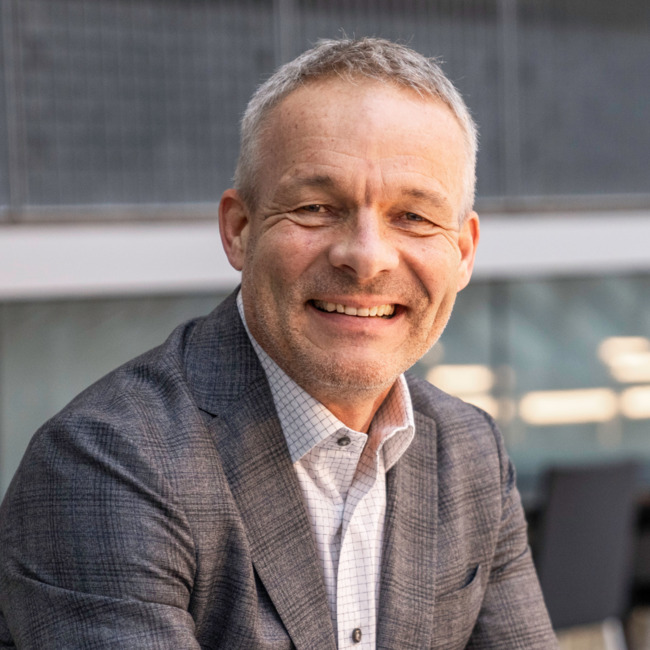
In this episode of the Beyond Speaking podcast, Urs Koenig shares his journey from growing up in Switzerland to becoming a leadership expert, ultra-endurance athlete, UN peacekeeper, and professor. He delves into his philosophy of “radical humility,” which emphasizes deep self-awareness, relational leadership, and creating psychologically safe cultures. Urs shares insights from his experience in the military and ultra-endurance sports, showing how humility and resilience lead to success in leadership and life. The discussion also touches on tough love in leadership, learning from failure, and Urs’ purpose-driven mission to give back through his speaking business and work with Junior Achievement.
Podcast Episode · Beyond Speaking · Sept 24, 2024 · 22m
Urs: Talk about belonging and vulnerability, which is very important. But I'm not advocating for relational leadering because we want to be nicer liked. You know, I talk about tough on results, tender on people. So during my peacekeeping mission, one of my commanders, I sat in his office. He opened the meeting with these words. He said, “Urs, I love you. You know I really do. And your work is not even close to being good enough.”
His words made me shrink in my chair. Why? Because I knew he actually cared for me. And of course he didn't just say I love you. I knew he did. He really cared for me. He got me. He wanted to help me go to the next level. And that's why I was able to hear his feedback. If he would have yelled at me, I would have tuned him out. Another, you know, high-ranking idiot officer who yells at me. No. But because he actually really cares for me, I'm able to hear his feedback. So that's actually an important point for all of those who are listening who are in leadership positions.
Our feedback is much more likely to be heard and acted upon by our teammates if we build meaningful and collaborative relationships with them. So that you know, the Tendron people gives me license to be tough on results.
Intro: Welcome to the Beyond Speaking podcast from Premiere Speakers Bureau, featuring in-depth conversations with the world's most in-demand keynote speakers.
Brian: Hi I’m Brian Lord, president here at Premiere Speakers Bureau, and your host for the Beyond Speaking podcast. Our guest today is Urs Koenig. He is a rare blend of leadership expert, ultra endurance champion, academic, and UN peacekeeper. So we're gonna hit a whole lot of stuff here. And the first thing, so Urs, I know you're based in Seattle. Is that a Seattle accent you have there? Where does that come from?
Urs: It's southern Texas, Brian. Can you not hear that?
Brian: South Texas, down Houston aways.
Urs: That's right. It is a Swiss German accent. I'm actually from Zurich originally, so Switzerland is my home country.
Brian: And that is just one of the most beautiful places that I've ever been to. I need to go again. I've only been there for like a couple of days. I need to go more, but it's certainly amazing. I know you did so many things, like you're this ultra endurance athlete in addition to your PhD and everything else. You're in Seattle now. I know there are a lot of mountains near there. Is that why you picked Seattle or what do you miss the most about Switzerland?
Urs: You know, that's why we picked Seattle for sure, actually. What I miss the most about Switzerland is frankly my family. I was just there for the summer for two months for that reason. And so yeah, I miss my family. We have plenty of mountains here, lots of snowing, great skiing. I drive 60 minutes from my house in Seattle. I put on skis, like that's amazing in an American metropolitan area. So I love that.
Brian: Yeah, that's great. That's great. Well, you've got this amazing life. I guess I might kind of wonder what came first. So you've got the military career, or peacekeeping career, you've got the endurance career, you've got the academic career. Where did you get started?
Urs: I guess I got started in ultra-endurance stuff. I ran my first marathon at 14, actually. And so and then I went into long runs from there and then ultra cycling, bike races between five hundred and three thousand miles, which was my main career actually. And that, you know, also almost cost me my life, actually. There was a race across America where I was diagnosed with severe pulmonary edema. That's the stuff people die from on Everest. And so I was hospitalized, it was not pretty. And that sort of ended my ultra cycling career.
But I still do stuff we just talked about. That was in Switzerland. I did an everesting thing three weeks ago, actually, sort of by myself. I parked four mountain bikes at the top during the night when there is no gondola. I hike up, ride the mountain bike down. During the day there's a gondola, and I did the equivalent of twenty nine thousand feet in twenty three hours. So I still love this stuff. I love it. You know, it's just so me.
Brian: That's amazing. And then where did your career leave from there? So you have this ultra endurance, you survive the pulmonary edema, you're traveling all over the world. What was the next part of that after you go from that? Where was the next step in Urs' life?
Urs: Well, it sort of goes in parallel actually. So I studied geography originally, and the reason for that was when I was fourteen, this was in the eighties, there I admit it, a long time ago. My dad took three months of unpaid leave from his corporate career to work in a refugee camp in Somalia. And so highly unconventional in the eighties, not exactly, you know, not a lot of clapping going on for my dad for doing that, but it really inspired me.
I really got inspired by that, my dad's example and that got me into geography. Actually, I studied geography because of my dad's example when I was a teenager doing work in a refugee camp. And that then actually led me to peacekeeping. So I'm now fast forward, I'm going all over the place. But I'm in the national service in Switzerland. Everybody has to do their service in their 20s. And then I move abroad. I'm in Australia for seven years. I'm in the States for 23.
But I've always had this wish to do meaningful international work. That's why I studied geography originally, but I never actually followed through on it. You know, business, the ultra sports, which is talked about, family. And then I was approaching 50. My dad passed away recently, and you know, we were very close. And I had a good look, hard, good, hard look at my life. And I went, what are the things I still want to do and not regret? And doing meaningful international work was one of those things.
So I re-enlisted after having been out for 22 years to be a peacekeeper. So I went to the Balkans in 2017 for nine months. And two years ago, I was in the Middle East for a year. So I know I wrote the book on humble leadership, like talking about humbling experiences, going back in after 22 years into the service was an amazing experience, and I loved it. It's fulfilling on so many levels. So that's my peacekeeping career that follows.
Brian: Yeah, that's amazing. And you talk about radical humility, which is it in a lot of ways is great for leadership groups because you're talking, you know, one of the things you talk about is the key thing behind great leaders is this thing called radical humility, which for those watching, you can see right behind Urs’ shoulder there. You know, what led you to write that book and what are maybe some of the main takeaways from it?
Urs: You know, I was always drawn to humble people, like in the ultra cycling world, competitors who let their legs do the talking versus the big mouth, right? But I never really started it in any seriousness. But then when I deployed on my peacekeeping missions, ironically, going back into a hierarchical environment actually showed me that the best commanders, surprisingly, are deeply humble. They have deep self-awareness. They ask their team members, believe it or not, for feedback. How can I do better? So I'm now gonna go into what radical humility is, right? For leadership.
It's actually having deep self-awareness, understanding myself in line with how others understand me. So that's sort of the first pillar. And you know, we can do this in our personal lives. I know you have three daughters, right, Brian?
Brian: Mm-hmm. Yeah, I have three daughters and one son.
Urs: Yeah. I constantly ask my kids, how can I be a better dad to you? And what can I do better? And by the way, leadership is not a popularity contest. We always ask. We always listen, we always thank, but we decide what we're acting on. So it's this notion of deep self-awareness.
A second piece of that is having to focus, having the humility to know that I can't do everything, but I can do almost anything I put my mind to. So, you know, sports is an amazing metaphor for that. Athletes are masters at compartmentalizing, at saying no, at focusing. You know, Greg Searle, the Olympic rower said, I never made any sacrifices. I made choices, right? So it's this self-awareness, seeing myself in line and seeing me focus.
That's the first core element of leading with humility. The second piece is leading relationally. So rather than just leading by content expertise, leading relationally. And by the way, you know, there's a lot of speakers who talk about belonging and vulnerability, which is very important.
But I'm not advocating for relational leadering because we want to be nice or liked. You know, I talk about tough on results, tender on people. So during my peacekeeping mission, one of my commanders, I sat in his office. He opened the meeting with these words. He said, Urs, I love you. You know I really do. And your work is not even close to being good enough.
His words made me shrink in my chair. Why? Because I knew he actually cared for me. And of course he didn't just say I love you. I knew he did. He really cared for me. He got me. He wanted to help me go to the next level. And that's why I was able to hear his feedback. If he would have yelled at me, I would have tuned him out. Another, you know, high-ranking idiot officer who yells at me. No. But because he actually really cares for me, I'm able to hear his feedback.
So that's actually an important point for all of those who are listening who are in leadership positions. Our feedback is much more likely to be heard and acted upon by our teammates if we've built meaningful and collaborative relationships with them. So that, you know, the tender on people gives me license to be tough on results. You know, are you a soccer fan, Brian?
Brian: I am somewhat. I've got a daughter who plays. I know other sports better, but I'm familiar with it.
Urs: Okay, so you know you've heard of Carla Overbeck, former US women's soccer captain from years back. So, you know, she scored only seven goals in her entire international career, which even for a defender is low. So great humility on the field would always look for ways to pass the ball off the field. She would slap her teammates back to their hotel room after an especially grueling international flight. And so she amassed a lot of credit, a lot of humility on and off the field.
And that then allowed her to be relentlessly tough on her teammates during conditioning drills because she was tender on people, which gave her license to be tough on results. And so that's that notion of leading relationally, not because we want to be nice or liked, but because it actually achieves business results.
And then the last piece of leading with radical humility is this notion of building a fearless, psychologically safe culture, which I know also a bunch of other speakers, of course, are talking about, making it safe for everybody to speak up about doubts, questions, concerns without fear of being shamed, or you know, even worse, risking their careers. And I have a beautiful example, if I may, also from my peacekeeping mission, like the commanding officer in the Middle East opened an after-action review with these words. She said, I screwed that up and I know it. And here is what I'm gonna do to fix it.
And by the way, when we talk about vulnerability. Let's do it in three acts. The first act is me. The second act is my weakness, the mistake I've made, an insecurity maybe. And the third act is what am I going to do about it? So in three acts. So she opened it, made it then safe for all of us who direct reports to own our own mess ups, right? All because she went first. And this particular action actually led to way better operations on the ground.
So you know, this notion that the best teams understand that being vulnerable together is the actual only way that the team can become invulnerable. Like even in the military, that is so true. So that's psychologically safe, that's the third element. So self-awareness, leading relationally, one on one, and a psychologically safe culture. Now I've talked a lot, Brian, so I'm gonna stop here.
Brian: No, no, I love it. I'm always curious. So, you know, these people, these thought leaders like yourself put together these different things. Which of these was the first one you thought of and which was the hardest for you to personally implement?
Urs: I love that question. That's so the first thing I think of, and this is so me, it's the tough and results tender on people. Like I honestly, you know, I have a military background, although endurance, like lots of no BS, give me results, you know, no excuses. And at the same time, I'm a really emotional person. I'm a relationship person. And so I've for my whole career worked on this, you know, dichotomy of tough and results tender on people. So that's the first. One that came easily.
The hardest piece for me personally, Brian, and I'm showing up with a bit of vulnerability in this, which I didn't specifically talk about, is the growth mindset. Okay. So I grew up in an environment where, you know, unless you have an A, you don't come home from school, you know, you gotta you gotta deliver, you know, there's tough love, that's something that I still struggle with to truly embrace failures and mistakes as an opportunity for learning and growing versus worrying how we come across. So that's a vulnerable share. But on a personal level, that's probably the hardest for me.
Brian: Yeah. And you can see how that is. And that's probably what it is for a lot of people. Like you kind of get the zero sum sort of thing, and it's hard to celebrate that from others. Especially you because as an endurance athlete, there may be some team things, but a lot of that is you. Like you have a support team, but you're it. And then switching from that to, you know, with a UN team from that military standpoint, what was your mental process? You had to switch from being sort of that I'm me to this whole team sort of mindset.
Urs: Yeah. So I am actually, surprisingly enough, even though I'm an ultra endurance competitor, I'm actually a real team person. And so I thrive in team environments. But it was still a hard transition, Brian. And the reason it was hard is because I was the oldest at almost 50. I didn't have, you know, my military knowledge was outdated. So I needed to get up to speak quickly, but I had a lot of other experience, right?
So you talked about some of my background. And so I had way younger seniors. So I had people who are my bosses who were less experienced, you know, probably not as good leaders. And so I made a conscious effort to go back to, you know, deploy the humble mindset. Like even if I think I know the answer, or if I'm sure I know the answer, or if I know better, I'm gonna zip it. And just, you know, zip it and just listen first and learn because there's always something to be learned. So that was actually the harder transition. And I, you know, I didn't do it perfectly, but I did it pretty well actually for the most part.
Brian: Yeah, and that's hard. I mean, I guess you get that start over type of thing you were talking about, your dad kind of starting over because if you're going from this corporate thing and then going to, you know, Somalia. So did you go with him or what happened during those three months? Is it just a separate thing?
Urs: He went, so this is in the eighties. So he went and you know, remember the cassette players, like he would send us, he would record on the cassette player like tapes and send them in the mail to us. And you know, he took lots of photos and slides and things. And so that's how we sort of got to know what was going on with him.
Brian: Were there any lessons that you learned from him during that time period that you were able to apply later?
Urs: Absolutely. Don't be afraid to make unconventional moves, even if other people frown upon them. I mean, literally in the 80s, like the other people were like, what the hell are you doing? Like, why? Right. And so when I decided to rejoin the military at almost 50, you know, kids at home, like it's not straightforward. I had to take time out from my business. Lots of people were so, you know, somewhat thinking, that's a great idea, but what about this and that and the other thing? And so absolutely having the guts to follow my calling, my passion, that's something that he instilled in me that early when I was 14.
Brian: Yeah. And you talk a lot about being a parent. So, you know, even early on in our interview that you were talking about how you apply these things, like asking your kids, you know, what am I doing well? What can I do better? That sort of thing, which is kind of like, you know, so I made you go to bed before you wanted to, before your movie was over. How am I doing as a dad? You know, like how does somebody go about doing that type of question, getting that feedback as a parent?
Urs: Well, I think as I said, it's not a popularity contest, right? And so I'm gonna make the call that you need to go to bed. But I can, you know, and maybe that's not actually not a great one because that's a non-negotiable. You go to bed at 10 or whatever it is. But I can ask for feedback on how did I show up when you asked me with help for your homework? Because I caught myself being impatient as a dad because I needed to get other stuff, but whatever it is, right? So that's a better example to solicit feedback.
Another piece I really work hard on is my voice because I personally struggled through my life with a growth mindset. You know? So my younger son, Liam, I still remember, I encouraged him to go and check with your teacher, ask for feedback. How can you do better on this specific of all things geography assignment? What things can you learn from other students who are doing amazing? And how can you apply those to get a better grade?
And so then he did. So the, you know, the notion that you don't have to be perfect. You try, you fail, you learn, and you try again and you fail again and you learn, but you get better over time. I'd really work hard on instilling that. And I think we can all do that with our kids. And actually, even using the vocabulary of growth mindset. Some schools now use this in their curriculum, actually, which I love.
Brian: Yeah. So define a little bit more, I know you talk about this as well, but successful failure. To you, what is successful failure?
Urs: So failing successfully to me means that instead of being flooded by my strong emotions of which we all have by the way, especially when we fail publicly, you know, talk about public if you make a mistake as a speaker, it's very public, for example. Shame, embarrassment. Instead of being flooded by our strong emotions, reframe and learn from the experience. So successful failing in a nutshell means I'm actually able to learn from my experience.
And so reframing, there's a whole, there's a lot of research around reframing. There's different models we can apply to help us get there. So that's successful failing.
Brian: You've already done so many of these different things, you know, obviously you're a speaker, PhD, you know, author, UN commander, and you know, super competitive, world-renowned endurance athlete. What's next? Is there a next thing out there that you're building towards or something else that people are going to tell you that's crazy that you shouldn't do?
Urs: I don't think it's crazy, Brian, but I'm actually transforming my business into a truly purpose-driven business in that I give all my revenue away to a good cause. Because, this is a vulnerable share again, I'm in the process of transforming this. Josh Linkner, who's a great mentor of mine, is helping me through the messaging with this. So I'm in a comfortable position where I can do that.
And I really want to make an impact beyond the stage. So I'm supporting junior achievement. And so my book royalties, my speaking fees, they go to junior achievement. But that's in terms of your question, what's next? That's what I'm working towards. I was on the call with JA Africa this morning, actually, with a CEO, and we talked about different strategies. And so that's what I'm super excited about. I love speaking, I love impacting audiences, I love helping them to go to the next level. But I also love making an impact beyond the stage. So I'm super looking forward to that.
Brian: Yeah, that's great. Well, I was a junior achievement kid. So I was supposedly the youngest president in my town of junior achievement. And then went to like the JA, like the International Leadership Conference and all that stuff. And I was, you know, got to be friends with all these kids from around the world. So that was very cool. Very cool. And not too far from where Josh is. It was that year it was up in Michigan. So that's very cool. Yeah, that's great.
Well, thank you for sharing your story. Well, thank you for sharing what you're doing, you know, the ultimate purpose, not just for the audience, but what that companies are doing, you know, sort of through you to help kids through junior achievement globally, you know, with leadership, with radical humility, and with so many of your stories. So so Urs, thank you so much for coming out and being part of the Beyond Speaking podcast.
Urs: Thanks so much. I loved it. Appreciate it.
Outro: Thank you for joining us for the Beyond Speaking podcast. To learn more about today's guests, visit PremiereSpeakers.com. Make sure to subscribe and leave a review wherever you listen.