Transcript for Thomas Landstreet Interview on the Beyond Speaking Podcast
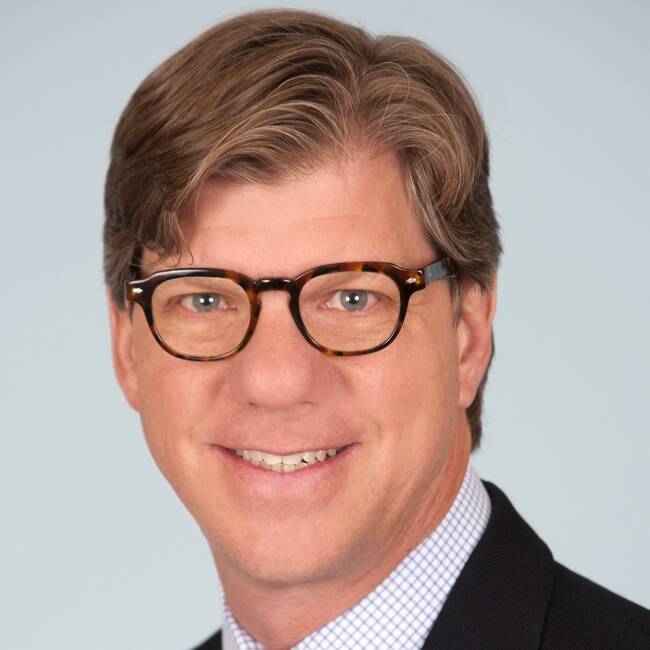
In this episode of the Beyond Speaking Podcast, financial expert Thomas Landstreet shares his insights on inflation, government policies, and the global economy. He predicts a long-term rise in inflation, drawing parallels to the economic conditions of the 1970s. Landstreet also discusses the impact of global trade, investment strategies, and how his unique career, which includes a stint in stand-up comedy, shaped his approach to finance. Tune in for actionable insights on navigating the modern economy.
Podcast Episode · Beyond Speaking · Oct 15, 2024 · 24m
Thomas: I happen to think that inflation is on a long-term upward trend. And that I would not be surprised, and this is a little risky, to see almost high single-digit interest rates by the end of the decade. The policy mix is very similar to the 1970s, which is a period I had to study under Art Laffer. I led a team, we did a deep dive, and I came away with a totally different understanding of what caused that stagflationary period that my dad and maybe even your dad grumbled about for years. Because it was 50 years ago, it's not in anybody's memory. Most investors, you know, professional investors are 40 something. But it happened.
Intro: Welcome to the Beyond Speaking podcast from Premiere Speakers Bureau, featuring in-depth with the world's most in-demand keynote speakers.
Brian: Hi, I'm Brian Lord, president of Premiere Speakers Bureau. This is the Beyond Speaking Podcast. Our guest today is Thomas Landstreet, or Loudstreet, as his friend say. Luckily, it worked out well to enter the speaking world, but he's somebody who's been an extremely successful broker running a massive international fund, you know, well-published forbes, and somebody who, a lot of companies, industrial associations, we've got a Belgian company coming up. So a lot of different groups love to hear his outlook on policy, on the economy, on politics, and investing.
So Thomas, thank you so much for coming on and being part of the Beyond Speaking podcast.
Thomas: Thanks for having me.
Brian: Now the main thing people look for in somebody giving an economic outlook is that they were an English major. So you had a roundabout way of getting to where you are. And you've also, I forgot to mention too, also a former stand-up comedian in New York City and performed at Catch a Rising Star all over. So a really unique background of somebody who comes into this. So where did you really get your start with all this?
Thomas: Well, I was an English major because my father wanted me to major in business and go into the investment industry, which he was in. And so of course there's a reaction to dad. I also thought I would be a writer. I really loved reading and thinking and history and I just thought it was my path. And my first job actually was as an advertising copywriter in New York City. So a junior copywriter. And that was, of course, boring writing one-liners for a women's jewelry line. You know, it was a little hard to get a job, I'll tell you. But once I got in there, I was like, this is boring. And all my friends were making really good money and having so much fun on Wall Street.
So I started pining for what I had avoided, and eventually worked my way into being an editor for a research firm that did, you know, investment bank. They publish a lot of research on companies. Yeah. And I love proofreading and editing. It really benefits me finding problems with other people's work. Kind of an ego boost. So I don't know why, but I love editing. And I fell in love with it from that point on and forced my career the other direction. It was very difficult to get hired, by the way. I had so many no's. Because you need a business degree and no advanced degree.
You know and finally I convinced a man to hire me for free. And I said, I'll sweep the floors. I've made a little money. I lied. And he hired me. And then when he called me up to give me the job, I said, Well, actually, I can't do it without sixty thousand dollars. And he gave me sixty thousand bucks and I started in the business with a salary. Yeah. It was really good.
And then by the way, funny story, I was too aggressive. Now, this isn't retail brokerage where I'm calling up, you know, Brian Lord and trying to get your account. It's institutional, which meant I was calling money managers, which were mutual funds mostly and hedge funds that were nascent at the time. And I was too aggressive, so they fired me after a year. I had a baby. You know, a child, and it was just wow, was that a low point? My dream job took me forever, got in there, I'm too aggressive, and I get tossed for ruffling feathers.
The neighbor, the company across town, however, had heard about me. They were a lot more aggressive, meaning growth-oriented, right. Hired me right away without me making a call. Saved my life. And I spent 10 years there. And it was, my goodness, was it a joy?
Brian: What made that a joy?
Thomas: First off, saving me from abject poverty as a young father. You haven't taken a risk. Second off, it was a blue chip southeastern firm called Robinson Humphrey, now owned by Truist. I was good at it. I really enjoyed pounding information, dissecting it, getting to know companies, getting to know my customers, the big funds that were buying these names, what they needed. I had a kind of a fun way to introduce a new account, which are big, sophisticated managers that have all the credentials that I didn't, by the way. I'd walk up to a gentleman, you know, Harvard MBA and so forth. And I would walk in there and I'd shut the door. And the way the investment banking world is organized. It had a trading desk, which I sat on. It was one of those open fields, like a big field for little for little screens. You see them on television, on CNBC.
And I was a salesman. So I would call on big funds. And if it was a small cap or a value-oriented fund, I would shop among the stocks that we covered. We had analysts covering industrials and retail and internet and REITs and insurance and a whole list of companies, 450 names that we covered. And I would basically be the go-between between our analysts and the names we covered and the funds that had a specialty.
And I always say this line really helped my career because there's a lot of cynicism on the buy side, so called the money management side, about the sell side. And I would walk in and I'd Well, actually I'm he would say, you know, traditionally they would say, Well, what do you what do you do? What do you cover? I said, well, let me just start it this way. I'm here to actually protect you from my analysts. And they would love that and be all ears. And I actually meant it. I often went against my analysts, which would have been controversial if the numbers didn't come in, if I didn't get paid a lot for it.
So it was a great time to be in that business. Ninety eight, ninety nine, the market was ripping and roaring and the investment banking was plentiful. We made a lot of money.
Brian: Wow. So is this the time when you're doing stand up or what at what point were you doing stand up?
Thomas: Well, that was earlier. So when I moved to New York City and got a job in advertising, because I've been in theater, I've decided to audition for a comedy slot. I needed some extra, you know, it was expensive. And that coveted spot in advertising paid me nineteen thousand a year. And you know, and there were like a million people that wanted that job. So I kind of needed more income. Rent was a lot, you know, I lived kind of sparse.
So a friend of mine worked or knew the owner at Catch Rising Star and worked up some pitch and went in there and he gave me an audition and I passed. He loved it. And he booked me. And next thing you know, I'm closing for Robin Williams. Now, you know, the way they would do it is like for the most junior comedian first, and then you might have an Adam Sandler and then Robin Williams. And either he closes it or they may have a windown. So I was either the first guy when nobody was there. But I did it.
And you know, and then I went to Catcherising Sussex comedy, the comedy strip, which was big back then. Caroline's. And so that's what I did. By the way, it's great training for studying government economic policies.
Brian: Yeah, so how's that?
Thomas: It gives me a sense of humor, otherwise, I'd be, it would be a tragedy.
Brian: Sure. Well, so when you go to speak at an event, you've got this big background. I know you said one of the things when you're managing this fund, you're seeing kind of the whole world, you have to have so much input in there. So you do have that history in and like studying history and English and everything else to go along with financial aspects of things. What does that sort of sense give you when you go out and speak to an audience?
Thomas: Well, because I've been both a stock picker and an analyst at the stock level, company level, and industry level. And I also worked for Arthur Laffer, who developed the Laffer curve, as you know, and famous for his effort to help Ronald Reagan cut tax rates from what was seventy-two percent highest marginal to twenty-eight. Setting off a twenty-five year bull market. I've done both macro and micro. And so I connect the dots between the big picture and companies and profits.
What I bring to the audience is because we also are an international fund. In other words, we can really do anything. I'm a macro-oriented fund. I currently own stocks in Argentina because of this amazing new president that's come along named Malay. And the point is I have to know a little bit about it. Everything. So for an audience, I can really pitch right at the audience because I probably know something about what they're concerned with. So it kind of gives me a very big palette to draw from. And I work really hard to understand the industry and the people I'm speaking to. So that I can take what I know and we have a research staff. And I can deliver very relevant, impactful, thought-provoking, hopefully actionable, you know, ideas and put a framework around what we're reading, which is so hard to understand sometimes.
Brian: Now for this one, so we're recording this in early October of 2024. We're coming up on an election in a month. What are audiences asking you about the most right now?
Thomas: Interest rates. It's on everybody's mind. And regulations. So interest rates and the regulatory apparatus are the two most critical subjects currently.
Brian: And what do they want to know or what are you able to share with them about those topics?
Thomas: Well, so Lafford taught me something really interesting, and this is his concept, but the government is the eight hundred pound gorilla in any economy. If it's in Buenos Aires, Brazil, or Bangladesh, or Boston, the real creator and destroyer of incentives is government and government policies.
He frames it in the government economic policies are organized in four different areas. He called them the grand kingdoms of macroeconomics and it's monetary policy, which is the Federal Reserve, fiscal policy, which is tax rates and tax credits and subsidies, regulatory policy, which is everything else, building safety codes, food safety codes, the ethanol mandate. And then trade policy, which is the least appreciated, which is free trade. You know, unencumbered free trade.
Those are the four grand kingdoms. And so when we look at the world and we look at a country and we contemplate whether it's going to be successful or not as an investment, we look at it through the framework of the four grand kingdoms. What are these policies? What is the policy mix? As we know, we had zero interest rate policies here for many years, and now they've gapped up a record increase in interest rates, and now he started to cut again. So that's really on everybody's minds.
And I can and I and honestly, where interest rates go depends on inflation. And I happen to think that inflation is on a long term upward trend. And that I would not be surprised, and this is a little risky, to see almost high single digit interest rates by the end of the decade. The policy mix is very similar to the 1970s, which is a period I had to study under Art Laffer. I led a team, we did a deep dive, and I came away with a totally different understanding of what caused that stagflationary period that my dad and maybe even your dad grumbled about for years. Because it was fifty years ago, it really is not in anybody's memory. Most investors, you know, professional investors are forty something. But it happened.
Brian: Well you know where I saw it was watching old sitcoms. And they would talk about I'll give you a loan, like on a taxi, like I'll give you a loan, okay, I'll do it for thirteen percent, okay, great, great rate, you know, that sort of thing. And so it's astounding that it's repeating itself.
Thomas: It is repeating. And it's because the policy makes the regulatory policies and the monetary policies and trade policies. Under Richard Nixon, which a lot of people will blame the 70s on Jimmy Carter, who wasn't elected until, you know, nineteen to late seventies. But really, it was Richard Nixon. and before him, Lyndon Baines Johnson with his giant social spending, which we have today, by the way. You know, debt and deficits.
But Richard Nixon was a very political president, thought to have the smartest cabinet of all recent presidents, but they really made the worst errors. He was very worried about inflation because it was a problem politically. And inflation at the time was stemming from oil prices rising, as you remember. When I was a baby, I don't really remember it, but right here in Nashville, you were restricted on what days you could buy gasoline. I'm sure you've heard those stories.
Brian: I remember seeing a picture of the long lines of that.
Thomas: I'm the youngest of five, and my mom would pull up in her station wagon and wait on the day she was allocated. So it's hard for us to even conceive of such a thing, but it happened. It happened because of Richard Nixon. Richard Nixon was worried about oil prices rising and hurting him politically. So what he did was he capped what oil producers could charge per barrel below the market.
So, if you and I were CEOs of oil companies and we were told by the government that we could only charge so much for oil below the prevailing price in the market, where's the incentive to find the extra barrel of oil? In other words, US oil production actually went into a 40-year decline on that day. And I show this chart in my presentation, and audiences gasp. It shows US oil production from 1925 when John Rockefeller revolutionized the industry.
And in the US this is production, not consumption. And it's going up. And then in the 60s, we had a growth economy. It just goes parabolic. And then in 1971, when Richard Nixon imposed these price controls, US oil production literally went into a forty year decline. And there is, and I show this to audiences because that's where policy meets price.
So either way, right now we have this administration's antagonism against oil production and natural gas and coal. And another thing Richard Nixon that happened during Richard Nixon's tenure was also related to oil prices, was the Yom Kippur War. So in 1973, there was this skirmish in the Middle East, the US sided with Israel, oil prices were rising, which gave the Middle Eastern countries a lot more money, emboldened them.
They kicked American oil producers out of their countries. This is the United Arab Emirates, Saudi Arabia, Iran, Iraq, the oil producers. Took over their assets, the wells and the land. And then OPEC was formed. OPEC was a loose-selling group before that. And then it became an official price setting cartel after that, price fixing. And it became an East versus West skirmish with oil prices as the battering ram. And oil prices skyrocketed because they withheld oil from the market to get back at us for supporting Israel and the Yom Kippur War. In other words, there was a massive schism between East and West, a breakdown in free trade that led to much higher oil prices.
So it was the exact opposite of what Richard Nixon hoped for in his price controls. So need I say that we have a similar situation today. We've got OPEC Plus, and we have the BRICS Plus, which is a trade association, which by the way is not evil by itself, but it's now becoming antagonistic to the US and to the West. And they're adding more countries by the day, they're adding Turkey, it appears, and NATO ally.
In other words, I'm seeing a very similar fracturing between East and West, which is a significant breakdown in free trade, which is inflationary. And it's something that the Federal Reserve has no power over. They can do whatever they want with interest rates. This is not in their purview, if you will. Does that make sense?
Brian: Yeah. It's more of that global than what they can handle directly.
Thomas: Yes. So but it's policy related. Mm-hmm.
Brian: Yeah. Wow, that's very interesting. So I mean that's a lot to give people to look at and to to think about. I guess more on the speaking side of things. How do you break it down when you do different groups? So like I know you're speaking to a European company pretty soon here. I think it's in the US but Belgian company, and then also you know, doing small domestic associations in Texas or in California.
How do you customize your presentations to each different type of group?
Thomas: Well, I get a sense of course from their business focus what their concerns are. I communicate with the representative who has hired me in detail. And throw some ideas out there. So I'm interactive in that way. The Belgian company, by the way, is an association of accounting firms that do international tax.
Well, accountants get what I do better than probably any other group, honestly. They understand the power of government policy changes and incentives. Obviously, if there's a tax rate change that gives an opportunity or an advantage or a penalty to some of the companies, they hear about it right away and they set up complex schemes to avoid paying taxes. So they really are where the rubber hits the road.
And I've got a lot to talk about it in the accounting industry. There's this global minimum tax that's being floated, which is actually very disturbing. We lose our sovereignty when we give the United Nations or some international global power over us. And that's a big concern.
And I will address that there. I spoke to an association of electrical contractors. They're very interested in labor costs and also the cost of goods of steel and aluminum and so forth and inflation and interest rates because they run smaller businesses. So my presentation was focused on the free flow of goods and services across national boundaries, trade. and my expectations for trade and for interest rates and and also labor.
And so I mean that was a very successful talk because it's something they all fret about. That's a kind of a complex topic that's hard to make sense of. Sitting at your desk at a thirty million dollar, you know, a contracting business.
Brian: All right, well I know we don't want to go too long and obviously don't want to give up everything you got. So definitely bring in Tom to speak. But what's one thing there's a lot of stuff to be concerned about. What's one thing that you're hopeful about that you feel confident about or positive about moving forward?
Thomas: Nothing. Well honestly, it's hard for me to be positive right now, Brian, because I think that the economy and the markets are being boosted by very generous government spending and money printing, which is inflationary inherently.
I was just looking at the federal budget deficit over the end of the quarter. Just a few days ago, our deficit increased by something like three hundred billion dollars. So the market is buoyant because it's directly correlated to government spending. So sad. When the government spends more, markets go up. And so the incentive then for politicians is to spend. And so my guess is that we'll wake up one day and it's overboard. And then will we have a crisis? Potentially. But we'll certainly have inflation.
What am I optimistic about? We have a template. It was the 1970s. There is an investment and a strategy which will protect the investor, protect the business owner, and make money for us. But it's a different strategy than has been beneficial in the last, you know, 20 years, 30 years. And yes, that's it. I wish I could say I'm more excited. I feel like the markets run in a sort of like ill gotten gains in a way. I'm trying to participate, but I don't love it.
Brian: Wow. Well, thank you for that. Well, thanks for your insight. I mean, all the different things you talk about from you know investing, policy, outlook, everything else. We've got the election coming up, and obviously your insights and just the framework of how to look at it is very valuable. So, Tom, thank you so much for coming on and being part of the Beyond Speaking Podcast.
Thomas: Thank you.
Thank you for joining us for the Beyond Speaking Podcast to learn more about today’s guests, visit PremiereSpeakers.com. Make sure to subscribe.