Transcript for Dr. Sahar Yousef Interview on the Beyond Speaking Podcast
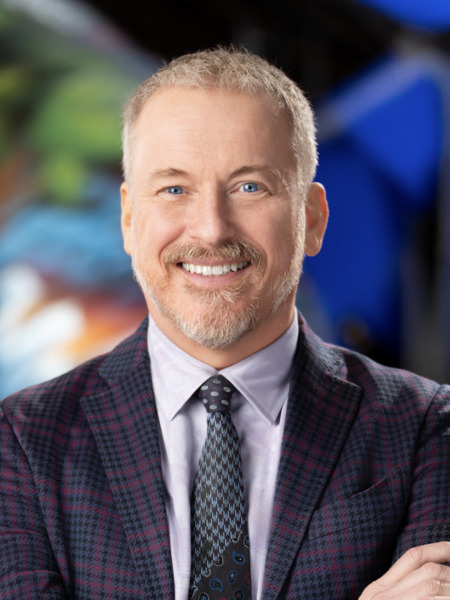
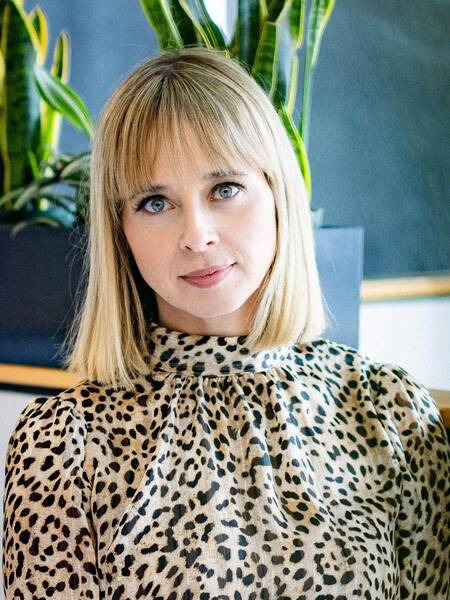
Please enjoy this transcript of Brian Lord’s Beyond Speaking Podcast Interview with Dr. Sahar Yousef, Cognitive Neuroscientist, Faculty at UC Berkeley. Her 10-plus years of research on “making superhumans” sheds light on how to improve focus, memory, and overall human performance in as little as six weeks.
Transcript:
Neuroscience Hacks to Boost Your Productivity Instantly with Dr. Sahar Yousef
Apple Podcasts
Neuroscience Hacks to Boost Your Productivity Instantly with Dr. Sahar Yousef
Podcast Episode · Beyond Speaking · July 29, 2025 · 30m
Dr. Sahar Yousef: We're looking at brains, and we're worried that if one does not actually continue to demand critical thinking skills, demand creativity, demand, truly, output from their brain, that just like any other muscle in this body, it will atrophy and it will weaken over time. And that's our number one concern at the moment is the overuse, the abundant and brazen overuse, of artificial intelligence, where you are underutilizing how important the human is in this puzzle.
Intro: Welcome to the Beyond Speaking podcast from Premier Speakers Bureau, featuring in-depth conversations with the world's most in-demand keynote speaker.
Brian Lord: Hi, I'm Brian Lord, president of Premier Speakers Bureau, and the host of the Beyond Speaking podcast. And our guest today is the great Dr. Sahar Yousef. She is a cognitive neuroscientist and faculty member at UC Berkeley Haas School, and she will teach us today how to become superhuman. And the focus of this is through the science of productivity and performance. She's been featured in Forbes, Wall Street Journal, Business Decider, just about everything else. She was also recently selected by Deloitte's Thinkers 50 as one of the top 30 thinkers to watch throughout the year and ahead. And she has also spoken to many top corporations. I booked her as well. And so Sahar, thank you so much for coming on and being part of the Beyond Speaking Podcast.
Dr. Sahar Yousef: Brian, thank you so much for having me. Super excited to be chatting with you today.
Brian Lord: I know, well, I'm excited to learn how to become superhuman. So I'm sure every kid grows up and wants to be superhuman. Then they get into their job, and things aren't quite what they think it is. And you help people to become superhuman, maybe a different way, not flying around. But in certain ways, I'm curious to know, what is your definition of superhuman?
Dr. Sahar Yousef: So glad you asked. It is true. No flying yet, no flying yet. But I will say actually, some of my old students helped name our lab at UC Berkeley, the Becoming Superhuman Lab, colloquially, of course. And so this isn't even a name necessarily that I helped create, but I will unpack the term becoming superhuman a little bit. So, first, the superhuman piece. In my humble opinion, as a biologist, the keys to becoming quote unquote “superhuman” is really to embrace all of the ways in which we are in fact very human. And that's actually the social commentary that I am making in the name in and of itself, truly. And that is that there are so many ways in which we work today and that we live today that's fundamentally misaligned with the ways in which our biology, our brains, and our bodies actually work best.
And my goal as a scientist is to, practically speaking, bridge that gap. Can we try to work more in line with how our brains and our bodies work best so that life and work doesn't feel like such a drag? We're not only more productive and efficient, but it also feels better. You should be happier, healthier, more well in every single possible way if we can start to bridge that gap. So becoming superhuman is really learning the blueprint of our biology and then working and living in line with it. And the becoming piece is that you never really arrive, right? Like with all the best things in life, it's not an outcome. You don't flip a switch and it's like, now I've done it and I'm done. I got the certificate, got my badge, I'm super huge, I've got my cape, Brian, and then I'm flying, I'm ready to go, I'm done. It's the fact that our bodies and our brains keep changing, right? We mentioned you got your job, your first job, maybe you're early on in your career. Well, I'm telling you, we all know this. Your brain and your body works a certain way, and then you hit mid-age, and then you hit your more senior years, and things are evolving and changing. And so we're never really done. It's this constant process of becoming and learning more about yourself and continuing to become whoever it is you'd like to be.
Brian Lord: Where do you think you are now compared to where you were on the superhuman scale?
Dr. Sahar Yousef: Oh boy. Well, I like to think I'm always in the same spot. Because everything keeps changing. So let's see. I would say, and I'll be giving you a truly very, very honest, transparent answer, and I’ve got no ego in this. I probably had dialed in quite a bit more about five years ago. Then my body started to change in mid-age. Then in addition to that, now in this last year AI has come out, and that's completely you know thrown–it's not a wrench, it's quite an interesting wrench–but it is new stuff and new adaptation is demanded and required for me, both professionally in what I do and how I do my scientific work, but also now what I teach and what I bring out into the world. So a lot of things have changed just this last year. So I think I've gone down a couple of pegs and now I'm in learning mode again and I'm trying to keep up with things and I'm adjusting, I'm making adjustments, both to my workflow, to the way I live, all of it.
Brian Lord: So in terms of productivity and performance, you mentioned AI. And that's I know that's something you get a whole lot of requests on. How does this fit in? And you're doing a lot of stuff there at UC Berkeley as well. So where do you think AI fits in if somebody wants to become more superhuman and how can it hurt them too? Like what's I kind of a double edged sword?
Dr. Sahar Yousef: Well, you said it beautifully. It is a double-edged sword. There are ways in which I can already see, and it's not just my opinion, but we are already seeing in the research, in the data, that human beings, especially those who are on the younger end, can misuse and overuse AI. The things to watch out for there, and I can tell you what my lab is keenly watching internationally at the moment, is cognitive decline and atrophy.
We're looking at brains, and we're worried that if one does not actually continue to demand critical thinking skills, demand creativity, demand, truly, output from their brain, that just like any other muscle in this body, it will atrophy and it will weaken over time. And that's our number one concern at the moment is the overuse, the abundant and brazen overuse of artificial intelligence where you are underutilizing how important the human is in this puzzle. The human is very important. So AI needs a driver. It's an amazing horse. It's an amazing car. It is truly horsepower. It's just taking a human and making it faster, but you're gonna need to learn to actually control the thing. So it needs to be led, it needs to be driven. We're not at a place where it can do it on its own. And honestly, thank goodness, because again, I'd be worried for some of the negative, more biological downstream side effects of the overuse of AI. But otherwise, it is a phenomenal accelerant and it's going to change the world. And we have to get on board with it for sure. There's no way that AI is not going to be in our businesses, in our homes, in our lives, in our society. So it's a matter of figuring out where that sweet spot is.
Brian Lord: So let's say you're talking to a CEO summit or a group of leaders or something like that. What advice would you give them, both personally, how they can develop but develop their companies as well?
Dr. Sahar Yousef: First take a deep breath. I'll be honest, Brian. I'm actually curious about yours as well. Like my first reaction when it was like the rocket ship was happening with AI and it was all over my newsfeed. It was just all over, and I was like, okay, okay, okay. But there was a part of me that was like, you know, this is none of my business. I'm like, are you kidding me? I'm running an organization. I'm running a lot.
I remember and Brian, you and I are, I think, probably, you know, similar age range. Like, I remember when we didn't have computers yet at home. Free of smartphones. I come from back in the day where I had to drive to the library to go answer a question. I've done a lot of adapting. I've been along for the ride for the digital transformation. Brian, I'm here for it. I got you. And not only that, being at UC Berkeley in the heart of Silicon Valley, are you kidding? Early on in my career, we've done digital transformation for Fortune 500, Fortune 100 companies for like 15, 20 years now. I kind of thought it was like we did it. Look at that. And then it was happening again. And I'm like, do I have to pay attention to this? Like, do I have to get fully on the train? And I remember sitting on the couch one night and my husband was like, “you know it's full, it's all in. There's no ignoring this. This is going to be it.” It’s like sitting on the couch, honestly, in the early 90s and kind of going, ugh, this internet thing, I don't think it's gonna be a thing. It's like no no no. There's no version of reality where you can just pretend as if you are a leader right now and you're running your organization, there is no ignoring it.
But I'm here with you and I'm here to take that deep breath. But there is no ignoring it. What we're all going to be left in the dust if so. So it's just a matter of figuring out strategy. And there are strategies. I will say that there are bad strategies too, though. So definitely get help, take a deep breath, get everyone on board, get everyone on the same page. Be intentional about it. Be intentional about it. And don't wait too long.
Brian Lord: Yeah. Do you have any that you've seen already that have taken it in a positive step? People you work with or companies you work with?
Dr. Sahar Yousef: Oh absolutely. I think Moderna's done a phenomenal job. I would say one of my prime examples or case studies of an organization very early on saying, okay, this is an accelerant. This is a jet pack for everybody at the company. Don't look at AI and just see, “we're reducing headcount.” I think a lot of folks fear it because they think that they're going to get replaced. And that's not necessarily the case. View it for what it is. What was Wi-Fi? What was email? You know, it is an accelerant. It is a way to strap on jetpacks and move faster in the direction of solving amazing problems and hard problems that we've all been trying to solve.
I am so excited to be able to be alive in a generation where I know, Brian, we're going to be curing diseases faster. We just are. We're going to be solving hard engineering problems a heck of a lot faster than we have been in the past. If you're in manufacturing, I assure you there's going to be positive changes. If you're not already on board with it, this is going to help people's lives in so many amazing ways. It's just not something to be feared.
But I would say Moderna is a really great example of a company that said, no, it's a requirement. We're all gonna use it. And the leadership, listen, there are no spring chickens. No, we're all in. We're all gonna figure it out together. Like let's all be both humbly scared, but totally go in headfirst into this and we're all gonna be fine. Let's hold hands and jump in.
Brian Lord: Yeah. What are the things you're most excited about? So obviously you have this, you know, the sort of the plus-minus with this. When it comes to productivity and performance, what are some examples that you've seen of people who've adapted some of these things so that they've been able to become more successful from a performance standpoint?
Dr. Sahar Yousef: Well, okay, well, still staying a bit on the topic of the best uses of technology, I would say the biggest leverage points for any organization is optimizing the way in which they communicate internally. Meaning we go in and we are addressing the number, the sheer number of meetings that people often waste time in. We have too many of them. They're taking too long, they're an inefficient use of time.
The most precious resource we have in our organization is not, in fact, money, Brian. It is time. It is the time of the people that is very expensive, that we are paying for anyway, right? It's a roundabout way of saying, like, yeah, it’s gross fiscal negligence to waste time. But is it unfortunately in 2025 the number one cause of not only fiscal negligence but also just general negligence within an organization. It's a number one cause of why people are not getting their best work done in a productive, efficient manner. And the number one complaint people have as it relates to burnout. So in general, it's the double edged sword of productivity, by the way. There was, yeah, there was a double edged sword, Brian, of AI, but there's also a double edged sword of productivity, which is you got to get the stuff done. You gotta get the right stuff done. So that's prioritization. You gotta get the right stuff done efficiently.
But you also can't burn out in the process. It has to be sustainable. So we do need to focus on whether or not our workflows are actually sustainable. We're attracting the best talent. We're retaining the best talent. And we're actually allowing them to get their most important work done in less time with less physiological stress. And in that pursuit, Brian, I would say the number one leverage point is to stop the misuse of technology and meetings in the pursuit of productivity. Leaving the notifications on, having two monitors and keeping email open and chat open off to the side and constantly checking that, allowing our employees to get interrupted, on average, every minute with some notif, one way or another, even if it's coming from a personal cell phone, we're getting interrupted all of the time. And our brains are not designed for it.
It is the number one, number one cause of decreases in productivity that we've been seeing internationally for the past few years, and the number one cause of burnout that we're seeing. We're just not designed for content interruption. So I'd say the misuse of digital stuff is really where I live and where I'm super excited to work with people on because it's easy to change it. Like in one hour, we can come in and we can teach you five different changes you can make to your phone and to your email right then and there in your seat that will make a huge, massive difference.
Brian Lord: Like what's one? So we want to get people to bring it in to get all five, but can you share one that you would recommend? And this part is called digital hygiene or no?
Dr. Sahar Yousef: It is digital hygiene, totally what I call it. It's your relationship with your devices and you gotta have good hygiene, right, Brian? I don't know. Absolutely. That's what we're all shooting for. So I'll show you my phone now. And can you see anything maybe vaguely different about this phone? It's just the fact that it's black and white or grayscale. Okay. So research from my lab has shown if you take your phone and you put it in grayscale or black and white like this, the average adult will spend one hour less unproductively on their phone every single day. So that's winning seven hours a week, Brian.
Brian Lord: So, like this is your kids' pictures and everything else. The entire phone the whole time is grayscale?
Dr. Sahar Yousef: Yeah, but watch this. Hold on. Okay. Actually, this is real. So hold on a second. This is my real phone. We did not plan this, by the way. Right. I'm back here. This is unplanned. Okay, well, this is a funny picture. Speaking of AI, someone sent me this photo. It's a chicken priest cow. Don't worry about it. Don't worry about the context.
Brian Lord: I have messy interviews. No one knows what's going on.
Dr. Sahar Yousef: Here it is. Yes, it's in black and white, but watch, if I triple click, which is an accessibility feature that I teach everyone to do during the keynote: click, click, click. If I triple click, it goes into color. So you can look at your kids' photos. You can look at, I don't know if anyone else is into Dogs of Instagram. You know, I got it. I know. We're all in the same boat here. I want to see my meatball recipe videos in full color. But then I can triple click.
Especially by the way, if you've got littles at home, if you've got kids, before you hand them that iPad or you hand them your phone to play with if they're asking for it, you can set it up, first of all, it can auto go into gray in the evening or weekends. So many parents will complain that “I'm checking email at this for Friday night, Saturday night. I'm sitting on the couch with my kids and I'm still finding myself kind of obsessively checking things.” This will help tremendously. And you don't have to stay in gray forever, but you can set up, you know, just functionality so that you can stay in gray and pop into color when you need and kind of bop back and forth.
Brian Lord: Yeah, that's great. That's awesome. I love it. That's very cool to have. So I'm looking at some other things. So we've talked a little about leadership. Let's talk about peak performance. So I know, you know, like I book a lot of times for speakers to talk at sales events. You've got your annual sales conference, your high performers conference. What are some different things that you can share when you speak to these groups?
Dr. Sahar Yousef: Okay, so say I love a sales conference. And I will say the top two areas that I not only love talking about, but I also find to be insanely high leverage at the moment. In the last five years, Brian, there's been new research coming out of top business schools on specifically influence, persuasion, and the psychology of getting people to like and trust you. And all I can we don't have enough time to dig into all of this, but things have changed.
The old school model of asking questions, shut up, don't talk too much–people like to talk about themselves so ask a lot of questions–old model. It doesn't work. People feel interrogated now. And we're looking into why. I think it's likely due to social media, YouTube, TikTok, you know, we are bombarded with people talking about their narratives and their stories. So when you get on the phone with someone, if you're a senior sales leader, you're trying to land the whale here.
The methods that we used 10 years ago, 15 years ago, are just not landing as well anymore. There's a new neuroscience of influence, persuasion, connection, and trust building. So that I have noticed in the last couple of years. If I'm asked to speak at a sales conference, it's going to be either on that topic, which is what our sales teams need to know about the science of connection that's new, that's hot off the press, so that they can stay competitive.
So there's that. And then the other is energy management. Because as you know, truly, it's not easy being in sales. We have to kind of stay at that peak performing 100%. I'm on my game, I'm on my A game all the time because it's not a fast job. Yeah, it's every day, it's relentless, it's all day. So I like to make sure that every time I speak with a sales organization, everyone walks away knowing what their biological genetic chronotype is. And this, by the way, Brian, was the 2017 Nobel Prize in Medicine. It went to three researchers who figured out humans don't have one, what's called a biological chronotype, which is, by the way, just a fancy term for morning bird, night owl, or what's called biphasic, which is two phases or two peaks, and that's a majority of the human population is biphasic.
But everyone should know what their chronotype is so that you can really leverage your peak performance window every day, about three hours long, where you are at your best. That is the time. Like if you're scheduling like a call, it's a huge deal. And you really want to put your best foot forward and you've got some say in when this call is getting scheduled, you can just keep giving them windows and time slots in that peak performance window because I promise you're going to show up better for it. And it's just going to be more likely to land the deal.
Brian Lord: Yeah, no, that's good. And yeah, because I found that was really interesting, the time thing. Cause I'm whatever that is at 10 a.m. And then most people are like, I'm dying at three. So like between three and five, I get a ton done. And I also that's why when I schedule these interviews, it's always like 10 and two. And so whenever I do those, the other thing too, you're talking about energy, because like I know I'm definitely like a I can't remember what it was, it was something like 20 years ago, but like a cheetah. So I can get a whole lot done. And I love what you're talking about, the sprints. I can get a whole lot done, but then I need like five or ten minutes to recharge. Like whenever I do an interview, like these takes energy I really enjoy them. They take a lot of energy. I'm gonna go watch five minutes of The Office when I get done and then I'll hop into something else, like a brain reset. So talk about those sprints. I really like the sprint idea that you had.
Dr. Sahar Yousef: Awesome. Happy to. And for this, I'm actually, by the way, I'm gonna totally riff on just using the concept of what a cheetah does. Okay. Because human beings, by the way, we're just fancy animals. That's like what I'd say. Like, right?
Brian Lord: Super human fancy animals. Love it.
Dr. Sahar Yousef: Really what we are. I mean, come on now. Like, I'm not comparing myself, I'm thinking about my golden retriever outside my office door right now. Okay, we're not that level of dopey and lovable, but we're we're fancy animals, but we're still animals at the end of the day. And all mammals, Brian, are designed for sprints and rest. Meaning we're not machines designed for sort of a 24-7 low hum where we are just humming along like a machine going for it for 18 hours a day, you can't do it. You will burn out that way. We're just not designed to work that way.
We're designed to work kind of like a cheetah. You run crazy fast and then you gotta conk out and take a nap and then get up and do it again. And by that, I don't mean actually take a nap. I'm not a napper myself. Not everybody can nap. We can talk to y'all about that when we talk about the science of sleep optimization and chronotypes another time, but it's not about napping, but it is about intentional, intense focus sprints.
Focus sprints are really the bread and butter of the research of my lab. And we study the most efficient and productive methods of working. How human beings ought to work if they actually want to again get as much done as they possibly can in the least amount of time with the least amount of stress. And a focus sprint is that. This is about 15 years worth of research on all the different methodologies, all the different steps we could do. Should we do this? Should we do that? What about what people do first?
We've studied it all. We're still studying it by the way, because again, as I said, AI really took me down a peg. So things are changing. I'm adapting again. But 15 years of research still, a focus sprint is still considered the best, most productive way of working. That's also again in line with our biology. So it's that thing we talked about in the beginning, right? You want to become superhuman, you ought to focus-sprint, take a couple minutes and rest, focus-sprint again.
The couple of things you ought not do–you should not do–that will totally mess up this natural biological rhythm so that you can't take advantage of it is distraction. Interruption again. It's the same stuff I was talking about before. You leave the notifications on, if you keep email open off to the side, you have your phone out, it's all these distractions that are coming in that literally interrupt your sprint. You need to allow yourself, even if it's 30 minutes, go heads down. Don't
keep any of the notifs on.
And I say that by the way, it's more nuanced than that. If you're a caretaker, you have little ones still in school, like I get you need to have what are called VIP notifications set up. And this is also, you know, part of digital hygiene. VIP notifications are you need to figure out who your, you know, VIP hit list is, your whales. Is it your spouse, your boss, your boss's boss? You need to figure out if this number calls me, texts me, emails me–you could do this in your email, you could do this in Teams, Slack– and we go over all the different ways in which you can kind of customize this, your phone, all of it. You’ve got to make sure the important things come through that might be an emergency, but everything else just stays behind the filter so that you can 30 minutes get a little bit of quiet and hear your own thoughts again and actually focus.
Get the thing done with lower error rates, by the way, too. Nearly 50% less error when you work with a focus print and you double the amount you can get done in the same amount of time. So it truly is just the most efficient way of working. When you do that, you sprint it. Now you need a couple minutes. You got to take a beat. And we talk about the science of brain breaks, like good ways to actually reset the brain so that you can get up and sprint again, like that cheetah, you know? If the cheetah is sitting in the corner scrolling on Instagram, it's not really a good break.
Brian Lord: I love it. No, that's great. No, I think that is so good. How does that work with you? Cause I know you talk about the biology of flow. So how do you get into that flow? So you've got the focus sprint. What's the difference between that and flow, and how do you get into that flow?
Dr. Sahar Yousef: Ooh. So some of the tips and tricks of getting into flow is having a routine. So I'll go, I'll rattle off a couple of tricks here. If you want to get into creative flow, try bumping yourself to a different location. Don't work at your desk. Don't work at the typical spot you're always at. Get creative here. Seriously. If you don't have anywhere else to work and you're like, “it’s so hard, I can't get out anywhere. This is it. This is where I am.” Try to make that environment feel and be a little different in some other way.
So what that might look like is playing music in your office that you typically wouldn't be listening to. So I have a creativity playlist where I want to get into flow for creativity. So if I'm doing a lot of, you know, more of my research and my science work, I'm problem solving, I'm coming up with solutions. I'm creating something that doesn't exist yet. I'm doing that kind of work.
I have a different set of music that I listen to, but Brian, it's always the same kind of music, but I only listen to it when I'm in that creative flow time. And so my brain over time will actually associate that music with creativity, with innovation, with getting into that flow for creating creative work. And even if I don't feel like it, if I'm not feeling particularly creative, if that music is playing and I sit down and I start playing it. And you could wear headphones, you can do whatever works for you. When you do that, you're gonna notice pretty quickly your brain just goes, “I know what's happening. I know what's happening.” And then it'll naturally want to fall into that flow state.
You can do the same thing for focus as well, which I highly recommend. So I've got a playlist for like if I'm doing emails and communication type work, if I'm just cranking through as many messages as I can, I have my communications playlist and I have my focus playlist. They're all different. And over time, again, your brain is going to associate these different brain states with that kind of what's called a stimulus of action. So in that case it's the music, but you could use lots of things. You could use a beverage of choice. You could have a certain kind of tea that you drink when you're in creative mode.
But again, you can't double dip. That's the issue. Yeah. So that's my little asterisk here. You can't, like, that playlist is ruined. You can't listen to it in the bathtub later or like playing T ball on the weekend with your kid. Like it's done. It's done. That's its own thing now.
Brian Lord: Yeah. I love it. Okay. We're almost out of time here. So now I'm gonna do a fun last question. Okay. Unless it's like a state secret, what is your Spotify, what’s your playlist for successful thinking or creative thinking? Just pick a playlist. What are the highlights of it that you can share?
Dr. Sahar Yousef: Ooh, okay. I can do the highlights because I listened to some weird music, Brian. It's not for everybody. But I would say instrumental. And I just want to make sure folks don't think I'm sitting around listening to Bach and Beethoven all the time. I'm not. I just mean lyrics in a language I don't understand. So right now I'm listening to a lot of like Mongolian throat singing. Just really into it. And so I'm actually doing a lot of reading to that at the moment. So right now I'm getting through a lot of reading because there's a lot of new research coming out on a variety of topics I'm looking into. So that's my reading playlist.
But I would suggest this for almost everybody. If you're using your brain, folks, don't also play words in a language you understand. So unfortunately, love her, but no Taylor Swift, right? Like you can't listen to music with lyrics in it. Otherwise your brain is going to be background processing those lyrics. So that's my quick tip on the music piece.
Brian Lord: Okay. All right. So be more creative. Mongolian throat singing. You heard it right here from Dr. Sahar. You just have to, and you know it counts because she’s got Doctor in front of her name. So that's awesome. Well, thank you so much for coming on and being part of this and sharing all this wisdom. I really appreciate it. For those who are watching, listening, make sure to check her out at PremiereSpeakers.com. And again, thank you so much for coming on and being a part of the Beyond Speaking Podcast.
Dr. Sahar Yousef: Thank you so much, Brian. It was a blast talking to you.