Transcript for Michelle Poler Interview on the Beyond Speaking Podcast
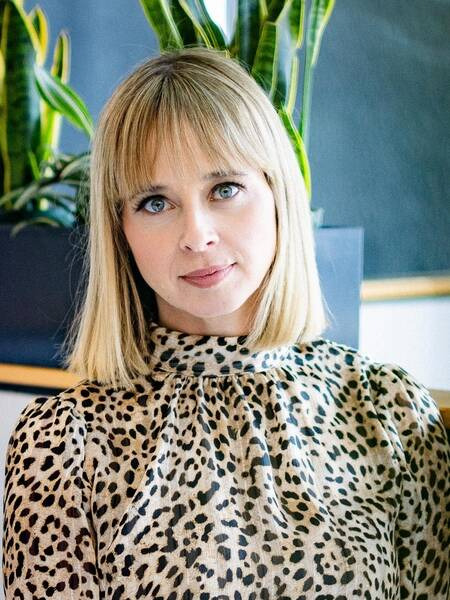
Please enjoy this transcript of Brian Lord’s Beyond Speaking Podcast Interview with Michelle Poler, founder of Hello Fears, a viral movement helping audiences worldwide build confidence, choose growth over comfort, and turn obstacles into opportunities.
Podcast Episode · Beyond Speaking · Jan 14, 2025 · 29m
Michelle: What happens is that people start to look outside and think that they have to do exactly what everybody else is doing, right? And it's so easy with social media. You're all the time looking at what everybody else is doing and you're thinking to yourself, I should look more like that. I should do more of that. I should have more of that. I should sound more like that. I should, you know, all these things, telling ourselves we are not enough. What we're doing is not enough. I need to be more like everybody else.
And so we forget about who we are. We start trying to be like everybody else. And that's when we become one more. And then we don't make it. We don't achieve our goals and we get frustrated. We never have what everybody else has. And that's really frustrating. So I realized that instead of comparing ourselves to other people, we need to contrast. That is my main tool. Contrast.
So the question I ask myself is, what is everybody else doing? And how can it be more me?
Intro: Welcome to the Beyond Speaking Podcast from Premiere Speakers Bureau, featuring in-depth conversations with the world's most in-demand keynote speakers.
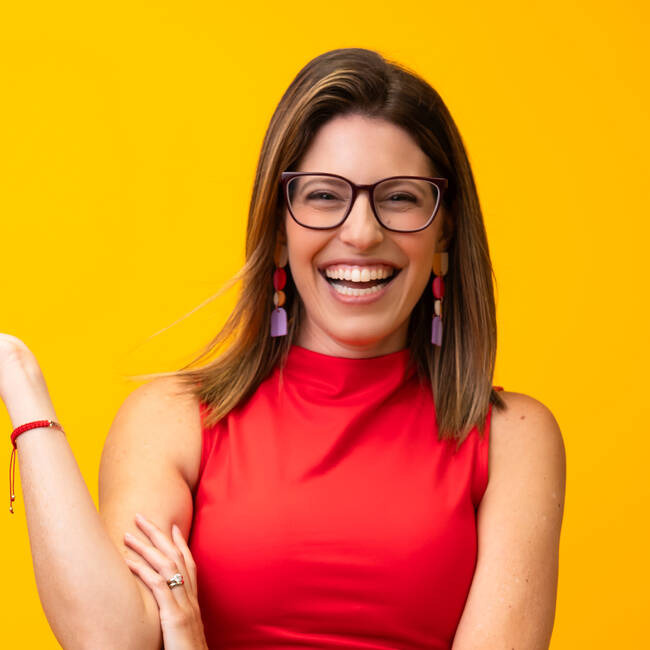
Brian: Hi I’m Brian Lord, your host of the Beyond Speaking Podcast. Our guest today is Michelle Poler. She is the founder of Hello Fears, a social movement that's inspired over 70 million people worldwide. She's a published author of two books and leads a membership community of thousands of women entrepreneurs. She's been in Forbes, CNN, The Today Show, HuffPost, Fox, and numerous international media outlets. She calls Miami home right now, but she's from all over the world, it seems like. So, Michelle, thank you so much for joining us on the Beyond Speaking Podcast.
Michelle: Thank you so much for having me. Yeah, I just want to say I'm originally from Venezuela.
Brian: Yes, yes. Well, that's what I was gonna get to. I mean, it's very cool. Like I I kinda like that's one of the things I know a lot of event planners like is having somebody who obviously is great, every audience likes you, but having somebody that's got that international background that at least for US audiences, to have somebody that's a little bit different and fresh and new and I think that's something that a lot of people really like.
Michelle: A lot of people thank me because they're not used to having a Venezuelan or a Latina on stage at these huge events, you know, and it's not like for Hispanic heritage or nothing related to, you know, the fact that I am Venezuelan. It's just their normal event and suddenly they see me on stage and they thank me and they say I'm so inspired to see somebody like me there. Like I'm not used to that. So it's I think aspirational for a lot of people.
Brian: Yeah, no, and it's great. I was just talking to Katie, who's one of the agents here, and she was just saying one of the things I love about Michelle is it's kind of like honest energy. So it's not energy just for the sake of energy, like you actually are like that type of person and it comes across as authentic. How do you think that affects audiences when you come on stage?
Michelle: It's just very relatable for them. And I realize that's sort of the key ingredient of my success. And when I say my success, it's the success of my keynote and the impact that it has on the audience. That's the success. It's when people not only listen to the presentation, but they take action. And I feel that the key is that they can relate so much to the person on stage, me.
And what I say is that it's so interesting because when I start the presentation, you know, I start dancing, reggaeton, you know, and and they're looking at me with these big eyes, like, what's going on? What did I get myself into? And all this. I start with a lot of storytelling and jokes and all this, and they're very engaged. And halfway through the presentation, you can see their eyes, they stop looking at me and they start looking at themselves.
They start seeing themselves on stage, their most accomplished selves, their most brave selves. That's who they start seeing on stage. And they start thinking, wait, if this girl did all of that, she faced all those fears. And now she's on stage because of it. What can I do? What's my potential? Can I be on stage? Can I do something great? Can I impact other people's lives? Like she's impacting my life right now.
So it's super interesting because they end up like they leave the presentation so charged with this energy of I can do anything. And they want to put it to work and it's like putting it to the test, you know? And I always tell clients, like, if you ask me, I rather always open presentations like events instead of closing them, because people leave with a lot of energy and courage that they feel they want to do something about it.
Immediately they want to raise their hands more or interact more, network more during the events, and they feel like they need to start testing what I just told them, like through my example, through my tools, through the mindset that I'm there now in through the whole presentation. And when I close, they go home to their kids, to their wives with all this energy. And they're like, how do I use this courage now?
Brian: That's awesome. Well, I mean, the energy you have is amazing. And you're talking about bravery. So I know if people have watched your video, they see like tarantulas and helicopters and jumping off cliffs and everything else. And you say that you were a very fearful person. So how does that person go from A to B? Like how did you become or start to become who you are?
Michelle: I think that my key driver has been my ambition. I've always wanted to do something great, like become someone, you know? And I got to this point where I realized that my fears were keeping me from living the life I want to live, from fulfilling all that ambition. And for a long time, I used to think that I could achieve anything inside of my comfort zone. I always say that I could do that because I graduated from high school, from college. You know, with two masters, you know, everything, I got married to the love of my life. So I got a really good job in advertising. So I was checking all the boxes inside my comfort zone. And I'm like, there you go. You don't need to leave your comfort zone to achieve things. And suddenly those check boxes, I don't know, like those boxes started being so small. And I was like, I want more. I want to be successful. I want to be on stage one day. I want to impact people's lives.
And I think that's the line. If you want to cross that line, you have to start getting uncomfortable. That's when I decided that it was time for me to face my fears if I want to take my life to the next level. And it, as you know, went crazy. Like I started facing my fears. The project went completely viral. And suddenly, you know, I was speaking on TEDx. And right now, right after that, I started getting booked and I became a speaker, quit my job in advertising, and my husband quit his job in finance to do this full time with me. Now we have a huge community and I always say that the universe rewards the brave when you do something brave intentionally. Like you don't wait for the universe to do a brave thing, but you make the decision to do it, you'll see how things will start to play out.
Brian: And so when you were facing your fears, like maybe what was the first one and what's been the hardest one?
Michelle: The first fear was to accept the fact that I'm going to start facing my fears from this point on, like something I avoided throughout my entire life. And I always said no to something that was a little bit uncomfortable, like immediate no, saying yes to all of those things that I said no for years. So saying yes to this project was the first fear. Then the next fear was I think trying oysters for the first time.
Brian: I haven't done that one yet. I just saw some people try oyster for the first time. I'm like, I'll pass.
Michelle: So, and then I got a piercing. So I started doing smaller things that I knew I avoided for a long time, but they weren't gonna kill me. And then little by little I started to increase the level of difficulty until I, well, if you ask me about hardest fears, definitely the last one speaking at TEDx, public speaking, I think that's a huge fear for so many people. It was my first time in front of an audience, and also the time when I realized this is what I want to do for the rest of my life. But trust me, minutes before going on stage, I was regretting so hard my decision to speak on TEDx because I was like, this is so scary. Why do I do this to myself? That's the question I was asking.
Brian: That's crazy. So your biggest fear is your career.
Michelle: What's my career? Now I think that after doing it for so long, I got a little bit more comfortable. But also I always tell people like you can't get comfortable because that's when you need to go to the next level. So that's why I decided to launch a new talk. And I have to tell you, it takes me back to my beginnings. Like creating a new talk from scratch, trying it, learning it again by heart, like all these things. It's very humbling. And it's even harder than the first time because it was my first time creating a talk and putting it together and seeing how this works. I have no idea, but now I have something to compare it to.
And fear less, do more. My first talk is at a point that it's just flawless at this point. Like you can't change anything about it. I know exactly when people will cry, laugh, clap, stand up, dance, everything, and then irreplaceable. Now I'm like, which is my new talk. I'm like, okay, how do I get that to this level? And that's what I'm working on right now. And I'm really excited because it's getting there.
Brian: Well, I mean, obviously that is great because you've got that one thing that's already really set, which is fear less, do more. And the new one will be irreplaceable. Why did you choose? There is a lot of stuff you've been speaking on for a while. There's a lot of things you could have spoken on. Why did you choose this?
Michelle: I started realizing that a lot of people were attracted to me as a brand. And they wanted to learn that from me. They were like, yes, all the courage, everything you inspired me. Thank you for that. But now I want to learn how you did it. Like, what's the behind the scenes to creating a movement, to creating a brand that so many people feel drawn to? And so I didn't know I started branding and I've been working in advertising and design and all of this for my entire life. So for me, it was like a whole challenge to look inside and figure out exactly what I did step by step to create this brand.
So I did that throughout the pandemic. This was like my pandemic challenge to figure this out. And I started trying it with my audience on Instagram. I started selling my course called How to Sell Authentically and Unapologetically Without Sounding Tales. It was like a whole course. That I started putting out there, and people started changing their lives through this course. They were saying, Michelle, you're not teaching me how to sell, you're teaching me how to fall in love with who I am, create a brand that is so authentic to me that I feel so comfortable putting myself out there. Like, and I started seeing the confidence that people had before taking the course and after taking the course, and it's completely different, like the energy.
How they sell themselves, how they talk about themselves in such a different way, with such confidence about who they are, just embracing who they are as they are, not like realizing they don't, they're already enough and they don't need to become anybody else. They have everything they need inside of them. It's just a way of seeing themselves differently. So it's like a whole transformation. And I thought more people need to hear this without having to take a seven-week course, right?
And so I put everything together in this talk that was called Unapologetically Me. It's how to become you unapologetically. But then I had a really interesting conversation with one of my best friends. And she said, Michelle, I started using Chat GPT. This was about a year and a half ago for the first time. And she was like, I'm blown away. We are completely replaceable by technology.
I started asking the tool all the questions that my audience asked me, and the odd answers were even better. And I thought to myself, like, something deeply bothers me about what she's saying. And I can't figure out what it is. And immediately I told her, I am a hundred percent irreplaceable. And she was like, You sound super confident saying that. Like, what makes you think you're irreplaceable? And I said, You know what? I realized people don't want to learn how to become a speaker or how to create a brand.
They want to learn how I did it. That's the question I get asked. They're always like, how Michelle Poler did this? If they want to learn from me, not just anybody, then I'm irreplaceable because I created my own journey. The way that I teach this isn't very particular, like the way I talk about values and color and branding and all that. Only I can do that. And then I went back to my husband and I'm like, Adam, am I crazy for thinking that I'm irreplaceable?
And then he told me, Michelle, this is exactly what you teach people how to do. You're not crazy. You are irreplaceable and people become irreplaceable after they hear your message. And I'm like, that's the name of the new talk. So we changed the name to Irreplaceable and now everything feels perfect.
Brian: Well, so I'm curious to know what when people on the journey to becoming irreplaceable, you said one of the things that people when they were taking your course, they weren't loving themselves, they weren't confident in themselves. What are those biggest barriers that people have to becoming able to love themselves or be comfortable with themselves or confident in themselves?
Michelle: Comparison. Comparison is the biggest barrier because what happens is that people start to look outside and thinking that they have to do exactly what everybody else is doing, right? And it's so easy with social media. You're all the time looking at what everybody else is doing and you're thinking to yourself, I should look more like that. I should do more of that. I should have more of that. I should sound more like that. I should, you know, all these things. Telling ourselves we are not enough. What we're doing is not enough. I need to be more like everybody else.
And so we forget about who we are. We start trying to be like everybody else. And that's when we become one more. And then we don't make it. We don't achieve our goals and we get frustrated. We never have what everybody else has. And that's really frustrating. So I realized that instead of comparing ourselves to other people, we need to contrast.
That is my main tool, contrast. So the question I asked myself is what is everybody else doing? And how can it be more me? What can I do differently? So that's why when I started being a speaker, I started like that, just looking around and thinking, I should dress like that. I should have this kind of slides, you know, all of it. Like my slides were black and white and yellow, like very toned down.
And it wasn't until I decided to start designing for myself and liking myself that I started being actually successful. That's when I was like, I should start my conferences dancing reggaeton just because it calms me down. And I love this music. So I want to start with that kind of vibe, even if they don't like it. You know, so I do all these things for myself and I enjoy it so much. And I think that energy is also very contagious.
Brian: No, that's great. I think that is an important part of it there. I know the things kind of go together, you know, dealing with fear and becoming irreplaceable. Where do you feel those two presentations kind of merge together? Not so much they repeat and you could have someone who would do something else, but where does fear or overcoming fear fall into becoming irreplaceable?
Michelle: So one of the biggest fears, if you ask me what people's biggest fear is, and I would say is disappointing others. And in that fight for not disappointing people around them, like their boss, their coworkers, their community, their family, their friends, they start to fit in and they start to make decisions according to what other people expect from them.
And they stop asking themselves, what do I want? And then it's really hard to have the courage to pursue that. So we just, you know, end up toning ourselves down. That's why in Irreplaceable, I ask people, what is your tone? But what is your real tone? Not the tone you feel you have to have.
Like I have to be very serious at work. I have to behave well. I have to be, I have to be liked by everybody. And what I tell them is you don't need to be liked by everybody. You just need to connect with the right people. You need to attract your crowd. And it takes courage to accept that not everybody will like your tone and that is okay. I know a lot of people don't like me or my tone. And at the same time, I attract a lot of people and I'm fine with that.
So it takes a lot of courage to be who you are. And that's where it all started. When I was doing my fear less and doing more, there's a section where I talk about the three different fears, the universal fears, cultural fears, and personal fears. But cultural fears, that's where it frustrates me the most, is to see people not be their authentic selves because of the fear of not fitting in.
And so I want to talk more about that. And that's where Irreplaceable is born. It's all about the cultural fears that limit our authenticity. We feel like if your tone is to be sarcastic, be sarcastic the whole time. Like that's fine, you know, like own that as your brand. I feel that's refreshing, also, right? If your tone is to be, I don't know, very skeptical, be skeptical. That's great. We don't have to all be, you know, so cookie cutter.
In fact, what I tell people is one of the things we should figure out is what's the enemy of your brand? Who's your enemy? Like in your enemy, not as a person, but as a concept. What is something that you, you know, you're so against that everything you do in your life is to fight that? And in my case, I realize it is generic. I hate generic things. Everything that is generic, don't take me there. Don't, you know, present me with a person that is generic. I don't want to know them. So I fight against being generic and all of that. That's why I care about people being different, being themselves, being unique, even if that means embracing all of who you are, even the things you don't love about yourself, that's also an important part of who you are.
Brian: How does this benefit companies? Let's say they bring you to speak and the audience is hearing this. How does that benefit a company?
Michelle: That's a great question. And I think that this is what I've seen in my own community. Because I care so much about empowering people and making them feel valuable, like they are so valuable. What I see in them is that after they see their own worth, they start raising their hands more. They start putting themselves to the to what's the word? Like, available to everybody else. Like they put what they bring to the table out there because they see it, because they trust it. Because when somebody doesn't trust what they bring to the table, they don't see their own worth. And you ask them, who can help me with this? They would say, no, probably there's someone better than me to do that. But when they see themselves and they trust what they say, I will help you. I can do that. I can edit that video. I can help you brainstorm ideas.
And it's because they start seeing that they are creative. They are worthy. They are, you know, bold. And so I think that's the best way that people can add to a company is by being very confident about what they bring to the table so they can actually put it in the table and not keep it to themselves.
Brian: So I know kind of leading with that, like putting yourself out there, whether that's just in sort of rank and file or as a leader, I know one of the other things you talk about is abundant leadership. Can you talk a little bit more about that and how that plays into it as well?
Michelle: Yeah. So I realized as a speaker that there were two kinds of companies. And this took me years to figure out after having contact with so many companies. I started seeing, I like this company that hired me. And for some reason, I don't resonate with these companies. And I and you could see it in the things that they would ask from my presentation.
So there are companies that you can tell they care a lot about the humans that work in the company, right? And they're like, We just want you to empower them in their personal lives because we know that if they're feeling good in their personal lives, they'll be great in the office, you know, like they'll have a different energy. And so the companies that focus a lot on the individuals and really cared about them as a person, not as an employee, right? We're very different from those who were like, please do not mention entrepreneurship. Do not say this. And I was like, wow, they're trying.
And what I realized is that there are abundant companies and companies that have more of a scarcity mentality. Like, I don't want anybody to take away my employees or all of that. I don't want my employees to open their minds because then they will leave, you know, all of that. That's more of a scarcity mentality. And after going to the events and meeting the employees, what I realized is that people that work in the abundant mentality companies wanted to stay way more than the ones in the scarcity. So they wanted to keep people, they are good about empowering people and what they're getting is people that feel like they belong and they feel so valued and it's true, it comes from a good heart, you know, from a good place that they want to empower them. And I was like, wow, I can totally see the difference. And even me, I thought if I ever have to get employed, I would go to one of these companies, right?
And that's when I started realizing the impact of abundant leadership, and it's leadership that comes from the desire to give to your people and instead of always trying to think what can you get? And it's what I see in my own community. Like the people I have this community for entrepreneur women. We already have over a thousand people in my community and they're from all over the world. It's in Spanish, so they're from Latin America, but they're all over the world. And there are leaders in the community that started emerging. And what I realized is that they came to the community wanting to give all the time since the first day they're here, like, how can I help you guys? I do this. Like, they see somebody that's struggling with sales and they're like, I know about sales. If you want to talk, I can just help you.
And there are other people that came into the community thinking, what can I get from this community? And they start trying to sell something from the beginning, and they didn't end up with nothing. But all the other leaders started having, you know, like following inside of the community and they became true leaders. And I'm like, wow, they are being abundant. And that's what they also I think get from me. I am always thinking, how can I make their lives better? How can I give them or how can I use my own exposure for them? So they have exposure. So they have everything I learned. So I never keep anything to myself. And I always like when I teach, I give you everything like good things, bad things, I don't mind. And that's what I call abundant leadership. It's all about giving to the people and realizing that when you do that, they will give you back.
Brian: So all right, so last question here. So you can pick whether this is personal life or business life or speaking or whatever it may be. So what is either one way you're becoming more irreplaceable or one fear that you're trying to overcome right now? You could pick one. Irreplaceable. How are you becoming more irreplaceable? Or how are you becoming more brave this year?
Michelle: Whoo, my gosh, this has been such a challenging year. So wow, I can answer both and I'm like, which one?
Brian: You could pick one. Irreplaceable. How are you becoming more irreplaceable? Or how are you becoming more brave this year? I mean you can do both.
Michelle: Okay. All right. How am I being okay, how am I becoming irreplaceable? I'm like, my gosh, I better give a good answer here because that's all I'm talking about. It's all okay, so this is what I'm doing. This has been a challenging year. And instead of hiding that, because it's really easy to hide it to the public eye, right? And pretend that everything is great. That I have everything figured out. That literally is like my speaking is going great and my company is doing great and my marriage is doing great and my you know family and everything. It's so easy in social media to do that, and that's what most of the people do.
And so the way that I become irreplaceable is by sharing the whole story. And that's what I continue to do every single time. My community knows exactly everything that I'm going through as I am going through that. And that's why they trust me so much. And that's why they always tell me I'm never leaving this community because you're such a real person. You're a true leader. I never had like if it's really hard for me, let's say, to get the membership going and always bring new members in. And you know, I'm so open about that. And I always tell them all the challenges and all the truth behind it.
And I know this is a risk. Because I am telling them, you know, you say you want to learn from me. I'm supposed to be your mentor. I'm supposed to have everything figured out. And at the same time, I'm telling you I don't. And yes, I am taking a risk by doing that. And at the same time, I know they're trusting me. By doing that, I increase their trust so much that they just want to continue learning from me. And so what I do is I always stay very human and very flexible.
And I always tell them, I am just learning, you know, with you. We're all entrepreneurs here. And as much as you're learning from me, I'm also learning. And my mission is to teach you what I learn as I am learning it. So that's my way of becoming irreplaceable is just owning 100% of who I am and what I'm going through.
And then how I'm going to be brave this year. Well one thing that we have we want to do is we want to become parents again. We only have one. He's Noah, he's four years old. He will be four years old very soon. And thinking about having another one is very scary because we know now what it takes to have just one. So then adjusting our entire life for that also, making really hard decisions that, you know, will help us be more present parents when that happens and all of that.
It takes a lot of courage to make those hard decisions, but because, you know, we believe in what we're doing, we believe in ourselves and we know we have a long journey ahead to to you know be back on track and and everything. But yeah, it's hard. It's a really tough decision, but it's something we really want to do.
Brian: Awesome. Well, thanks. I know we didn't prep for that part at all. I was like, yeah, I was authentic once. So you can tell she's being authentic right now. She didn't know those questions were coming. I gave her some other ones. That's a new one. So anyway, well, Michelle, thank you for being here.
For those who are watching or listening, you can go to premierspeakers.com and check out Michelle Poler there. And as you make sure to subscribe, rate, and review if you're checking this out too. And Michelle, thank you so much for being on and sharing your wisdom and vulnerability on being brave and being irreplaceable and being a great speaker as well.
Michelle: Thank you so much. Thank you for having me, Brian.
Outro: Thank you for joining us for the Beyond Speaking podcast. To learn more about today's guests, visit PremiereSpeakers.com. Make sure to subscribe and leave a review wherever you listen.