I don't think enough people are talking about vulnerability He was very vulnerable, and I think that encouraged the audience to be vulnerable. I definitely took a lot away from this presentation.

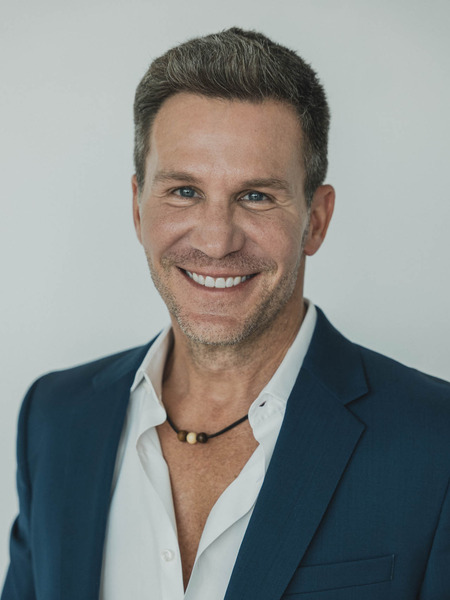
Judd Shaw
Keynote Speaker & Author on Conscious Bravery | Founder, Brave Ideas Co.
Profile Links
Fee Range
$10,000
Judd Shaw
Biography
Judd Shaw is a keynote speaker, author, and founder who works at the intersection of authentic leadership, organizational culture, and human connection. For more than two decades, Judd has built and led one of New Jersey’s most successful law firms. By every external measure, the organization was a success. His face was on billboards across the state. The firm was thriving. Clients were well served. The team was delivering. But a personal reckoning forced Judd to look at himself honestly, and the inner work that followed changed how he showed up as a leader. When he brought that shift back into the firm, his team didn’t just accept it. They preferred it. And the organization got measurably better. Retention strengthened. Decision-making clarity improved. Trust accelerated execution.
Through that process, Judd came to see something he now brings to every organization he works with: something doesn’t need to be broken to be made better. When leaders begin to operate more honestly, not more perfectly but more presently, something measurable changes in the culture around them. The leadership habits that build a high-performing organization are not always the ones that take it to the next level. He measured what shifted. The results documented inside his own organization form the evidentiary foundation of his work: authentic leadership is not soft. It is brave. And it is the infrastructure of sustainable, high-performing culture. His keynotes are built on that proof. Tailored to the specific moment an organization is in and grounded in a conviction he can back with data: the leaders who will define the next decade are not the most charismatic ones. They are the ones who can tolerate uncertainty without abandoning integrity. Judd is the author of How to Live Authentically: The Surprising Cure for Loneliness and Disconnection (May 2026). He is the host of the Behind the Armor podcast, the founder of Brave Ideas Company, and the president of Judd Shaw Injury Law. He also writes the Sterling the Knight children’s book series.
Judd Shaw
Featured Keynote Programs
The Brave Space
Authentic leadership as the infrastructure of high-performing culture
High-performing leaders are rarely afraid of hard decisions. They are afraid of the pause before the decision. The moment where certainty hasn’t formed yet, but the room is watching. Not because they lack courage, but because the habits that made them successful have become the default. Projecting certainty. Forcing outcomes. Performing strength. Avoiding the messy middle. Those habits build organizations and drive results. They also quietly limit range, reduce dissent, and create internal friction that compounds under pressure. Judd Shaw knows this firsthand — not from research, but from rebuilding one of the most successful law firms in his region by redefining how leadership operates under pressure. He shifted how he showed up, brought that shift to his team, and measured the results over two years through anonymous employee surveys. The impact was clear. This keynote names that pattern and offers something more useful than inspiration: a framework for the specific leadership condition required for authenticity to operate under pressure. The Brave Space is not a mindset exercise. It is the structural condition that determines whether honest leadership can actually emerge in a room, and whether the culture around a leader will reflect their values or merely their defaults.
The Brave Space is operationalized through a three-part leadership discipline: Notice when your instinct is to rush, control, or shut down. Stay long enough for honesty, dissent, and clarity to surface.
Choose a response aligned with values, not self-protection. This discipline is designed to be repeated without a facilitator in the room. It gives leaders and teams a shared practice they can return to in any high-stakes moment — in meetings, high-stakes decisions, difficult conversations, and the uncertain moments between them. Organizations don’t fail because their leaders lack intelligence or ambition. They plateau because the leadership habits that drove early performance create internal friction that compounds over time. This session gives leaders the awareness to recognize that friction and the framework to reduce it. So that what they’ve built can go where they need it to go next.
This is the keynote for organizations that have outgrown inspiration and need infrastructure.
Audiences Gain:
A repeatable three-part discipline — Notice, Stay, Choose — that teams can operationalize immediately
A framework for creating the conditions where honest leadership can emerge
Tools for navigating uncertainty without defaulting to false certainty
Greater alignment between values, behavior, and decision-making under pressure
Practical strategies for building cultures that can tolerate the tension required for real growth
Best For:
Senior leaders Executive teams Leadership development programs
Organizations navigating transition or scale
The Power of Authentic Connection
The Surprising Cure for Loneliness and Disconnection
From the outside, Judd’s life looked successful. He was a thriving attorney, leading a growing firm, building a public profile. On the inside, he was privately struggling. Behind the performance and achievement lived isolation, addiction, and a growing disconnection from himself and the people closest to him. This keynote is the story of what happened when the distance between who he appeared to be and who he actually was became too great to sustain. Judd shares his journey through addiction and recovery, the identity patterns that kept him stuck, and the rebuilding process that transformed how he lives, leads, and connects. Drawing from his book, How to Live Authentically, he introduces The Connection CURE, a practical path for moving from isolation to alignment. Not through willpower. Through honesty, self-awareness, and the courage to ask for help. This is not a talk about addiction alone. It is about the universal experience of looking composed on the outside while struggling internally. It speaks to professionals, leaders, and individuals who feel alone in rooms full of people, and offers a disciplined, actionable way back to authenticity. If loneliness and disconnection are the problem, connection is the cure..
Audiences Gain:
A lived example of recovery that includes the setbacks, not just the breakthrough
A practical framework for understanding how disconnection drives suffering and how connection heals it
Insight into how coping mechanisms quietly replace one form of hiding with another
Permission to rewrite their own story, without shame
Best For:
Mental health conferences Treatment and recovery spaces Healthcare systems
Education HR wellness events Organizations invested in well-being
Judd Shaw
Featured Reviews
Frequently Asked Questions
Quick answers to some of the most common questions about booking Judd Shaw for your event.
How do I book Judd Shaw for my event?
Booking Judd Shaw with Premiere Speakers Bureau is a streamlined 4-step process:
- Availability Check: Contact us with your event date and budget to verify if your desired speaker is available.
- Hold Date: We place a temporary "hold" on the speaker's calendar while you finalize internal approval.
- Contracting: We issue a contract outlining the fee, cancellation policy, and event expectations.
- Logistics: Once signed, our event management team handles all travel booking, itinerary, and AV requirements.
Why should I partner with Premiere Speakers Bureau rather than contacting speakers directly?
Partnering with Premiere Speakers Bureau provides a comprehensive safety net for your event that direct booking cannot match. You get the same speaker for the same price, but with a dedicated team with over 30 years of event experience handling contracts, logistics, and are prepared for any emergency. We know what it takes to run an excellent event.
What makes Premiere Speakers Bureau unique compared to other agencies?
Premiere Speakers Bureau distinguishes itself by having over 30 years of experience while partnering with more than 35,000 events. PSB has also built a streamlined, fully online process that makes booking a speaker, handling travel and payments extremely easy for anyone looking to plan a speaker led event.
How does Premiere Speakers Bureau's 'Zero Cost Service' model work?
Premiere Speakers Bureau operates on a 'Zero Cost Service' model for event planners. Our services—including research, booking, and logistics—are always free to the client. The speaker covers our commission from their standard honorarium as payment for our role in marketing and managing their engagements.
How are speaker fees structured, and what is typically included?
A speaker's fee typically covers the keynote presentation, a pre-event planning call, and standard customization. Travel expenses are usually billed separately.
What are the standard policies for speaker travel and expenses?
Travel expenses are negotiated during contracting. We generally recommend a flat travel fee for simplicity, though we also offer line-by-line invoicing when preferred. PSB ensures these expenses adhere to professional standards, and our Event Portal allows for easy tracking and invoicing.
Popular Speakers
Kim Bearden
Best Selling Author, Co-founder at Ron Clark Academy, and National Teacher Hall of Fame; Organization Culture / Climate and Communication Specialist
Alex Weber
Be Unstoppable! with Leadership & Performance Expert, American Ninja Warrior, & Acclaimed Author
Daymond John
Founder/CEO of FUBU, Presidential Ambassador for Global Entrepreneurship, Star of ABC's Shark Tank and CEO of The Shark Group

Liz Bohannon
Top 1% VC-Backed Female Founder & CEO and Bestselling Author of Beginner’s Pluck: Build Your Life of Purpose & Impact Now

Deion Sanders
Pro Football Hall of Famer, Two-Time Super Bowl Champion and Coach

Dr. Jessica Kriegel
CEO Advisor and Doctor of Leadership, Best-selling Author

Dr. Ben Carson
Former US Secretary of Housing and Urban Development / Conservative Political Thought Leader / Renowned Pediatric Neurosurgeon

Jon Acuff
One of INC's Top 100 Leadership Speakers, New York Times Bestselling Author of Soundtracks, Finish and Do Over