Transcript for Derreck Kayongo Interview on the Beyond Speaking Podcast
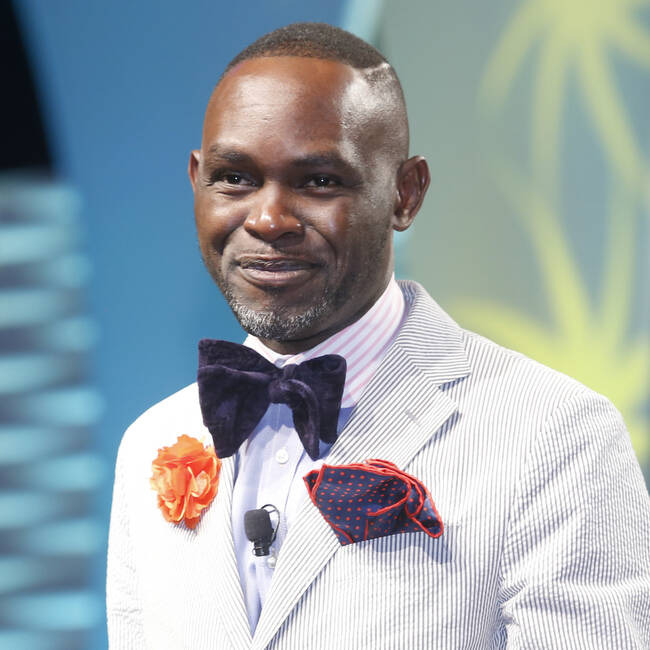
Derreck Kayongo, CEO, visionary entrepreneur, and founder of the Global Soap Project, shares his incredible journey from being a Ugandan refugee to becoming a successful business leader. He discusses the importance of power networking, innovation, and resilience, and explains how companies can achieve purpose-driven profit. Derreck also reveals how his initiative to recycle hotel soap has made a global impact, improving hygiene and reducing waste.
Podcast Episode · Beyond Speaking · June 11, 2024 · 27m
Derreck: Big ideas need big advocates and big friends. I call that power networking, not just networking. Networking is the usual, you know, you go to a power where somebody gives you their card up. But power networking is based on you making connections with people and telling them what you want to do. And say, Do you know anybody who can help me with this? And that question, do you know of anybody who can help me with this?
Based on you telling the story like I'm telling you, I want to recycle soap from the hotels, but I know if I go to the hotels, they're gonna be looking at me like, my goodness, this former refugee, yuck, first of all, number two, we're all gonna get sued. I mean, come on, there were so many impediments. But the more I saw impediments, the more I knew this was a really good idea. Because most people, when they see impediments, they run off. So I met a woman called Vicky Gordon, who was the vice president of external relations for the Hilton Corporation. And we sat in a coffee shop, I drew the idea, she said, Derreck, I had never even thought about what happens to that soap.
Intro: Welcome to the Beyond Speaking Podcast from Premiere Speakers Bureau, featuring in-depth conversations with the world's most in-demand speakers.
Brian: Hi, I'm Brian Lord, your host here of the Beyond Speaking Podcast. Our guest today is Derek Kayango. He's a CEO, visionary, entrepreneur, human rights activist, and the founder of the Global Soap Project, which I'm excited to hear about. From a Ugandan refugee to a successful business leader, and he's done a great job speaking for my clients. One in particular has booked him at least six times.
So Derreck, thank you for coming on, Kajumbo and Oliot. That's the only Luganda I know. So I know I know a little bit of Swahili, but that's the extent of my Luganda. So I'm glad I was able to drop that in there.
Derreck: Yeah, that would get you out of jail any time. I mean that good one.
Brian: Yeah, if I'm ever in jail and Kampala, I know what to do. So anyway, you've got this incredible story. You're in Atlanta now, but you didn't start there. So, can you tell us kind of your journey to at least the five-minute version of that to how you got to where you are now?
Derreck: Yeah, so I came to go to school in the States after the encouragement of a lovely, lovely lady called Marge Campbell from Pittsburgh, who came to take care of us as refugee kids. And after she saw my talent, she said, you know, Derreck, you need to get out of here and go get an education.
So I landed in the city of Brotherly Love, where Brian, I found this amazing discovery. It was in my bathroom in the hotel that I was in, they had three bars of soap, and they were facial soap, body soap, and hand washing soap. And I said for the life of me, why do they have soap for every part of their body? Now, my father was a soap maker before the war began. And he never talked to me, Brian, and said one time, Derek, that is your butt soap. Don't use that for your face. That's your face you're doing. So I was shocked.
So I took the two bars, put them in my bag for another day, and every day they would bring back more soap. So I would steal them. And then I realized they're gonna charge me for it. So I took them back and gave them to a concierge and the concierge started laughing. He said, “Why were you giving me soap?” I said, “Because you're gonna charge me for it. I don't have the money to pay for it.” He bust up laughing and he said, “Derek, are you African? Are you Nigerian?” Because you guys all think we're Nigerians. And so that became my journey of thinking about recycling soap. And then we built a global soap project after that. And here we are.
Brian: That's amazing. So I'm curious to know, is there anything you could say about your journey from Uganda? And for those who don't know, maybe say where that is. Like I've studied Africa a bit, but just so people have an idea of where that is on a map.
Derreck: Yeah, so it's in the heart of Africa. It's a very interesting country, Brian. It is the source of the Nile. Now, the reason that that is important is because there's no Egypt without the Nile. And so we have a huge civilization opportunity there. So it's a beautiful little country. But something bad really happened when Idi Amin, for those of you who have never watched the movie Last King of Scotland, you should watch it by Forrest Wedliker.
And that guy, Idi Amin, was a brutal, brutal leader. And so he decided to wage a war against all of the intellectuals, against all the business communities, against Indian Ugandans who had lived there for 70 years, who had been brought by the British to build the railway. He kicked them out of the country in 90 days after they had been there for 70 years.
So it was amazing, so my family and I were caught in a very hard situation where there was a firing squad situation, and my father, my mom, and my siblings were on the firing squad. For some reason, which I can tell in my bigger story, we survived this firing squad. And that's where my story really, really becomes very interesting. But for another day, for those of you who want to hear it.
Brian: That's a teaser right there. You got to bring him in for the spirit for the rest of the story. So fast forwarding it. So you go through there, you go through Nairobi, Kenya, and come to the States. So what did that woman see in you? You said that there's a woman that saw something in you. What did she see in you that made her think, hey, this kid can do something great.
Derreck: Because I was very industrious around her, you know, even though I was a refugee kid. I never really thought of myself as a refugee. I thought I'm in a different place, in a different time.
I'm 13 or 14 years old at the time. And I love to play soccer. I love to, you know, learn from her. And she would be making what she called cookies. And I didn't know what cookies were. And I would say, what are these? She's like cookies. I said cookies. And I would say, teach me to make the cookies she would teach me, then she would introduce me to iced tea and I didn't know that it was cold. So I took a sip of it, it was cold. I said, ma’am you forgot to cook the tea. What is going on over here? You know? So she had all these small things and we learned together how to bake, how to cook. She brought soccer to me and all that stuff.
So she said, you know, Derek, you're so charismatic and you're so ingenious in what you do. You need to really go get a good education to frame everything around you. And so ended up at Tufts University in Boston, for that lovely lady.
Brian: Yeah, that's great to hear. And so when did you actually start? Like what's the timeline? So you start the global soap project. At what point did you start that and what triggered that? I know that you have the story, but when did you actually start putting it into action?
Derreck: So it took a while because Brian, if you're serious about digging something, that's why. You know, really serious innovations take a while. So I talked to my father, said I had this great idea of recycling all the soap. How much soap do they throw away? Eight hundred million bars of soap annually are thrown away by hotels. Eight hundred million. So to turn that into a new product, I had to really first learn the culture of this country, this great country called America.
And learn how do you build an NGO? How do you create a board? How do you raise money? How do you recycle soap? That was another big question. Because people think you can just recycle it. No, it's a very, very tough process. So I had to spend time, finish school, because every good idea that is meant for you, God will preserve it for you. He will you know you have it. It will wait for you. But learn your skill set and your craft.
So I went, I worked for NGOs for about ten years. It took me ten years to then say, you know what, I know enough about board construction. I know enough about leadership. I know enough about innovation. Now I can start this idea. And lo and behold, boom, the idea was born after ten years of being in the country.
Brian: What was there like the first chain that really took you on with that? Or were there any big supporters or advocates along the way?
Derreck: Yeah, so big ideas need big advocates and big friends. I call that power networking, not just networking. Networking is the usual, you know, you go to a power and somebody gives you their card. But power networking is based on you making connections with people and telling them what you want to do. And say, do you know anybody who can help me with this?
And that question, do you know of anybody who can help me with this based on you telling the story like I'm telling you? I want to recycle soap from the hotels. But I know if I go to the hotels, they're gonna be looking at me like, my goodness, this former refugee, yuck, first of all. Number two, we're all gonna get sued. I mean, come on, there were so many impediments. But the more I saw impediments, the more I knew this was a really good idea. Because most people, when they see impediments, they run off.
So I met a woman called Vicky Gordon, who was the vice president of external relations for the Hilton Corporation. And we sat in a coffee shop. I drew the idea. She said, Derreck, I had never even thought about what happens to that soap. And I said, Vicky, it is the heaviest thing you throw away. And when it gets into the landfills, it contaminates the landfill and slows down the decomposition process of the landfill. So if we take it out, then you know what? We will give number one health to new people that need soap packs in Africa.
Two million kids die every year, Brian. Two million because of poor hygiene. Girls drop out of school in Malawi because boys make fun of them, because there's poor hygiene. So I said, Vicky, if you help me, we can change that around. And she said, You know what? Let's do it. And that's how we began, through a power network, through a woman that was really, really close to me and knew exactly that my passion was going to carry me through that whole thing. But that's how we began.
Brian: Yeah. And I love that. Just because there's so many different layers that you don't think of. I know the Hilton Foundation is huge in Africa, building wells and everything else. And but just the thought of empowering women, like you don't think there's this chain, this chain between somebody throwing away a bar of soap in a hotel in Atlanta and girls being able to have go to school and be able to support themselves and their family when things go, you know, whatever it may be.
That's a huge thing, and for you to have that thing because a lot of those kids are never gonna know Derreck, but they're going to know a better future because of the things that you did and because of the things that she did.
Derreck: Yeah, so the Hilton Corporation brand ended up giving me $1.3 million to build the first factory. And that first factory was a pilot. And when we proved the concept, we were then able to get more money. And then before you knew it, I had a factory in Vegas. We partnered with Clean the World, people know Clean the World, and we're in Orlando, we are in Europe. And before you knew it, we were supplying soap to 90 countries around the world. So it has been a fantastic, fantastic idea to see it happening in these places, yes.
Brian: So we've got Hilton as an example. I know sort of, in a broader sense, when you come and talk to companies, how do you encourage companies to strive for purpose-driven profit?
Derreck: So, purpose-driven profit is a new term coined to really help corporations understand their role in society. It's not enough to just have a foundation and you give 10,000 here, 20,000 there, when you actually can solve a problem. And I'll give you an example of a company that I love very much, Patagonia.
Patagonia is built to literally sell the Amazon area and to go into South America and really change the composition of the communities there, literally dedicating at least two to three percent of their company profit for us that would save all our lives because, as you know, the Amazon are the lines of our continent. So that kind of dedication with purpose you know really makes profit attractive to all of us.
The profit that has no attraction is the one where we all are just greedy and buying stuff and buying stuff and buying stuff and we have no direction where our purpose is and what our profit is really doing. What is the impact of your company or if especially if it's a big one? It doesn't have to be big, but a small one, mid-size. What is your impact? Because that's when we start to see your purpose. And so that is a beautiful thing that I work on.
So when I worked with the Hilton Corporation, they didn’t ask me for a business plan, Brian. They just saw a great idea by this African kid who had so much passion. And they said, you know, what shall we lose? We're just gonna give him 1.3 million dollars. That is nothing for the utility corporation. But let him try. Let him try. That is a company that has a soul. That is a company that has purpose. And they don't look at profit alone. They look at purpose as equally as they look at profit. And that's what drives them as a company. It makes them very, very utilitarian and very good to the whole community. So that's what I mean by purpose driven profit.
Brian: And one thing I like too about your message is that so I've only booked you for corporate clients, you know, big Fortune 500 type companies, where they are, you know, there it's it's not so much booking you for to speak for nonprofits on how to do nonprofits better. It's on taking those things that you've learned and being able to apply them in the business realm. You know, one of those is innovation. You know, how can companies harness the power of innovation? And creative problem solving in what they do like take your lessons. How can they apply it themselves?
Derreck: So for me I think it's an issue of having time to really think about things. Sometimes companies are so busy because they have one niche area and that's all they do. But actually if you really look at their capabilities, they can expand their innovations into newer spaces, which is why they get disrupted all the time. You hear this company has been disrupted because it doesn't spend time to say, Okay, we have nailed this one area, but what are other areas that are vicariously related to this one area that we're very good at.
And so they stop innovating and they stop inviting innovation. All they want you to do is go to a 9-5 and go home. You did your part, go home. There's no what I call war rooms where they spend time and say, your job guys, you five guys, your job is to spend time thinking about the next move, the next innovation. Is this enough?
So you have companies like VCRs and Beta and Kodak that missed out on an opportunity of putting a small camera on a phone. Now Kodak, you know, we used to all go to Wolf Camera. Remember Wolf Camera where you used to go develop your photographs? When was the last time, Brian, you went to Wolf Camera?
Brian: Not often, not often. Although there's a little comeback now. We have the little things, what are they called the way where it prints out itself. We do have those. There's a little throwback for all the teens who are into those. But yeah, wolf camera. I haven't been there in a long time.
Derreck: Yeah, disrupted. Now they had the market locked down. Product disrupted had the market locked down. You know, I just watched Blackberry. The story of Black BlackBerry is one of those companies that are very successful that I loved very much, and I still love all of them, but they did not spend time in the war room to find out how innovation works.
Number two, and the last point I usually say innovation is about leadership. If the leader of a corporation doesn't spend time finding ways to innovate by asking his team, what else can we do to make this place innovative, better for employees, for clients, for product? And he's just doing the one thing which is what is our quota report? What is our quarter report? Those are lovely, but what is the health report? Okay? That's why I call it the health report.
That feeds into the purpose-driven profit piece. Because if employees know that Brian, our leader, really cares about these soft power issues that become very complementary to the hard power issues, which is profit, then we're gonna help him do this job very well. That's why these corporations like Patagonia have done very, very well.
Lastly, you know, people laugh about Tom's shoes. Remember Tom's shoes? The little funny-looking shoes? And what was his premise? His premise was buy one and I'll give one away. That was his premise. He had purpose. And whether you like the way they look or not, man, we all wore top shoes somewhere. That's how you do stuff, yeah? It's all about leadership. Leadership, leadership, leadership. So that's what I talk about when I talk about this at your global soft project.
Brian: That's awesome. So, breaking it down from sort of the company standpoint, down looking at something from the individual standpoint. So anybody in the audience listening to you, whether they're a leader or they've just started, you know, how does somebody, obviously you have gone through a lot of difficult things. How does someone develop a resilient mindset?
Derreck: That's a very good question. And people don't know that when we talk about these medieval societies that had you know the power of balance, the power of self-awareness, the power of self-improvement, the need to be healthy, those things sound like the la la land kind of situations. That's another Buddhist sort of claim, that's another African.
I'm telling you, if you are not healthy intellectually, physically, it's very, very hard for you to compete at a very high level. Very hard because you get depressed easily, you think everything is not functioning or working. Setback becomes an issue of defeat for you. Not knowing that NASA, if you go to NASA, they have setbacks every day. And they go back in there and change around and before you know it there's a rocket going up. You're using cell phones. Do you know how much setback was faced by NASA and everybody to develop that technology? Wi-Fi.
So most people when they get a setback moment, then it's a time for them to give up. No, a setback is, a very Derreck's definition of a setback is that the idea that you're trying to work on is telling you you're not good enough. Go back and revise that. It's what we've learned in school. If you get a B, it's not that you're an idiot, no, that's just saying go back and really read that thing. If you want to get an A, you really have to go back. You don't quit school because you got a B or C. You go back and study.
And people forget all those lessons that we've learned since we were growing up. You know, when I played chess with my dad and he beat me 45 times, I never gave up. I learned how to beat him, and now my son beats me in chess. Setbacks are so important. Other people call them failures, but for me, I don't use the word failure because it's so loaded. I use the word setback. A setback is you try that, but you get a setback in the process. That means you have to go correct it and then you keep on moving.
So individually, health, being healthy, being self-aware, spending time with yourself. I do a retreat, a Derreck retreat once every year where I go away and spend time with myself and ask what are the things that I've done wrong, what are the things I've done right. Where do I need help? Then I come back, I evolve out of that space, knowing exactly who I'm gonna talk to to help me rebuild in that space. How many times have you had a self-retreat? You know, we talk about vacation and you take your kids and they're screaming, there's no time you come back more exhausted than when you went. That is not self-awareness. So that's what I usually talk about from an individual standpoint.
Brian: No, I love it. That is great. One of the other things too is, talking about leaders, you know, you've got this resiliency mindset. How as a leader do you inspire your teams to their full potential, either from bouncing back, you know, from those setbacks or just you know from a common everyday example of how do you help them reach their full potential?
Derreck: I think that you involve them in what I call problem anatomy. You go in there and without blaming anybody, say, guys, we didn't do this right. I want everybody to tell me what do you think could have been done better, and let's see where we can go from here. That problem anatomy is never done in corporations. It's assumed that Brian is the guy that messed this thing up, he's down the road, and they don't look at the trail of mistakes that led to that particular big mistake.
So I tell people every time you see a big mistake at work, it's said as a small mistake. And because you never pay attention to small mistakes, you then have the big one that shocks everybody. And that's why beautiful corporations, I don't know whether you know this, but beautiful corporations that have, you know, spent time doing beautiful things like Volkswagen, one of my favorite cars. Favorite cars.
And one of the employees just decided to make a small mistake, which was to do with the Catholic converter. And they had promised so much in terms of air pollution and all that stuff, and that their car is going to be exactly what it's not supposed to be, which is this beautiful car. And then that big mistake cost them a lot of money. But you know what? They went back and corrected it, and paid a price for it. Guess what? Now we are buying a Volkswagen. I love Volkswagen.
That is the kind of company I want to see that can go and admit the problem and then go back and do problem anatomy and then figure out how to correct it and then move on. That is how we want you to do. And acknowledge your problem, go self-correct, correct it, and come back and give us a beautiful story of how that went wrong and how you've come back. And as Bill Clinton once said, I'm the comeback kid. I wish you were somebody else. So be a comeback kid, man. Be a comeback kid. That's what America is all about. We are all comeback kids, if you want to.
Brian: That's great. Now I do have a question for you. So kind of the last one to round it up here. I think I mentioned like I'm an Indiana farm boy. I went to Kenya and I couldn't believe how much that part looked like Indiana. It's all cows and corn and it's got that smell. And all the farmers, it doesn't matter where you are, farmers kind of amble the same way, which I was like, this guy's walking like my dad. So what is to you, what is similar between Uganda and Atlanta and what's different?
Derreck: My goodness. Let's start with the differences. We have no traffic like this. There's too much traffic. I mean, that there's a similarity. Uganda and Atlanta have the same problem, traffic. We have a lot of traffic. Number two, I think the similarities is that we are all party animals. Atlanta is a party town, it's a very, very big party town. So is Kampala. When you land at the airport, you hear music from the airport all the way to the city. So there's this love of life.
But I think one thing we have in common is Atlanta is a city of civil rights and social justice. That's where the civil rights movement began. With Dr. Martin Luther King, with City Vivian, John Lewis, all these people that have come to learn about who have done remarkable things to self-correct the country's morality. And look at where we are right now.
In the same way, Uganda did the same thing. We have the same kind of leadership that we had to then bring about to get rid of people like Idi Amin so we can bring about a country that is prosperous and doing very well. So there's this resilience in these two people that is amazing. They love to party, they love good food, they do all that good stuff. The difference is that obviously we're Ugandans and they're from Atlanta.
Brian: Also, how many streets in Kampala are named Peachtree? Because I know about one out of every four streets in Atlanta is Peachtree something. So yeah, everybody in Nashville, every third street is named Old Hickory something. So that's awesome.
Well, Derreck, thank you. Thank you so much for coming on and being part of this and talking about innovation, having that great mindset, you know, sharing your journey, making this global impact and just sharing so much for us. So we really, really appreciate it.
Derreck: Can I tell you one last thing, Brian?
Brian: Definitely, definitely. Let's hear it.
Derreck: Good work leaves behind good legacies. And so I asked myself in my self-retreat, what is the legacy of Derreck's work? And now when you go to the hotels, you will no longer see the three bars of soap, the facial soap, body soap, and hand washing soap. You'll see custard canisters mounted in the bathroom soap area that are liquid soap. So we get rid of the pollution.
Even though we are now moving less in terms of providing soap globally, the environmental impact and legacy of our work is really a trademark of what it means to be a leader who lives back a legacy that inspires everybody. So we were able to inspire the hotels to look at their corporate social responsibility and they changed that around. So congratulations to all of them.
Brian: That is awesome. That is awesome. Thank you so much for sharing that. We really appreciate it. Great. And so for everybody watching or listening, make sure to check out Derreck's page at premierespeakers.com. And for the podcast, make sure to subscribe, write, and review. So, Derreck, thank you again so much, and thank you to everyone who is watching and listening.
Outro: Thank you for joining us for the Beyond Speaking Podcast. To learn more about the podcast, visit premierespeakers.com. Make sure to subscribe and leave a review wherever you listen.