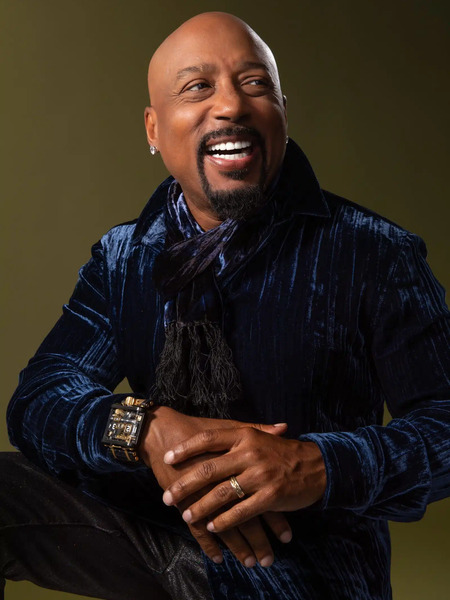

Jay Kiew on AI, Adaptability, and Leading Through Change

October 02, 2026
Brandon Edmonson
VP & Director of Sales
Jay Kiew is an AI and change management keynote speaker and the author of Change Fluency. In this episode of Premiere Speakers Bureau's Ground Transportation, he joins Brandon and Woody after a Nashville keynote to discuss practical AI applications, adapting to change, and helping people move forward when the path is uncertain.
The conversation connects three questions leaders and event planners can bring to their next meeting: Where could AI help with real work? How are people responding to change? And what obstacles should we prepare for before pursuing the next goal?
Jay also shares the family story behind the Stevie Wonder harmonica he carries to every keynote, giving a personal perspective on the relationship between technology, possibility, and human potential.
Watch Jay Kiew on Ground Transportation
Watch the full interview below, or use the timestamp links throughout this article to jump to a specific discussion.
Published September 29, 2026. Runtime: 23 minutes, 54 seconds.
Watch the Jay Kiew interview on YouTube.
How Jay Customized an AI Keynote for a NASBA Audience
Jay's approach to customization starts with the work his audience actually does. In the interview, he describes tailoring his Nashville presentation to questions attendees had about updated NASBA standards and their implications for professional education.
Rather than relying on a generic AI example, Jay asked an AI tool to help develop an ethics course concept for tax practitioners, including a learning outline and presentation materials. The example connected the technology to a task the audience recognized.
During the keynote, he handed his phone to an audience member, who read the prompts while Jay displayed the outputs on screen. That interaction invited someone in the room to interpret the process rather than simply watch a presentation about it.
"It was just really nice to hear him make meaning of it himself."
Jay Kiew, Ground Transportation
The demonstration illustrated a possible workflow; it was not a verification that AI-generated course materials met professional standards. For a similar event, agree in advance on what information may be shown and who will review the outputs.
For event planners: When briefing a speaker, identify a real task or decision your audience is facing. That gives customization a more useful starting point than an industry name or conference slogan alone.
Watch at 0:47: Customizing the keynote and demonstrating AI on stage.
What Jay Kiew Says About AI and Everyday Productivity
Jay is optimistic about using AI for practical tasks, while acknowledging that enthusiasm should not eliminate questions about its limitations.
In the interview, he describes using an AI assistant to arrange airport parking around his travel schedule. He says the assistant worked from his flight information and requested permission to sign in. He also describes asking an assistant to prepare a food order before his arrival in Nashville.
These are examples from Jay's own experience, not a promise that every AI product can perform the same tasks. What interests him is how an unfamiliar technology becomes easier to understand when someone connects it to a specific need.
For a leadership or future-of-work event, use that idea to make the discussion more concrete. Instead of stopping at "AI will change everything," ask which task your people would like help completing and what a useful result would look like.
For event planners: Ask for an example your audience can evaluate. For an organizational demonstration, agree on approved tools, information access, human review, and any purchasing permissions before testing.
Watch at 2:38: Jay's perspective on AI and everyday productivity.
What Is Jay Kiew's Change Fluency Approach?
Change Fluency is Jay Kiew's approach to helping people develop their capacity to adapt. He describes change as a language people can learn, with an emphasis on how they interpret disruption and respond to it.
In the interview, Jay separates two questions: Do we see a change as a threat or an opportunity? And are we responding by resisting, waiting, or taking an adaptive step forward?
He also points out that people move between different mindsets. Someone may be eager to experiment in one situation while protecting a familiar process in another.
That creates a more useful leadership conversation than simply dividing employees into people who like change and people who do not. Explore what they believe is at stake, what they are trying to preserve, and what would help them evaluate a different approach.
For event planners: Brief the speaker on the change your audience is experiencing and the concerns you are hearing. A new technology rollout, a shift in strategy, and a team reorganization may require different examples and discussions.
Watch at 5:02: Change mindsets, threats, and opportunities.
The Stevie Wonder Harmonica Story Behind Jay's Keynote
One of the interview's most personal moments begins when Jay takes a harmonica out of his travel bag.
Jay says the harmonica was a gift from Stevie Wonder to his father, Roger, a blind radio DJ in Singapore. His father later passed it on to him.
In the story Jay shares, the conversation between his father and Stevie Wonder centers on using the abilities and technology available to pursue work that matters. Jay now includes the harmonica in his keynote's closing story and plays a few notes during the interview.
For an event planner evaluating his style, this segment shows a different side of the presentation: personal storytelling alongside the discussion of AI and organizational change.
It also introduces a question worth bringing back to the workplace: What could become possible when people use the tools in front of them differently?
Watch at 10:02: The Stevie Wonder harmonica story.
Why Jay Now Pays More Attention to Obstacles Than Goals
Jay describes shifting his attention from visualizing success to preparing for the obstacles between a goal and its outcome.
Earlier in his career, setting and crystallizing a goal played a central role in how he approached achievement. He now places more emphasis on identifying what could get in the way, deciding how to respond, and learning through the process.
His point is not simply to abandon goals. It is to spend more time considering the work and adjustments required to pursue them.
For a team setting priorities, that suggests a useful follow-up conversation: What are we trying to accomplish? What is likely to stop us? What will we do when that obstacle appears?
For event planners: Build a short discussion into the agenda after the keynote. Ask each team to identify one obstacle it can influence and one next step it will take. These are suggested follow-up activities, not a description of the steps in Jay's full framework.
Watch at 21:02: Goal setting, obstacles, and personal growth.
Which Jay Kiew Keynote Fits Your Event?
The interview offers a starting point for understanding Jay's perspective. His keynote programs allow planners to choose a more specific emphasis.
Evolve: Redefining Work in the Age of Agentic AI focuses on applying AI to work. Consider this direction when your audience needs a more practical conversation about AI adoption and its implications for everyday tasks.
Navigate: How to Flourish in the Complexities of an Uncertain World addresses leadership through uncertainty. Consider it when your meeting needs to connect changing conditions with how leaders support their teams.
Change Fluency: Leveraging the Language of Change to Drive Growth focuses on people's relationship with disruption and their capacity to adapt. Consider it for teams working through change fatigue or an organizational transformation.
Explore Jay Kiew's keynote programs and speaking videos, then share your audience and desired outcome with Premiere Speakers Bureau.
Frequently Asked Questions About Jay Kiew
Is this interview a full Jay Kiew keynote?
No. This is a post-event conversation on Premiere Speakers Bureau's Ground Transportation series. It provides insight into Jay's thinking, personality, and approach to customization. Review the speaking videos on his profile to evaluate his onstage delivery.
Can Jay tailor an AI keynote to our industry?
In this interview, Jay describes tailoring a presentation to a NASBA audience and using an example connected to its work. Discuss your industry's needs, the intended audience, and the level of customization you are seeking with Premiere before finalizing the program.
How much does it cost to book Jay Kiew?
Premiere Speakers Bureau provides Jay's speaking fee by inquiry. Send your event date, location, format, audience size, and budget range to request a current quote. Confirm what the engagement includes and discuss travel and any special presentation requirements.
Bring Jay Kiew to Your Next Leadership or AI Event
Start with the challenge your audience needs to address. Is the priority identifying useful AI applications, helping people adapt to change, or preparing leaders to guide a team through uncertainty?
Share that context with Premiere Speakers Bureau, along with your event date and location. Our team can help you review Jay's programs, check availability and current fees, and discuss how the message could fit your meeting.
Request Jay Kiew's Availability and Speaking Fee
Still exploring your options? Browse Premiere's AI keynote speakers to compare additional perspectives.