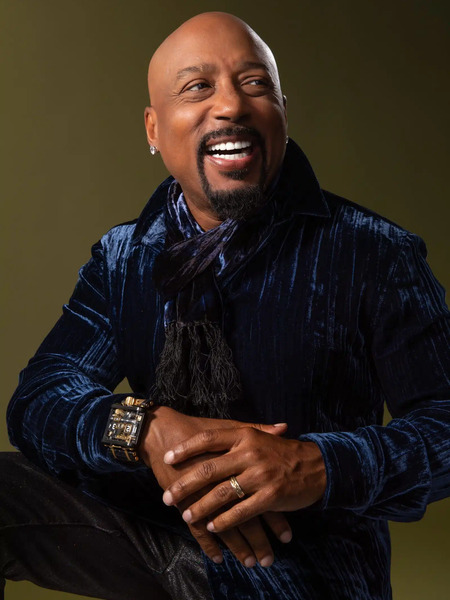
Transcript for Merril Hoge Interview on the Beyond Speaking Podcast
This episode of the Beyond Speaking Podcast features Merril Hoge, a former NFL football player and motivational speaker, discussing his journey from a small-town kid to playing for the Pittsburgh Steelers. Merril shares his personal philosophy, “Find a Way,” which has guided him through his career, battles with cancer, and life challenges. He talks about the importance of resilience, mental strength, and finding motivation to overcome obstacles. The conversation also covers his experiences with the Steelers, lessons from his mentor Chuck Noll, and advice on leadership and teamwork.
Podcast Episode · Beyond Speaking · Sept 3, 2024 · 40m
Merril: Don't say things in anger. Don't use emotions to make a statement because most of the time it's gonna be wrong and you're gonna regret it the rest of your life. I am so grateful I didn't do that on that day. Something came over me and I thought of gratitude and the opportunity that I'd had with the Pittsburgh Steelers and that they helped me live a dream. Pocatello, Idaho, a kid at 12 years old who wanted to play in the National Football League, and that came over me.
And so I was thankful for that day. And I didn't do anything stupid. And I walked back in the house going, okay, I can't believe I just did the right thing.
Brian: That’s your next book, “I can’t believe I did the right thing.”
Merril: So I wanted to do the wrong thing. And I was like, I wanted to say everything that I was because I didn't want to leave. But it wouldn't have come off like that. Okay, the way it came off is it came off like that. And that was the way I was thinking, anyway, phone rings. And it's Mr. Rooney. He said, Could you come see me tomorrow?
Intro: Welcome to the Beyond Speaking podcast from Premiere Speakers Bureau, featuring in-depth conversations with the world's most in-demand keynote speakers.
Brian: Hi, I'm Brian Lord, your host of the Beyond Speaking podcast. Our guest today is Merril Hoge. So if you're a football fan, you're in for a treat. He also does a ton for the community. We were talking about this off-air about how, as a Steeler, part of that that that Steeler background, as you get involved in the communities, works with the Leukemia and Lymphoma Society, with American Cancer Society, with mental health, as well as being a top speaker on leadership and motivation and overcoming obstacles. He's also an author as well.
So Merril, thank you so much for coming on and being part of the Beyond Speaking podcast.
Merril: Pleasure. You know, actually it's the first time any bureau has done this. really? Yes, cool. I don't even know you do it, so advance you guys. Advancement to you guys. Yeah, yeah. I love it.
Brian: Well thanks. I appreciate it. Well you kinda led us into it with a hat here. So your hat has got the Find a Way on it. Always wearing the cool stuff here. So you know, your book and the main speech that you talk about is Find a Way. So where did that come from? Where did that start in your life and how have you been able to apply?
Merril: Well, these words have helped me live a dream and fight to live and a lot of in-between. They're just supposed to help me live a dream and that's when the journey begins. I think everybody can identify this at some point when you were a kid or later in life. Either somebody asked this of you or you asked it of yourself or both. You get asked, hey, what do you want to do? What do you want to be when you grow up? In fact, I've always thought you need to keep asking yourself: What do you want to do? What do you want to be? because self-reflection, as I have grown and evolved, is such a critical part of challenging yourself and growing.
But going back to where it all started, I was eight years old and somebody asked me one day, what do you want to do? What do you want to be when you grow up? I was eight years old, I was like, I have in my head, I'm like, I got no idea. And yeah, but I wasn't frustrated by the question. It was intriguing to me. It was the first time the scope of my little mind had widened to something I would never have thought of. And so I'm like, man, I'm gonna start thinking about that.
So I do share this when I speak, but I have to paint a picture of 1973. This happens in 1973, and the reason that's important, my dad was a milkman. My dad got up at 4:30 in the morning, he went on a route, and he delivered bottles of milk to people who left empty bottles in a container on the porch. You didn't go to the grocery store and get milk. And most people wouldn't even probably remember that or know that.
So that's what happened in 1973. I also explained that not everybody had a television. If you did, it was a box about yay big, an antenna, two knobs, three channels, no remote. So if you were gonna watch something, you had to make sure you selected the right channel before you got comfortable on the couch. Yeah. But this is how I always know if somebody was around in 1973. I go, but if your parents come in and watch television with you, then you become the remote. Yeah. So I'm like, okay, that's how I know the people around in 1973.
Okay, well, we had a rule in our home. Couldn't watch television on Sunday. So I used to love to go to my grandparents' house on Sunday because they always had their television on. And it was shortly after being asked, what do you want to do? What do you want to be? that I went to my grandparents' house and I walked into their kitchen, the TV was off to the left because I will never forget it, because I looked over and there's football and television. The Green Bay Packers were playing. I don't remember who they were playing, and the big deal wasn't the Packers, the big deal was I had been doing it in the backyard. I just signed up for it. I had no idea that I did on television. And I'm like, my gosh, I know what I want to do. I know what I want to be. I'm gonna play in the National Football League.
So that's where it started. I now had an answer. And so when somebody would ask me, What are you gonna do after that? I told them I'm playing in the NFL. And every time I did that, man, one of four things was always said to me right away, my gosh, you know how hard that is. You'll tell you odd you playing in the NFL, Merril? Oh son, don't put our eggs in one basket. We wouldn't want you to be disappointed. Or, that's impossible.
And it was probably my first taste of resiliency, which is another good life lesson early that I learned. I'm like, nah, I want to play in the National Football League. I'm gonna play in the National Football League. But it led, all of that led to a couple years later, a teacher comes into class. I'll never forget how much she goes, stands right in front of us. She says, Now listen, everybody needs to have goals and dreams. However, you need to write them down and pin them up in your room. It's where you start and end your day. And Brian, the first time I ever heard that, I was like, my gosh, I love that idea. I'm going, that's the idea. That's what I need.
So I started thinking. But I had a problem. I have a little brother in a bunk bed, right? So I used to pray. I used to pray diligently every night, he would disappear. That doesn't mean I don't love him. I just was like, I want my own bedroom. And then I thought, one other way to have a great bedroom, I would want one thing in my bedroom I've never seen in a bedroom before. I want a wall of cork because I pin all my goals. I loved that idea. Because now the goal that I had had in my head for so long, I could see it every day.
Well, a few years later, I'd get my own bedroom. And my dad, I asked my dad to make me a wall of cork. He asked me why, I explained. He said we'll see what we can do. So when my room's done, actually there was a wood chair rail, my bed was bumped up against and then above it was three panels of cork. And it wasn't an entire wall, but man, it was big enough.
I ran in the room and I had all my goals. I had junior high, high school, college to attend, so I thought I'd write a goal for every one of those. And at the top though I'll play in the NFL. My favorite team was the Pittsburgh Steelers. So I cut a picture of them out. My favorite player was Walter Payton. I cut a picture of him out. And I even cut a symbol of the National Football League, just kind of emphasized. I thought the more you decorated that goal, the more, you know, for me, the more potent it'll be and powerful.
Anyway, I get in my room, and I pinned them all up. And as I sat and I sat and looked at that, I will play in the National Football League. This is where I get to my first moment of truth in life. I start thinking about all the things people had said to me, how hard it was, the odds: 0.016% of eligible drafted players get drafted in the NFL. And only thirty percent of those make it. I don't know what they are from Poca Tell Idaho, I just know they're less. So there's some validity of those people saying the odds are against you.
But what it did is, as I looked at playing the National Football thing, I started thinking about all those things. And they just became overwhelming to me. It became daunting to me. And I'll play in the NFL, nothing more than words on a wall.
And the first moment of truth in my life happens at this point. And everybody has these. I've had many of them since. But you come to a point in your life, there's always, because everybody has a point where they're like, boy, I have to make a decision. And this decision is gonna, my life will be different from this decision that I make.
When I was sitting looking out playing the NFL, I'm like, I didn't write that up there to be words on a wall. And it was the first day I opened myself up, first time ever in a moment of self-reflection where I'm like, I committed to that goal. I'm like, I didn't write that to be words on a wall. I'm gonna do that. I'm gonna make that happen. And the more I start thinking that way, the “words find a way” pop into my head. And then I'm saying, even to this day, the energy that comes, the second I say that, I can relive it. I remember the energy that took over my body. I was excited. I'm like, Those words gave me hope. It was the first time I had find found hope in words.
I wrote those words down, I stuck it on the wall. And the combination of those words, find a way, and that goal, they gave me a different energy, they gave me a different focus. They inspired me to do many things on that day. But the one thing they did that everybody should do, regardless of your circumstances in life, take action. Do something about your circumstance. And those words moved me to do that.
And from that moment on, they sent me on a journey, and they've helped me live a dream. They've done a lot of things in between, but they inspire me to do something about my circumstance. And that's ultimately what the message is about. It's not about me, it's about what's possible for you, what's possible for people. If they use the greatest tool known to mankind, which we all have, and that is our minds, you know, and that's what find a way message did so much for me, but the message I share is what's possible for other people.
Brian: When you're going through, when you set when you announce your goal like you were doing, do you find more people are against it, whether it's playing the NFL or whatever it is, more people are against it or more people are for it and how do you deal with it?
Merril: Well, I find over time as a kid, I didn't know this. I actually keep my goals and what I'm trying to do private because I just think privacy is power. that I would rather have a goal set for myself and I know the process and what I gotta do to get it done and then when it's done I'll share it. But I try not to share it prior to that because I just think there's more people that will be negative, probably the people that are scared you're gonna do it, quite honestly. Afraid you're gonna do it, you know, and the negative things that can come. I just think it's better to work in silence.
I think silence is power. and the goals and stuff like that. I keep to myself. When I was a kid I didn't, I announced it everywhere. And like I said, I got the feedback because of that. And that hasn't changed. So that's why I've chosen to work in silence now more when it comes to goals.
Brian: Why do you think other people are afraid of somebody else hitting their goals?
Merril: They're afraid of the work. They want the elevator ride. They don't want to take the stairs. Yeah. And that's most cases. I mean, I think in history that people want the easy way. And people that usually spell doom and forecast doom, they're the ones that would like to do it, but they're not willing to commit to it. They're not willing to do it and pay the price for it. and then they hear that somebody will and they want to try to discourage that. That's how I view it.
They probably don't want to do the work. You know, they're trying to discourage the work. Back that day and I'm first thing I thought about, they said, You know how hard that is? And I remember committing to that. I'm like, whatever work's required, I'm gonna do it. Whatever work is required. And you know, then I could just peel off.
I talk about how I'm a product of a lot of people. People challenged me, people inspired me, I find hope in people. By no stretch of the imagination do I do it by myself. I did the work but without people and having different influences and different ideas and thought processes, I would never I probably never would have made it.
But I will go back to this one. Well, there's an Aristotle quote that was significant in my life, but the one I was referring to or going to was a Walter Payton video that I saw. And Walter Payton, when he put this tape out, it was called Winning in Life. And he was gonna talk about charity work, family life, and how he trained.
So I'm a kid. And I had heard about how Walter had run dirt hills and he did all these things and I'm like, well and I was sure it's just right after putting that goal up, trying to find out different ways to get better. And I'm like, man, there's gotta be something he said, done, or will do that might help me. So when I heard about that tape, I order it, I plug it in, and this is just for fun. It's a VHS tape. So some of the people they'll be Googling VHS. What's VHS?
Brian: Please be kind online.
Merril: Right. So I threw the VHS tape in there and I didn't realize there was an interview process. Now he's become the all time leader rusher when he does this. And I don't just assume everybody knows who Walter Payton was, but when he put this tape out, he's the all-time leading rusher in the NFL. Pound for pound, he's the greatest player to ever play, still to this day. And this was always said about him. He's not the biggest, he's not the strongest, he's not the fastest. He's just the best.
Now, as a kid, that's confusing. Because everybody is bigger, stronger, and faster, and he's better than me. So how's this guy the best in the world? And he's not bigger and stronger and faster than any of them. How is that possible?
Well, the interviewer, first question. He goes, what makes you better than everybody else? I'm like, my gosh, that's what I want to know. He said something as profound as I've ever heard a human being say it. He just paused for a second. He looked at him, he said, I want it more than they do every day of the week. You see, in the off season when I go run that dirt hill at seven o'clock in the morning, I want it more than they do. Monday, Tuesday, Wednesday, Thursday, Friday, and Saturday. During the season when there's not 65,000 fans sitting in stands watching me, I want it more than they do.
Monday, Tuesday, Wednesday, Thursday, Friday, and Saturday. Sunday at one o'clock, you better believe I want it more than they do. I hit pause. There's not a soul sitting that will be listening to this that can't do that. You can't do that. Eric can't do that. There's not a soul sitting in this room right now that can't do that as a mindset and that is a choice and that is a habit of a relentless commitment of every day, regardless of what you're going for, your goal, your dream, your challenge, your circumstance, your craft, or your profession.
The hard part, is not wanting it. It's that relentless commitment of every day, that resiliency to do it every single day. Now, the second I heard that, every day I practiced, played, and trained, and even in other aspects of my life, I made it a habit to do that every day.
Now, that means you don't just do things when it's convenient for you or when it works for you. Every day is every day. Those arduous, tough days, you must do it, you must be committed to it. Because what you find out is that once you plow through those arduous tough days, the road becomes smoother. It becomes easier for you. It's easier to plow through those tough days. They're not as arduous as they once were, as long as you don't surrender to it.
That relentless mindset and commitment every single day, whatever work is required, whatever you're responsible to do to get to where you're trying to go, it'll be the difference between you and your competitor. It'll be the thing that gets you to the top. It'll be the thing that helps you start something or stop something.
But you gotta do it every single day. And that's what separates a lot of people. They want it, but not everybody has the ability. 'Cause I didn't have that ability. I heard the second I heard that, I just remember going, I'm gonna do that. Now I'm not saying I just made it, it became easy. It was years, I mean, of doing it and doing it and doing it.
Now it's a part of my arsenal. So if something comes up, I know this, I'll commit to it, it's gonna be every day. We're gonna do it every day, even if it's easier now than it once was. But if you get out of bed with that, and the first time you do it, the more you do it, the easier it becomes, and the more it becomes a part of you.
And I've said this, but I do mean it because I've seen it in so many different aspects of other people's lives and even mine, it could be the thing that separates you. It could be that one little ingredient that makes a difference in your life is that relentless commitment. Whatever it is you're striving for, you're dealing with. And it was an invaluable lesson as a kid, watching that tape, I've never forgotten that. I think of Walter Payton probably once a week actually for the things that he and how he impacted my life.
Brian: That's awesome. So as a speaker, as a leader, you know, talking about these different things. So there's how Merrill Hoge works on Merrill Hoge, how Walter Payton works on Walter Payton. As a leader, how do you translate that to your team?
Merril: Well, the first thing that I try when I'm speaking, I do get to the point where I have a perspective on life I didn't have before. Having gone through cancer, when I got done with that battle, that brutal chemotherapy, the two years of brutal chemotherapy I went through to finish that, I now have a perspective on life I didn't have before.
And that perspective is this all I would have missed had I not survived. My kids were nine and seven when I was diagnosed. They're now 28 and 30. Both are married, four grandbabies. I look at that all the time. I'm like, I would have missed all of that. And I know Stuart Scott, a good friend of mine, passed away when his kids were young. Sam Mills, another football player who was a friend of mine who passed away when his kids were young. And I think about those people who didn't make it, and I do think about that. But I don't share this message with people because I read it, saw it, or I or somebody told me about it. I share it because I've lived it.
That's not the main reason. The main reason is because I know it's possible for people. I know it's possible for everybody who will watch this or hear this. If they use the greatest tool known to mankind, and we all have it, and that is our mind. The key though is: do you control your mind or does your mind control you? And it is proven that people who learn to control their mind can overcome anything and become anything.
And one of the most powerful things to actually help you control your mind are actually visuals. You know, I actually did that very first exercise. When I put the goal up, I'll play in the NFL and the words find a way. Okay, I told you they did a lot for me on that day, they inspired action on that day initially, but they did something even probably just as great for me on that day. They helped me control my mind, like I was in charge. If a person will take action of their thoughts and turn them into words and goals, the words and goals will inspire action.
Okay, your action is gonna lead you to patterns and habits. And then those patterns and habits are gonna build the character that you become. And then the character that you have now will help you find your way on your journey. So if a person could do those things and they learn to add that process,
And then one of the things that I'd learned over time that is really important, you like there's almost moments where you got to check on yourself. Moments of self-reflection where you got, okay, where am I at? Am I doing everything I can? Is there more I can be doing, should be doing that would help me on my journey? Is there a challenge I should take on? Is there something I need to start or stop? You know, self-reflection is a great opportunity to find out where you are and challenge yourself.
And that's how we grow. Without challenging ourselves, we can't grow, we won't evolve. Self-reflection is not about pointing fingers, casting blame, and making excuses. That is a toxic blender of disaster, has garnered no success by anyone, ever, and never will.
In fact, people who point fingers, cast blame, and make excuses, they make the day easier. They make their tomorrow harder. You eventually have to do the work and you have to do the things. If you want to accomplish something, I believe this, I've seen it, I've lived it, I've watched it, that people that really want to find really want to accomplish something or get somewhere, they're gonna find a way. People who do not will find an excuse.
But ultimately it comes back to them. I mean, they're in charge of that. Like there's not a human being that doesn't have the ability to throw out a visual up there, take their words, make that lead to sparking a passion that leads into habits and patterns that they eventually develop and become where they want to go or what they want to do or what they want to be.
And if you start practicing those processes every day, then you go back to Walter Payton. It's not just when this works for you, it's not when it's convenient. It's like every day, and you create those habits and those patterns. Like you become a machine. You really do there's nothing a human being cannot accomplish if they put their mind to it and then they put those tools and that action in place. And they realize they're in charge of the whole process. And to let anybody take you or take that from them.
And I've just seen so many things happen. I was in an event, this is almost like 10 years ago. I'm in Atlantic City, I speak. Ten years later I'm at this event and the guy who was catering it, he kept looking at me. I could tell it was a friend of mine. It was actually my oncologist. He had a big celebration, I can't remember what it was, but I went to the party and the guy just kept staring at me. I felt that, you know, he came over and he introduced himself.
He said ten years ago I was listening to you in Atlantic City and I talked to people about, you know, about self-reflection, it's about taking ownership. You make a commitment to that person in the mirror. You take ownership of where you wanna go, what you wanna do, and what you wanna be. When you do that, your life will change. You'll go do what you want to do and you're gonna be who you wanna be.
And he said, he was at school, he goes, he wanted to be a chef. He was doing something he didn't want to do. He called his mom up, I'm only in school. I'm going to be a chef and I'm going to do this. He goes, Now I have my own business and I'm doing the thing I love. He goes, Because I took ownership on that day. And see that to me.
That's what find a way is about. It's not about me. It's about that. It's about that spark that that person sees that they're going to take ownership. They see their gifts. They see what they have inside. And they decide to go get it. And that's what, to me, those things are the game changers and things and why I love doing it because Walter Payton did that for me. Aristotle did that for me. Chuck Knowle did that for me. My daughter did that for me. And so many people that, I mean, you wouldn't know, that have done things for me in my life, and I'm grateful for it.
Brian: That's awesome. That's awesome. Well, so next question, I'm gonna give credit to, you just mentioned Chuck Knowle, I'm gonna give credit to our producer, Eric Woody, who, this podcast, everything else would not be what it is without him. So his question, he wanted to know, you know, you've talked to these great leaders, you've learned from these great leaders. What'd you learn from Chuck Knowle?
Merril: I could write a book on it. He's the greatest man I've ever met. Okay. I actually use part of this because of him. The two most important keys to peaceful, successful people. And I've talked to a lot of people who are really successful, businesses, companies, everywhere I speak I actually try to find out what makes truly peaceful, successful people. And of all the things that are discussed, there's always two that always rise to the top.
One, and this is Chuck Knowle, integrity. We will all be exposed for our integrity at some point. It's better to be exposed for having it than not having it. And he had integrity. And in my presentation, I talk about self integrity. That's why, like looking at yourself, looking in the mirror and going, Hey, you know, are you doing everything you can? Are you doing your part? Is there more you could be doing, should be doing? Only you know that. And even if you try to lie to yourself, you're like, Hey, you're lying yourself. That's why reflection is so important.
Is that, you know, if you really want to make changes in your life, you can do it. You know, you make a commitment to that person in the mirror. But his integrity stood out amongst anything. And then that combination, which I think was the greatest, I actually learned it more from being a parent, really confirmed it being a parent, but it is true in every aspect of leadership. And parenting is one of the greatest leadership roles you could ever have if you have kids. But modeling.
You could stand, you know, I could stand up in front and give a pontificate, give the greatest speech in the history of mankind, and talk about all these things that I do, and then walk out and do the complete opposite of what I just said. And people will remember what they saw over what they heard. So modeling is so important. Now, if your words match your modeling, well then now you've got now you have power. And that's what he was.
Man, you know, and he stood up in front of people and he spoke a certain way. And he talked about building people. And again, good men. He didn't just talk about football. In fact, I bet you of the times that in five years I played for him, a third of it was about football, and the rest of it was about your life's work and who you are as a human being and who you are as a man and a person. He was and without him, I wouldn't have half the tools that I have today.
In fact, when I was twenty-one years old, I shared that story about challenging people to tie yourself to people that are credible. You know, just don't run around doing charity work. You know, make sure you tie yourself to people that are credible, which is true in every aspect of life when you think about it. I remember I was twenty-one going, I will never see somebody like this again. I better take note every time I sit here in this meeting.
And thank goodness I did. I was smart enough at twenty-one. I didn't think I knew it all at that moment. I was like, Thank goodness I took notes and he impacted my life significantly. But who I am and things that I have, principles in my life are largely because Chuck Nolan. Not just as a football player, more as a human being.
Brian: And in terms of how organizations run, I know you mentioned this you know before the interview too. You know, we have all these companies that kind of move by the wind, and there are a lot of NFL teams that operate from just everything changes week to week, month to month, and you have these others that have this really stable foundation. I think the Steelers are definitely in that latter kind. What could people learn from how the Steelers are run from a business perspective, from their leadership that would apply to corporations?
Merril: Well, I'm going back to the thing that everybody relies on. I mean, and their foundation is their integrity. The integrity, you know, and how you model and the consistency that you do that with. Those are really the principles of the CEO's organization and what they go about. And everybody is a part of the team. Okay, we all work together. Nobody works for anybody. They have that philosophy.
We're working as a team. I believe in it personally. I think they do a good job with this as an organization. I cause I knew the chief, I knew Mr. Rooney, I grew up with Art, who's now the president and vice president is his his brother Dan Rooney Jr, who has been a good friend of mine forever, is just is they almost do these versions of of self-reflection too, where you know, you gotta you gotta look at yourself at some point, check on yourself, and challenge yourself to grow and evolve.
And they give you opportunities to do that. I've heard Mr. Rooney make Max when I left with the Chicago Bears. I did not want to leave to play for the Chicago Bears. I wanted to stay with the Steelers. I tried to do everything I could. I'm not gonna bore people with the details and the circumstances, but when it broke the news, I went to Chicago, Mr. Rooney called me.
Now listen, I had everybody like when I left Pittsburgh. Like that was a big deal. Like nobody thought, including me, I was ever gonna leave Pittsburgh. And I was having some of the best years I've ever had in football. So every TV station was at my house. I'm thankful for a lot of things. On this particular day, I'm so thankful I didn't say what I had, this is another good example.
Don't say things in anger. Don't use emotions to make a statement because most of the time it's gonna be wrong and you're gonna regret it the rest of your life. I'm so grateful I didn't do that on that day. Something came over me, and I thought of gratitude and the opportunity that I'd had with the Pittsburgh Steelers and that they helped me live a dream. Pocatello, Idaho, a kid at 12 years old who wanted to play in the National Football League, and that came over me. And so I was thankful for that day.
And I didn't do anything stupid. And I walked back in the house going, Okay, I can't believe I just did the right thing as I wanted. I was so angry.
Brian: That’s your next book, “I can’t believe I did the right thing.”
Merril: I wanted to do the wrong thing. And I was like, I wanted to say everything that I was because I didn't want to leave, but it wouldn't have come off like that. Okay, the way it came off is it came off like that and how because I the way I was thinking anyway, phone rings. And it's Mr. Rooney. He said, Could you come see me tomorrow? And I'm like, Well, of course. And so I hadn't signed the contract yet. I had just verbally.
So I go down to the Steelers and I sat in front of Mr. Rooney and we're going back to like the ownership, and, going back to integrity, okay? The first thing I'm on my mouth, I was I didn't sign the contract. He's like, nope. You gave me your word. No. That's not why I had you come down here. He goes, listen, in this role I have, I have people to do their job. He goes, now sometimes I wished I would have maybe went in and been a little more up to date on what was going on and I probably would have been a little more influential. So I didn't do that.
He goes, And I don't want to see you go, but you gotta go. You've made that commitment. But I want you to know something. And I'll never forget those front doors right there, you are welcome inside them anytime. And I mean, the integrity, the class, I mean the overall scope of okay, leadership, I made a mistake. Or, you know, I should have. That's another thing, leadership. It's okay to take ownership of making a mistake. And you know, you and then when you explain that and you talk about it and you own it and you correct it, I don't think there's anything of greater value for people who are following you and watching. I learned so much from the Rooney's, Chucknell, and things that have applied to help me from a leadership role, Whether it's business or or being a parent.
Brian: That's awesome. Well, so one last question here. So I know you know sometimes your events, you'll do some Q&A, that sort of thing. So I'm gonna hit you with a current events question, also courtesy of Eric Woodie.
Merril: Eric, thanks for this. This is good stuff from you by the way.
Brian: So the current quarterback situation right now. Who are you gonna pick for your quarterback? If you're playing for the Steelers now, you get Russell Wilson, Justin Fields, or Bubby Brister.
Merril: My gosh. If you just do Bubby Brister in it, let me with Bubby Brister. I'm saddling up with Bubby Brister.
Brian: Well the current ones, he had one of my favorite all time football names. But yeah, go ahead.
Merril: Okay, well, see, you know, here's what I think Bubby actually was, well, I know Bubby was completely misunderstood as a player. Do you know who the guy who loved him? I mean, loved him. And knew because he, and you know why he loved him? Because he knew how great he was. And he was, he was not much different than Terry Bradshaw. And he had already tamed and done all kinds of wonders with Terry Bradshaw. Chuck Knowle loved him.
You know, yes. I mean, once listen, when Chuck left, there was really the beginning of the end of Bubby and I because Tom Moore too, our offensive coordinator. Yeah and and people don't know that name, but he orchestrated all of Pate Manning's career in Indianapolis. Okay. He's a Hall of Famer. He just went into the Hall of Fame. Yes, last year we went in and he got inducted into the Hall of Fame. That's how legendary Tom Moore is. Yeah. He went to Minnesota because he thought he was gonna be the next head coaching coach there and he never got the job. And then Chuck retired.
And so when those two guys left, that was really the beginning of the end of Bubby Brisker. Yeah. Because both of them understood him. They understood his pulse. They saw his talent. They saw his energy. And it was just like breaking a stallion every game. I mean, he was wild, crazy, you know, he played at a high volume. I mean he was, you know, and they loved that because they knew what they had. They just had to corral him and bring him in a little bit. And they were slowly doing that. I mean, he was slowly getting there. But from an overall like skill perspective, arm, talent.
And you know, listen, he used to get a bunch, I'll just tell you this really quick. Okay, because he used to get heat all the time, you know, because he said I was in Cleveland, he said, he was talking about, well, I don't know about the lake or the river. He said something about there in Cleveland. I forget exactly how he said it, because he was like, I didn't know they had a river down there or something like that, right? Okay, so that got him labeled as he's dumb, right? Yeah. So we're in Cincinnati. And there's two minutes before half. Okay, we got about a little over a minute, we're on a two-minute drive.
Now it's third down, and Bubby's looking at his sheet and he's going like this. He goes, send me another plan. And he's like this. Okay. And then finally he goes, time out. So it's our last time out. Well, we got over a minute. This is not the time to take a timeout. Okay. And he's coming over to me. He goes, How many, how many numbers are on there? I said, ten. He goes, those idiots are calling in twelve. He goes, and I have to call a timeout. Do you know who's gonna look like an idiot? I'm gonna look like an idiot because I had to call a timeout because they're sending me 12 and I only have 10 plays here. He goes, so I'm gonna get labeled as an idiot.
Sure enough. So he goes aside, he goes to the sideline, he gets his play, we come back, and sure enough, after the game, they're like, Bobby, why would you call a timeout? That was the dumbest time to call a timeout. Now, did he say that they were calling 12? He didn't tell anybody he's calling. He goes, no, made a bad call. Now, do those anybody else back him up there and go, hey, listen, that wasn't Bubby's fault. No.
So that's the kind of teammate that he was. Yeah. He took one for the team. He didn't sell it. He didn't sell anybody down the river. He took ownership of stuff. Yeah. even when it wasn't his, he took it on him. And that's what I loved about him. I mean, and I'm telling you, and if you want if you need anybody on your team in the team of life too, that's your guy. Yeah. I mean, I'm telling you, he's the greatest one of the greatest the greatest team that I've ever played with and one of the greatest human beings. And if you ever need anything, Bobby Brister will be there.
I'm gonna tell you one other that actually probably the best story of all that tells you all of what I just mentioned. We just remember the Superstars con superstars competition when they used to have superstars in Cancun and all these different events. So I competed in it. Okay. I got second play. Herschel Walker beats me on the 880. Herschel got lucky.
Brian: He's kind of fast.
Merril: That's irrelevant. Yeah. But we're on bicycles, so I had a chance, right? So I bring Bubby as my guest. So we go back to Monroe because we're going to the Daytona 500. The next day. So we stay the night in his hometown. We go out. It's late. It's like 1:30 in the morning. I was always the designated driver, so I'm driving home. And there's a guy parked over on the sideline s side of the road. It's one thirty in the morning. It's dark. As we're passing, he goes, stop, stop, stop, stop, stop. He goes, Back up, back up. So back up. I back up and Bug Rolls and goes, Hey, what's going on there? And he goes, you guys cuz I got a bad flat here, you know, and I got some other problem. The guy was dejected.
He goes, well, he goes, You got anybody gonna help you fix that? He goes, Nah, he goes, I ain't got enough money to get anybody to come fix me. He goes, What do you think it's gonna cost you? He goes, I'll probably I don't know. He goes, sir, probably about two hundred bucks. He goes, here you go. Handed three hundred dollars. Okay. And that guy's eyes lit up. He was like, holy cow. He goes, Man, who do I think? He goes, what's your name? He goes, Hey, just cheer for the Pittsburgh Steelers. He goes, Let's go.
Okay, so that told me everything about Bubby Brister. He didn't sound Bubby Brister. He didn't even mention his name. He just said Cheer for the Pittsburgh Steelers. And we drove off. That's Bubby Brister.
Brian: That's great, that's great. This is like tripled, quadruple the amount I know about Bubby Brister on this. So I threw in the last part for Eric. So out of who the Steelers have now…
The actual two current guys, this is my honest belief where I think a lot of mistakes are made is coaches make up their mind going into training camp. Okay. There's a reason that you have training camp and there's a reason that you compete. And there's a reason you let them compete to get the best out of them. Okay. So then this is not a cliche. I would let them compete.
Now, do I think Russell Wilson's experience could edge him out? I do. Because what they're doing from a philosophy perspective, is what they need to be doing. Their whole foundation is gonna be built around running the football and being really good at that. Russell Wilson has won one Super Bowl. He's been his very best when they've had what? The best rushing running team in football and the best defense. He's a great compliment to that. He is not a pocket guy. He is not a Peyton Manning. He's not a Ben Rothesberger. He's not that kind of guy. He is a compliment and he has limited skills, but those skills that compliment are outstanding.
So that gives him a chance, I think, to rebuild his career if he understands who he is versus who he thinks he is. And they're gonna give him that platform. And I think that from a run action, play action, boot movement, boot action, he's perfect. He's not a pocket guy. And if he can complement that and that's how they evolve as an offense, then I think Russell Wilson will be your starter.
It's also a great way to develop a guy and build a guy. Shoot, Nashville, Tennessee, where you guys are from, you guys watched one of the greatest developments of a quarterback in NFL history in Steve McNair. They did exactly that to Steve McNair. Jeff Fisher did that. He built him from the ground up to the MVP in the National Football League.
Justin Fields he's had a new office coordinator every three years. The poor kid hasn't had a shot. So in all fairness, if you let him grow within that and he has two more years on, you might develop a guy who can play from the pocket. Okay. He has a better skill set there than Russell Wilson does and better potential there. But to use that to develop him too and then have somebody for the future, I think could be ideal.
Now, all that being said, they could have as many as four new starters on that offense. That is just not easy. And you have a new offensive system. There's a lot of new learning. I've just said new, new, new, a lot. That is not easy. It takes you know, I've seen it well played for the Chicago Bears when we did that.. We had like five new starters and our office coordinator was the same one that was there. So we didn't have that new learning. But it was a challenge to get everybody on the same page. That's not gonna happen overnight, you know. Could it happen sooner than later? Sure, but nobody knows. You know, you hope it's quicker for the Steelers perspective.
But the potential there is, I think, truly exciting. and I think that there's a lot of upside there, but you're gonna have to have some patience because, now I'll say this, the way they are doing it, there's a much easier that's a much easier build than if you're gonna try to chuck it all over the field and do five wides and spread it. Let me tell you that's much harder, that's a more arduous challenge than the way they're gonna build.
So I'd like their direction and what they have going and I would think that Russell's experience would probably edge out Justin Fields. but let them compete and get the very best out of him. And crazier things happen. Shoot Russell Wilson went to Seattle after they just paid…
Brian: Flynn.
Merril: Flynn! Good, that was good by you. I'd forgot kid's name. And Russell Wilson built him out by letting him compete. You know, a third rounder coming in and beating a guy they just paid a bunch of money to.
So listen, it's about winning games and getting the very best player out there, so let them compete. But even with that competition I think that Russell's experience will win it.
Brian: Awesome. Great. Well, Merril, thank you so much for coming on being part of the podcast.
Merril: My pleasure.
Brian: For those of you who are watching, listening, make sure to subscribe, rate, and review, and check out Merril's page on premierespeakers.com. Thank you again so much for coming on being on the podcast.
Outro: Thank you for joining us for the Beyond Speaking podcast. To learn more about today's guests, visit PremiereSpeakers.com. Subscribe and leave a review wherever you listen.