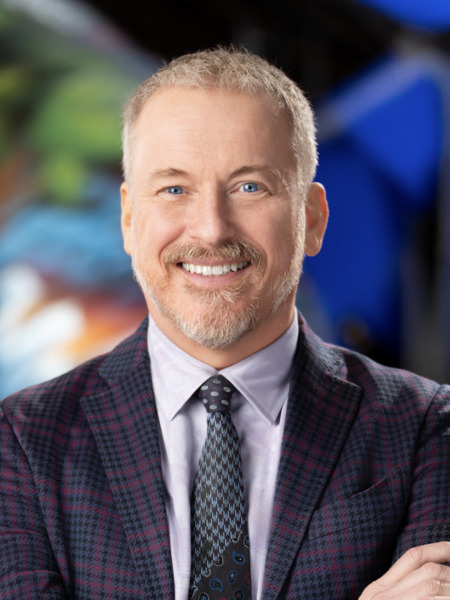
Transcript for Liz Bohannon Interview on the Beyond Speaking Podcast
Top 1% VC-Backed Female Founder & CEO and Bestselling Author of Beginner’s Pluck: Build Your Life of Purpose & Impact Now, Liz Bohannon discusses the importance of creating community and connection both in personal and professional life. Liz shares her journey from moving to Uganda and starting a business to the significance of vulnerability and authenticity in building meaningful relationships and successful organizations.
Podcast Episode · Beyond Speaking · July 16, 2024 · 30m
Liz: If you can create a community where people go, “this is the place where I can be real, I can ask for help, I can be honest, I can celebrate other people's wins, but we can also be with each other in the losses.” What that does for your mission, for your organization, I mean, you're gonna see retention rates through the roof, right? Workers that say they have one close friend at work they feel like they can really confide in and really trust are seven times more engaged and committed and loyal to their employer than people that don't.
And that actually comes back to that kind of sense of relationship. And so not only do we see people being happier and healthier and literally living longer lives, but I also see the implication that that has on how they show up at the workforce and how resilient they are and how able they are to to weather storms when they really feel like, no, I have the support that I need, not just to survive, but actually to thrive.
Intro: Welcome to the Beyond Speaking podcast from Premiere Speakers Bureau, featuring in-depth conversations with the world's most in-demand keynote speakers.
Brian: Hi, I'm Brian Lord, president of Premiere Speakers Bureau. This is the Beyond Speaking Podcast. And our guest today is Liz Bohanan. She is the former CEO and founder of Seiko Designs and just has an amazing story of going from the US to Uganda, making an impact in a very dignified way with so many people being really innovative. You know, you're the author of Beginner's Pluck and doing so much now on community and for leaders. And I've just had a bunch of recent events where they're just over the top about having you to speak. So thank you so much for coming on and being part of this podcast.
Liz: Thank you so much for having me. I'm so excited to be here.
Brian: Yeah, well it's great to have you in the studio. I know you're all over the world and like you're talking about going to South America and you're in Africa.
Liz: Yeah, you know, I get around very exotic places.
Brian: And so anyway, I'm curious to know what was your start like going from starting this international company? What gave you the idea to do that? Have you always been an entrepreneur?
Liz: No, I was not an entrepreneur. Not only was I not an entrepreneur, I would say I was kind of actively against business in some ways. I would say, like, I was a journalism student and I cared about human rights and I cared about people. And so I have eaten a lot of humble pie over the years as I've come to be very passionate about business and entrepreneurship and the power of a dignified job.
I also had zero interest in fashion or design, which is the industry I ended up going into. And so my whole story, it's pretty unlikely. And, you know, some of the principles that have really guided me along the way, I think oftentimes when we don't have our thing, right? There's some people, about 20% of the population would say, I have a passion. Like I know what lights me up. It's been there since I was a kid. 80% of people actually don't. They hit like young adulthood, they're mid-career, they're still going, like, what is this like finding your passion thing? Like, I haven't found it. Is there something wrong with me?
And I actually think what's wrong is the way that we're talking about passion. I was very similar. I didn't have a thing that I thought I was passionate about. I wasn't passionate about business. I wasn't passionate about fashion. But that actually ended up really serving me.
So I moved to Uganda really with the goal of building relationships and building community and making friends. I really wanted to understand the perspective of the issues that were facing women and girls living in extreme poverty. I didn't have an idea of what I would do with that information. And so I actually really think that that benefited me because I was naturally kind of in a posture of curiosity and openness. I kind of followed the leads and I asked questions and I ended up meeting a group of young women in between high school and university that tested into college but then couldn't afford to go.
And so I was thinking, okay, like surely there's something we could do or make, right? To keep these young women living together, in community, earning an income. But it actually really served me that I was like, I don't know, I tried to start a chicken farm, but that failed. I tried a handful of different things before I landed on sandals. And I share that because one of the things that I'm really excited about, dare I say passionate about, is actually changing the way we talk about passion.
Passion isn't something that you find, it's not something that you discover. It's actually something that you build. And we're more likely to live passionate lives when we have a kind of a sense of curiosity and openness and we're willing to be surprised. I am very surprised 15 years later that I am the CEO of companies and specifically companies in the fashion space.
But I'm really passionate about those things, but I'm passionate about them because I kind of dove in before the passion existed and I really built that. And that's actually one of the principles of Beginner's Pluck, is kind of a willingness to be surprised and just to get in the arena and start figuring it out.
Brian: What was your first big surprise?
Liz: My first big surprise was that I really didn't like chickens. I got into the chicken business and I was like, I am not the girl. I am not the girl for the job. My whole story, honestly, was a surprise in a way to move to East Africa. That wasn't like a grand plan. That was one day, my first job out of college, I was working for a corporate communications firm. And I was sitting in my office and I had this realization that I said I cared about women and girls living in global extreme poverty.
But my life and the life that I was building and the trajectory that I was on didn't really reflect that. Like I say I care about this thing, I have opinions about it, but how I'm spending my time, my friends, my community didn't really align. And so sitting there, literally in my cubicle, my first job, I'm just like, man, like you kind of have this gap between what you say you care about and just like the decisions that you're making in your life.
How would you close that gap? And I thought, well, I could close it like if I had one friend. If I had one friend with a girl who had this lived experience, I would close that gap. And it's a pretty small dream, Brian, to make one friend, right? Like no one's getting on Oprah. No one is winning a CNN Hero Award for being like, I have a goal of making a friend. But the reality was giving myself permission to dream small, like really, that's a really small dream.
But then to take that small dream seriously of going like, I don't know, like what's stopping me from making one friend? Like, here's the thing about small dreams. You don't need a big budget, you don't need a huge team, you don't need a board of directors, you don't need your entire community to rally around you, you don't need an Instagram post to go viral. It was small enough that I was like, literally nothing and no one is stopping me. So why don't I just do it?
And sitting there at my desk, put in my two weeks notice, wrote to my boss, spent my entire life savings, bought a one-way plane ticket to Uganda, literally with the goal of making a single friend. In hindsight, what I can see is that I actually kind of got out of this state of overwhelm because there's a lot of talk about dreaming big. A lot of talk about big dreams and big ideas. And listen, that works for some people and that resonates.
But what I have found over the last 10 years is that the average person is actually quite overwhelmed by that message. They hear some inspirational guru up on stage telling them to, you know, dream big and look at all the big things that I've done. And they start to go, that I don't think that's for me. Like I don't know if I have a really big dream and then how do I get it? And like I think that's kind of special for other types of people.
And what I have learned is that for most people, what I actually think is so powerful is when you give yourself permission to dream small and then to take your small dream seriously. Like so often we get in our heads and we're like, that's not a big enough dream. That's not important enough. I can't talk about it like it's important. I can't prioritize it. I can't invest in it. But what if you have a dream, it's a dream, like size doesn't matter. Okay. If you have a dream, then it matters. And if we treat our dreams regardless of how impressive or big they sound to other people, what I actually think that that does counterintuitively is it really unlocks us. It unlocks us, it can create a sense of just momentum and possibility, and it kind of can launch us out of a state of just paralyzed overwhelm and waiting and into a state of creating.
Brian: What was your next small dream after that? Cause I love the big dream, small dream. What was the next big dream after that one? Like go to a how did you make your one friend?
Liz: Yeah, so after one friend, I literally just showed up in a country and just started wandering around. Like I am not exaggerating. It was like I lived in a hostel. I would wake up in the mornings, I would just kind of like wander the streets and be open and available to converse.
I was as big of an aimless loser as you're imagining right now. And it was through that just kind of openness and curiosity that I ended up meeting this group of women in between high school and university. And I just started asking them questions. It was really just like, what's your experience? What are the biggest challenges you're facing? What are your dreams? What are your hopes for the future? What are you afraid of? And it was really through that line of questioning and being open to like maybe the answer is different than what I, you know, than what I think.
One of the principles of Beginners Pluck is actually to act like you're a journalist on assignment in your own life. Sometimes we come into situations and we have a sense that we already have it figured out. We already know what the problem is. We already know what the solution is. Beginners Pluck and the whole concept of Beginners Pluck really helps us think like beginners on an organizational level. It's going to help your organization think like a startup.
Because what happens when we grow in our own career and in our own vacation, and as our organizations grow, the temptation becomes bigger and bigger to kind of go like we've done it before, we've got it figured out, this is the way things have always been done. The risk of taking a risk becomes higher and higher, right? Because there are more people that are watching you, the stakes are higher.
And so if we don't really intentionally put some thought into channeling our inner beginner, what ends up happening is subconsciously we start to act out of fear, of kind of like, I have to act like I've got it all together. And I can't ask questions because I'm supposed to be the boss. I'm at the top. I've got people looking at me. I've got to come in and know the answer and know the solution. But the reality is coming in as a beginner, coming in with a curious mind, kind of channeling your inner investigative journalist.
I believe that the people that know how to ask the best questions are the ones that are going to win in the long run. And so for me, in the beginning, but also throughout my whole career, I've really intentionally tried to stay in that spirit of going, what if you don't have it all figured out? Like what if you dig one layer deeper? And we can apply that in our teams, we can apply that with our customers.
Some of my biggest wins in business have been when I've just stopped and gone like, how does our customer actually experience this? How has her world changed? And what does she need right now, even if it isn't what we've always done? And channeling that sense of knowing that actually asking questions is not an act of weakness, but it's actually an incredible superpower that you can have is part of channeling your inner beginner.
Brian: What are some of your best go-to questions?
Liz: Well, I really like to start probably on an individual kind of personal, emotional level with people of kind of where are you at? How are you experiencing this? And this can be everything from the product to your culture at work. And one of the things is I've asked questions, just like, but how are you doing really? I've discovered some pretty interesting trends. I say I've discovered it, but you know, just me and, low-key, the Surgeon General of the United States, you know, kind of coming to similar conclusions.
But from a cultural level, we've seen some massive behavior shifts over the course of the last decade. Massive shifts in how we connect with people, how we spend time, if we're gathering in person in real life. It's one of the reasons that I think we're probably both very passionate about the events business because I think now more than ever, getting people out of their comfort zone, out from behind screens and in person in real life with one another is incredibly important.
The Surgeon General is saying we're in the midst of a new epidemic, which is one of loneliness and isolation. 70% of Americans would say that they don't have the connection and the support that they need to thrive. And this is a relatively new ish trend. It's really been happening over the course of like the last 15 years. What's encouraging to me about that is that we still have time, right? Like we still have time to kind of reprioritize how we think about prioritizing community, connection, authenticity, vulnerability within the workplace and also in just how we're engaging in our personal lives. And that really matters. It matters for our long-term health.
In fact, Harvard Medical School just released the studies of the longest ever study done on human longevity and wellness. They followed a group of participants for 80 years. And at the end of this experiment, they found that the single greatest predictor for how long somebody will live, how happy they will be, and how healthy they will be, was actually the quality of their close and intimate relationships. It's the single most important factor.
And yet 70% of Americans are saying they don't have it. 70% of Americans in the workplace would say, I don't have a connection. I feel like I don't have people I can be real with, that I can rely on. And here's what we know about lonely workers. They're 107% more anxious. They're 78% more prone to burnout. Ernston Young just did this huge study and found that 46% of Americans are actively seeking other jobs and they're pointing to the fact that they feel disconnected and lonely and isolated in the workplace.
And so I think sometimes we can think about friends and community and relationships. It can feel like a little bit fluffy, you know, a little bit like, yeah, but how does that actually impact our ROI? Like, how is that really gonna drive forward our KPIs? And the reality is, I think it's the single most important thing that we can be doing, encouraging our people to have lives outside of work that are healthy and that are grounded in community.
There was a study that was done that showed that people who see their friends multiple times a week when they measured just their general kind of life fulfillment, that bump that they saw in happiness and fulfillment was the equivalent to a $100,000 raise at work. So you want your people to be happy and fulfilled and engaged. You can go hand out $100,000 bonuses, or you could get really serious about creating a culture of connection and authenticity and support.
Brian: So what are the first steps to creating that culture?
Liz: Yeah. So there's within the workplace and then there's outside of the workplace, but there's a lot of overlap in how we can do that. The first thing is we have to start with a posture of going first. So whoever you are, and whoever is listening to this, like if you're the boss, I'm looking at you and I'm saying it's up to you to go first, to lead with vulnerability and to lead with authenticity.
It's one of the things that I love about having the honor to talk about this from this stage, is because most people are like, yeah, okay, that sounds good. But like, how do we translate that? Like it's scary. It's really scary to go first and to open yourself up because we're really afraid. We're really afraid of judgment. We're really afraid, you know, that people are gonna, you know, when we lead with authenticity or vulnerability, that they're not gonna, you know, whatever. They're gonna judge us, they're not gonna trust us, they're gonna gossip about us. That's a very real fear.
By the way, we're not making it up. When they study brains with an MRI, the part of your brain that lights up when you're about to get hit in the face is the same part of your brain that lights up when you imagine social rejection. So if you feel afraid of being vulnerable with your team and going first is something that sounds scary to you, one, I just want to say, you're not alone. Like that's a real thing that's happening to you.
But the reality is the connection that we need and we desire to get those benefits for longevity and creativity and health. They're on the other side of our fear of rejection. And so part of that means if you're a leader in an organization, you have to go first. And part of what I love doing when I work with organizations, whether it's giving a keynote or doing follow-up workshops, is really just like creating the space and the environment. So you're not like, I don't know, do I just walk in and be vulnerable one day? Of kind of guiding people through the process, creating some shared language and just kind of like starting to, in a safe training wheels way, start to build that muscle.
Brian: Yeah. And that I mean that is so difficult. Like that's a huge hurdle. In between big dreams and small dreams, that's almost like a big dream, a big hurdle to do that. But what have you seen from people who've actually taken that?
Liz: My gosh, Brian, it is transformative. Honestly, as I've been focusing more and more on this message, largely because our culture is in a place where more and more that has become such a need, the impact that it's having on people has been really significant.
Actually, I was just in Oklahoma a couple of weeks ago, and three women that were in the audience, you know, that I was speaking in, I was at the airport and they came up to me right as I was boarding the plane, you know, and all three of them were crying and saying, “I've never experienced something like that before. I've felt I've walked into this space and I've just felt alone. I felt like I'm the only one who's struggling, whether it's with anxiety or in my marriage or my business isn't where I want it to be. And I have feelings that I'm an imposter and I don't really belong here.” But the reality is like most people in the room are feeling the same thing. And so once we can kind of create this collective sense of like, there's nothing wrong with you. You're not broken. We are all in this together. And we start to create a culture where we normalize that.
And that level, like if you can create that at your conferences, on your staff, within your broader communities, if you can create a community where people go, this is the place where I can be real, I can ask for help. I can be honest. I can celebrate other people's wins, but we can also be with each other in the losses.
What that does for your mission, for your organization, I mean, you're gonna see retention rates through the roof, right? Workers that say they have one close friend at work they feel like they can really confide in and really trust are seven times more engaged and committed and loyal to their employer than people that don't. And that actually comes back to that kind of sense of relationship.
And so not only do we see people being happier and healthier and literally living longer lives, but I also see the implication that that has on how they show up at the workforce and how resilient they are and how able they are to weather storms when they really feel like, no, I have the support that I need, not just to survive, but actually to thrive.
Brian: So whenever you do a transition from something where it's been sort of an invulnerable culture to a more vulnerable culture, what are some of the I know there's always hiccups whenever you do something? Is there a common thing that people do out of a good heart, but it's the wrong thing when they go through those transitions?
Liz: I think it's easier than most people think. It's not quite as tricky. It's like jumping off the high dive where it's like you can get so into your head. And then when you actually do it, I think most people have a sense on the other side of it of like, okay, that actually wasn't as bad as I thought. One of the things that I've started to do, a little add-on that we've been doing with my keynote, is actually doing a live Plucking Up interview.
So I have a podcast called Plucking Up, where I get the opportunity to interview some really successful people, you know, Matthew McConaughey and Liz Gilbert and Ariana Huffington. Here's the deal, though, we don't talk about your successes and your highlights and, you know, all the things that you've accomplished. We talk about your pluck-ups, your mistakes, your wrong turns, your harder seasons along the way, and really explore those. Like it's okay to talk about it. And actually, the only way we're gonna learn is if we normalize failure.
So often leaders in an organization become untouchable, right? They become people who never make mistakes, they feel really inaccessible. And so by doing a plucking up interview with a leader, it's like a really fun way for us to kind of create like a container to have that conversation. So instead of the boss being like, I don't know, do I just in a staff meeting one day talk about something that went wrong? Instead, you have somebody like me kind of gently teasing out the questions and having a conversation. And once the container is created, we all actually long for it. And it doesn't take very much in my experience to kind of really shift a culture to normalize that sort of just reality and authentic connection.
Brian: Wow. That's great. What is next for you? Like I noticed you've had Beginners Pluck. And then with this, I mean, what are you most excited about in the future that you see yourself growing towards with what you're doing?
Liz: You know, it's interesting because I feel like these two messages of my life. So the first is Beginners Pluck. How do we think like beginners, both on an individual level and on an organization level, to think like a startup, to maintain innovation and curiosity. And now this works around the community quotient about how do we cultivate communities of trust and of authenticity and connection. In a lot of ways they kind of go together, right? Because in beginners pluck what you can think about is like what are the things that actually came more naturally to me? Earlier on in my career and connection and authentic connection is actually one of those things.
You know, think about kids. Like, I don't know, my kids, they go to the park. There's something so inspiring to me about the way that they just show up and they connect. And there isn't a lot, you know, the fear of who's gonna say what and the social dynamics, they just haven't really learned yet. And so this kind of focus on authentic relationships and vulnerability, and specifically how we can do that on an organizational level.
I really think it is kind of the mission and call of my life. And you know, I've spent the last 15 years building my companies. I've lived abroad. I have built companies, communities in dozens of cultures, you know, from Southeast Asia to South America to here in America. So I've really had this incredible opportunity to frankly, I was an acting CEO, but I was really a journalist, right? Just kind of taking notes and going, “Where in the world are people the happiest, the most fulfilled, the most connected?” They come to their jobs, they love it, they're creative, they feel a sense of loyalty, and really kind of trying to reverse engineer that.
And there's a few things. There are principles and priorities that I've gotten to observe in these different communities and different cultures across the globe. And now my life's work is basically like a social experiment, going like, okay, but how does that translate? Okay, but I live in 2024, in a city in America. I drive a car. I'm the CEO of a company, you know, like I have a real job in the real world. How can we kind of integrate some of those principles, however, to create these communities of belonging?
And I actually think it's the single most important thing that we can be investing in. I mean, if the Surgeon General is saying this is the single greatest threat that is facing Americans from a mental health, but also from a physical health perspective. Like, can you think of a condition that you're like, yeah, 70% of people are walking around struggling with this and no one's really talking about it. We don't really know how to solve it.
I think by starting small, by prioritizing community and connection, whether that's in our own neighborhoods, which is something else that I'm doing, or if it's on our staff or even with our customers and our teams, it may not seem big and fancy and splashy, but it's being faithful to these relatively small commitments that I believe in the long run are gonna make a massive impact.
Brian: Yeah. And so taking I know you mentioned this a little bit earlier before you got on camera, but you've got kids and family. Do you bring this up with them or like what's your quotient right now?
Liz: Oh Brian, do I bring it up with them? I told you I've made my life into a social experiment, right? Because here's the thing: if I'm gonna have the honor to stand up on a stage and to tell people some ideas, they better be ideas that I've tested in real life. That's kind of a theory I have. Anybody can get up and read an article online and then go make a keynote out of it. The reality is I'm going like, does this principle hold? And I'm gonna take it to the nth degree. I'm gonna test it for you and then see how things play out.
So yeah, on a personal level, around the time that we started having kids, that was a huge thing that I noticed. America is very unique in how we are operating, how we live, how we integrate or don't with our families, how transient we are. I live in a city. I moved there when I was in my early 20s because it was cool. I moved away from all my family and started going like, I don't know, like I also have big visions for my life and for my career.
But I have huge visions for having a beautiful, connected family. Both of those things are really important to me. I think I'm gonna need support. And so about a decade ago, started kind of going like, well, what if I tried to live life in a normal city in America? How globally 90% of the rest of the world lives, prioritizing and focusing on things like interdependence, vulnerability, connection, generosity, sharing.
I've created this entire neighborhood. It started out with just two families, going, what if we live next door to each other? And what if we kind of shared responsibilities? And what if we really normalized asking for help? And in a way that sounds so basic, but for Americans, it can be very scary because we have a cultural narrative that says, like, no, be successful and do it on your own. Don't ask for help. That's like weak or that's needy. But when you totally flip that on its head and you actually say, no, our value is asking for help and being willing to receive it.
It changes everything. So what started out with one family has now grown into an entire community. We have families, we've got some grandparents, we've got single people, we share property. Again, we're in a normal city. We share meals, we share it's just like the daily responsibilities of parenting and adulting. We're really exploring the question of what does it look like to create the support and prioritize building it because so many people are going, Yeah, duh, I've heard it takes a village, but like where do you get the village? You know, like what number do I call? The reality is like you gotta build it and you have to and you have to prioritize it, but the impact of it is so significant.
My neighborhood last year, my little zip code was named the seventh most friendly zip code in America. I'm not saying it's a direct result of what we're doing, but I'm not saying it's not. Okay. My companies have been named by B Corp as the best in the world at building community. And again, it really is these small moments.
You know, let's take last week I had a speaking event in San Diego. My husband had a work event in New York. We made a mistake. I said yes to the event. He said yes to his event. And we're sitting down doing our kind of weekly calendar, and we're like, we have like an 18-hour gap where neither of us are gonna be home. So for the average two working parent household, we don't have family in town. That's like a crisis, right? Of like someone's got to cancel and there could be huge implications.
So we're like, of course, you know, I'm sure what we did first was to blame the other person like, it was on my calendar first, you know. But then we moved through that. We put out a message to our community, we're like, guys, we made a mistake. We messed up and we really need help. Brian, within five minutes, one couple was like, okay, the boys go to the same school as our boys, we'll get them home from school, we'll do a sleepover. Another couple, the one that lives right next door to us, is like, we'll just take Jack so he can sleep in his crib and we'll just take the baby monitor and then you'll get home and we can do a handoff in five minutes.
Problem solved. Like the stress, the anxiety, the competition of how on earth are we supposed to be two working parents that are building a family and really caring for our community and our kids, but also have jobs that we really care about. Like that is too much. It's too much for us to do on our own. But what I have seen is that when we integrate these principles and we really take them seriously and invest in them, the ROI on it is so significant. And it frees us up to go like, I actually have the support that I need to be an awesome mom and to have great kids that by the way feel a sense of community and connection.
I think so often we believe that, like, but to prioritize community, it's like I have so much going on. I've got work, I've got family, am I taking away time from those things? But they're so integrated. I really do believe that one of the most powerful things I can be doing for my kids is actually investing in community and giving my kids a sense of belonging. Like I belong to a place and they watch me pluck up and make a schedule mistake like that.
And then they watch what happens, just a community of people going like, literally no big deal. We'll figure it out together. That to me is directly like investing in my family culture. And it's also directly investing in my work because I get to show up and do my job because my kids have a community that has our back.
Brian: That's awesome. That's very cool. Well, thank you for coming on and for sharing your stories and your wisdom. And you know, it's bringing so much about community and everything else, and just giving leaders a blueprint to be vulnerable and help build that in their own community. So thank you for coming on and being part of the Beyond Speaking Podcast.
Liz: Thanks so much for having me.
Brian: All right, so for you who are watching or listening, make sure to subscribe, rate, and review, and also you can check out Liz's information at premierespeakers.com and also everywhere else we've got on social media.
Liz: Bye everybody. Thank you.
Outro: Thank you for joining us for the Beyond Speaking Podcast. To learn more about today's guests, visit PremiereSpeakers.com. Make sure to subscribe and leave a review wherever you listen.