Kara Robinson Chamberlain is the embodiment of a champion. She not only freed herself and survived this horrific experience but she is thriving. Kara turned that pain into power. Now, she's out in front giving other victims voice, courage, strength and inspiration to move forward. The lessons and perspectives Kara shares are universal-because it's ultimately about moving through trauma, emotions and hardships. Kara is a powerhouse and everyone needs to hear her story.

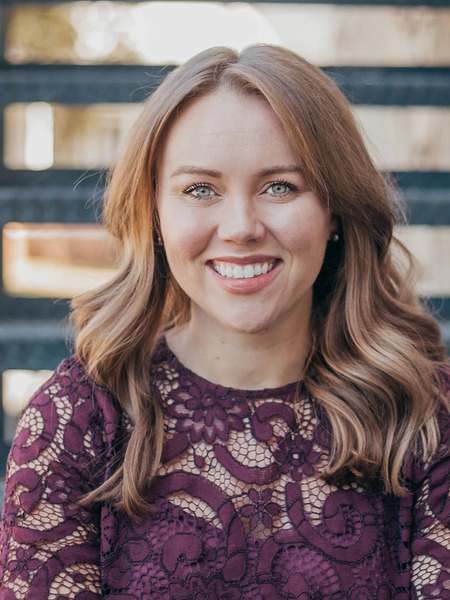
Kara Robinson Chamberlain
Empowering Victims Through Her Story, Law Enforcement Experience, and Advocacy
Profile Links
Fee Range
Please contact us for pricingTravels From
Lexington, SC
Kara Robinson Chamberlain
Biography
Kara Robinson Chamberlain is a keynote speaker, survivor advocate, former law-enforcement professional, television host, and established voice on ethics in true crime. Her work sits at the intersection of survival, criminal justice, media, and what happens after trauma.
Her perspective comes from having lived and worked on nearly every side of those spaces--as a survivor, investigator, advocate, television subject, producer, and host. Today, Kara uses that breadth of experience to empower survivors, train professionals, advise media teams, and bring humanity and nuance to difficult stories and conversations.
Her public story began with survival. Her work is about what comes after.
At 15, Kara Robinson Chamberlain was abducted at gunpoint from a friend’s front yard and held captive for 18 hours.
Throughout the ordeal, she deliberately observed details about her captor, his belongings, and her surroundings. When an opportunity came, Kara escaped. The information she provided investigators helped identify Richard Evonitz and ultimately connect him to previously unsolved crimes.
The case became widely known. But for Kara, surviving it was only the beginning.
Kara’s relationship with the criminal justice system did not end when her case closed. She later completed the South Carolina Criminal Justice Academy and worked in law enforcement, including as a school resource officer and in sex-crimes and child-abuse investigation and victim advocacy.
That work gave Kara another perspective on trauma and response: what it feels like to need help, what it means to be responsible for providing it, and how profoundly the actions of professionals can affect what comes next for a survivor.
People need more than procedures. They need to be seen as whole human beings.
For much of Kara’s public life, her relationship with media was straightforward: she was the person being interviewed about what happened to her.
Over time, that changed.
Kara became an executive producer on Oxygen’s Escaping Captivity: The Kara Robinson Story, worked on the development of Lifetime’s The Girl Who Escaped, co-created and cohosted Survivor’s Guide to True Crime, and moved into investigative television as host and investigator of ABC News Studios’ Somebody Knows Something.
Her work continues with Investigation Discovery’s The Serial Killer Connection, a three-part docuseries in which Kara and Bonnie Lou retrace Richard Evonitz’s past, pursue unanswered questions, and investigate whether additional victims may still be waiting to be identified.
That progression has given Kara an unusually complete view of true crime—from being the person whose trauma becomes content to becoming someone actively involved in how stories are investigated, developed, and told.
Kara has become an established voice on ethics in true crime, training professionals and speaking about survivor participation, consent, language, victim agency, family relationships, storytelling choices, and the impact that remains after the cameras leave. Her position is not that difficult stories should not be told.
Compelling storytelling and responsible storytelling do not have to be opposites.
The strongest work can hold complexity, preserve humanity, and recognize that the people at the center of a story continue living long after the audience moves on.
That commitment to nuance now informs Kara’s television work, training, consulting, advocacy, and the conversations she brings to the stage.
Kara believes survival does not have to become an identity someone remains trapped inside. What happens to us matters. What we build from it matters too.
Her work is ultimately about expanding the story beyond the worst moment—toward agency, responsibility, growth, purpose, and the people we become afterward.
Kara Robinson Chamberlain
Featured Keynote Programs
Not Defined
For conferences, leadership, schools, community organizations, and general audiences
Survival is part of Kara’s story. It is not the whole story.
Through her experience and the years that followed it, Kara explores identity, resilience, agency, healing, and what it means to build a life that is bigger than the worst thing that has happened to you.
This keynote challenges audiences to think differently about adversity—not simply as something to endure, but as something that does not get to make every decision about what comes next.
Format tailored to audience and event
Grace
For law enforcement, prosecutors, victim services, healthcare, mental-health professionals, and multidisciplinary teams
Using her own case as a real-world case study, Kara examines not only what happened, but what happened next—and how professional response can affect a survivor’s sense of agency, trust, and recovery.
Drawing from her experience as both a survivor and former law-enforcement professional, Kara gives audiences a practical, survivor-centered framework for responding well without losing sight of professional responsibilities.
Typically 60 minutes · Q&A available
Kara Robinson Chamberlain
Featured Reviews
Frequently Asked Questions
Quick answers to some of the most common questions about booking Kara Robinson Chamberlain for your event.
How do I book Kara Robinson Chamberlain for my event?
Booking Kara Robinson Chamberlain with Premiere Speakers Bureau is a streamlined 4-step process:
- Availability Check: Contact us with your event date and budget to verify if your desired speaker is available.
- Hold Date: We place a temporary "hold" on the speaker's calendar while you finalize internal approval.
- Contracting: We issue a contract outlining the fee, cancellation policy, and event expectations.
- Logistics: Once signed, our event management team handles all travel booking, itinerary, and AV requirements.
Why should I partner with Premiere Speakers Bureau rather than contacting speakers directly?
Partnering with Premiere Speakers Bureau provides a comprehensive safety net for your event that direct booking cannot match. You get the same speaker for the same price, but with a dedicated team with over 30 years of event experience handling contracts, logistics, and are prepared for any emergency. We know what it takes to run an excellent event.
What makes Premiere Speakers Bureau unique compared to other agencies?
Premiere Speakers Bureau distinguishes itself by having over 30 years of experience while partnering with more than 35,000 events. PSB has also built a streamlined, fully online process that makes booking a speaker, handling travel and payments extremely easy for anyone looking to plan a speaker led event.
How does Premiere Speakers Bureau's 'Zero Cost Service' model work?
Premiere Speakers Bureau operates on a 'Zero Cost Service' model for event planners. Our services—including research, booking, and logistics—are always free to the client. The speaker covers our commission from their standard honorarium as payment for our role in marketing and managing their engagements.
How much does it cost to book Kara Robinson Chamberlain?
Available on request. Send us your date and budget and an agent will confirm.
What are the standard policies for speaker travel and expenses?
Travel expenses are negotiated during contracting. We generally recommend a flat travel fee for simplicity, though we also offer line-by-line invoicing when preferred. PSB ensures these expenses adhere to professional standards, and our Event Portal allows for easy tracking and invoicing.
Kara Robinson Chamberlain's Featured & Related Topics
Find Similar Speakers Overcoming Adversity







Popular Speakers

Dr. Jessica Kriegel
CEO Advisor and Doctor of Leadership, Best-selling Author

Liz Bohannon
Top 1% VC-Backed Female Founder & CEO and Bestselling Author of Beginner’s Pluck: Build Your Life of Purpose & Impact Now

Alex Weber
Be Unstoppable! with Leadership & Performance Expert, American Ninja Warrior, & Acclaimed Author
Ron Clark
"America's Educator", NYTimes Best Selling Author, Disney's American Teacher of the Year, and Founder of the Ron Clark Academy

Candy Valentino
Founder, investor, WSJ Best-Selling Author and Serial Entrepreneur

Kim Bearden
Best Selling Author, Co-founder at Ron Clark Academy, and National Teacher Hall of Fame; Organization Culture / Climate and Communication Specialist

Dr. Ben Carson
Former US Secretary of Housing and Urban Development / Conservative Political Thought Leader / Renowned Pediatric Neurosurgeon

Brett Culp
Award-winning documentary filmmaker helping leaders and teams rediscover clarity, courage, and connection in times of transformation