Transcript for John O'Leary Interview on the Beyond Speaking Podcast

In this episode of the Beyond Speaking Podcast, John O'Leary shares his remarkable journey from surviving a near-fatal accident to becoming an inspirational speaker, author, and podcast host. He discusses the importance of intentional living, the power of saying "yes" to opportunities for good, and how everyone can find purpose and joy by embracing life's challenges with a childlike wonder. O'Leary's story is a testament to the incredible resilience of the human spirit and the transformative power of positivity and determination.
Podcast Episode · Beyond Speaking · Mar 19, 2024 · 28m
John: Reminding people ultimately of the power within their life, whether they have one talent like I do, or five, that our lives can be used for good, but you gotta say yes to it. So you said, John, ultimately, what do you say to the people who are kind of like they've lost that buzz right now, that that energy? You gotta take a look back, you gotta come present again, you gotta have a big, grandiose vision of what is possible right now, but you gotta start. You gotta stop making excuses and start living now.
Intro: Welcome to the Beyond Speaking Podcast from Premiere Speakers Bureau, featuring in-depth conversations with the world's most in-demand keynote speakers.
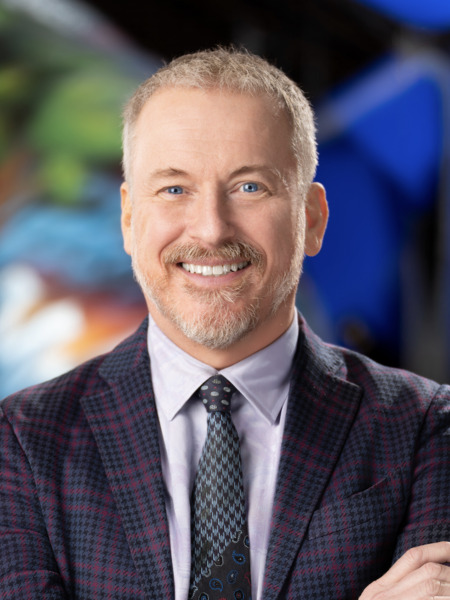
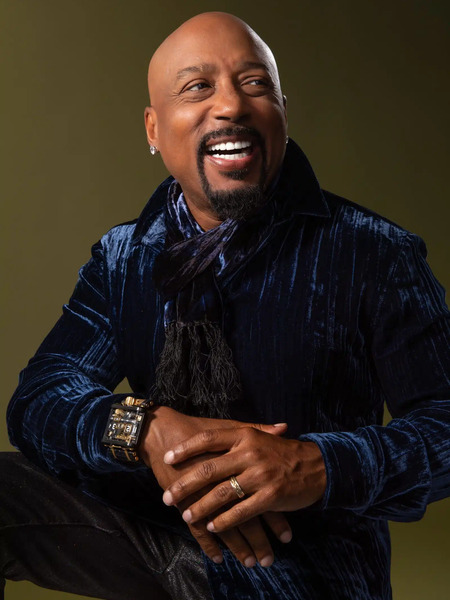
Brian: Hi, I'm Brian Lord. This is the Beyond Speaking Podcast. Our guest today is John O'Leary. As a nine-year-old boy, John was burned on 100% of his body and given less than 1% chance to live. His amazing journey of survival illustrates the incredible power of the human spirit. Today he's the author of the best selling books On Fire and In Awe. He's the host of the top rated Live Inspired Podcast. So as soon as you finish this one, go and listen to that one. Don't listen to my other episodes. Listen to his because it's better. He's awesome.
He's an inspirational speaker who's taught millions of people around the world how to live inspired. John's a business owner, writer, husband, and father of four. We're gonna talk about that. We're both fathers of four. And now he teaches other people how to live despite being so near death himself. So, John, thank you so much for joining us here on the Beyond Speaking Podcast.
John: Brian Lord, I have the pleasure of doing a lot of podcasts. It's rare to come on a show with a friend though. So truly, man. Like most of these guys and ladies are people I meet for the first time when the Zoom starts rolling. So it's great to see your face, and hear your voice, and to be back on your show.
Brian: Well, thanks. Yeah, because you were one of the first. So I've been doing interviews since 2009. And we started the podcast in 2017. And you were one of the very first people that we had on. I remember the first time I heard you speak, it was at ISB. So like everybody's got an association, speakers bureaus have an association. And I won't say the two speakers who were before you, but they were like, it was the part we're like, “Oh no who's next?” And then you were on for like eight or 10 minutes. It was really quick, and we're like, holy cow, that guy is different.
Like you know how you see some athlete go out there and dunk and just they're made of different stuff. And John O'Leary's made of different stuff. And so and then even when you came to speak at our office and another company, and it's just like, you could hear this guy fifteen times tell the same story. You tell different stories, but it's that good. So that is a lot of build up, and I am in sales for a living, but that's actually true that all that stuff, all that stuff is great.
John: I would encourage your listeners to lower expectations for John, the speaker and the man, and certainly for this podcast. Yeah. So one thing that I think makes us different is I'm an introvert. I'm self-conscious. I don't like the spotlight. I'm a homebody. And sometimes some presenters want to hear the sound of their own voice. And I don't cherish the sound of my own voice, but I cherish the work we get to do. And I cherish reminding people that their life matters and their work matters and their words influence and to act like it. And so all that we do around here, whether it's speaking or coaching or podcasting or whatever the thing is, it's to remind people that the things they do today will influence profoundly tomorrow. And that matters.
Brian: Mm-hmm. I know you've impacted so many people. Who are some of the favorite people that have impacted you?
John: I mean, how do I begin? I'm a pretty normal guy, and we can drop some pretty big names here. Like, when I first got burned, we got letters from Ronald Reagan and Nancy, Pope John Paul II, Billy Graham, famous baseball players and hockey players and football players. So, like those are all names and big names.
But for me, my mom, you know, she raised me, taught me, taught me manners. She taught me how to shake hands both before I got burned and then after I got burned and lost my fingers. Like that's an important lesson. How do you shake hands when you don't feel worthy and you can't grip the hand of the guy in front of you? Well, I'll do it now because my mom taught me. So I look up to her. She's taught me an awful lot about life.
My dad, I think you and I have talked about my dad in the past, but my dad's a veteran and a business owner and humble and faithful and cool. And now he has Parkinson's disease. He's had it for about 30 years. He's nonverbal. He's in a wheelchair. His caretaker is my mom. So to see them still in love through the midst of this storm is a lesson every time I'm with them, they're teaching. And even in the silence, what speakers get wrong so often is thinking they need to fill the air with their voice and their brilliance.
Dude, there's just something about silence. And my dad lives it every day. And some of the best conversations I have, and I'll get emotional, dude, but some of the best conversations I have are with my dad. So those two, my wife, she's awesome. She's humble. She's beautiful. And she's just servant-minded. So I'm wild about her. My kids teach me. Like I'm not trying to be, Wow, Goody Two Shoes. Everyone with the last name O'Leary, he's now celebrated. But it's true, like the people nearest me truly influence me the most.
Brian: Mm-hmm. What's your favorite thing about being a dad? I know you got four kids. What's the best part about that?
John: To distill it to one is hard. But the first thing that came to mind is to make what they're most passionate about mine. So arts and crafts is what I was doing last night with my daughter. You know, I haven't done arts and crafts in a while, man. O'Leary lost the ability to create arts and crafts when he was nine and got burned. So I never did that well. But what she has taught me is you don't need to do it well to have fun and to create something beautiful. It's like I was doing you know, we were painting last night together with this little girl.
One of my boys is huge into football. His team is called the Detroit Lions. And so we watched with great vigor for about 39 minutes a game. And then our hearts started to slowly sink and then completely were decimated by the end of it. But I love football now because of him. Another kid likes basketball. Another kid is into Big Brothers, Big Sisters. He's more like his mom. He's a thinker and a doer. So he's big into that. He's big into mock trials. So I'm big into mock trials. I love that about him. So I think what I love most about being a dad is they expose these things that are unique to them that are beautiful. And in that you see what's beautiful also within yourself.
Brian: Yeah. What's one of the hard things about being a parent to you?
John: Man, when their hearts break, I don't care. Like the word no doesn't bother me. Can I get a new Barbie? No. Can I get a new phone? No. Like I'm good at that, man. Can I stay out tonight, tonight past midnight? No. So I don't mind the word no. I'm not trying to be my kids' friends, but I want to be their leader. And I want them to know that they can trust me, and that they can respect me, and that I love them, and that I'm for them.
So what breaks my heart is when their heart breaks. Not because they weren't able to stay up past curfew, but because of something that happened at school or a team they got cut from, or you know, they were pretty sure that she was the one, you know, the middle school girlfriend and it didn't work out the way they anticipated. And just to be with them in that period of crisis and pain and not to look down upon it, man. Like when we were 14, that was a big thing. So I have a pretty big heart these days and it fills for my kids, but it also sometimes breaks for them.
Brian: Yeah. Yeah, that can be tough. And you know, one of the things that's fun about what we do is doing podcasts and learning. And so I'm curious to know. So what and I am being serious, like you should definitely go and check out the Live Inspired podcast. And you've got a gazillion downloads. I can't remember what it was. Whenever I see the stats come out, I'm very jealous. But what are some of the favorite things you've learned maybe in the past year?
So for timing, last night was the AFC NFC championship game. The Super Bowl is probably already happened by the time this comes out, but that gives some context to the Detroit pain that is being felt in the O'Leary household today. But we're also here in January, the end of January. What are some of the biggest things you learned last year, either through podcasts or just the people you've been around?
John: So we had on in the course of a couple of days Willie Robertson, which was hilarious and fun, and you know who Willie is. And then we had on Martin Luther King III. And then we had on an expert on raising kids. And so like all this like the ebb and flow of people.
And I'll go back through all those in a moment, but just that people are people. You think that Willie's got to figure it out. And then you spend three minutes with him and he is broken, lost damaged goods, and he's okay with it. And he's getting better every day. And then you think MLK III, like, you know, he's the son of Martin Luther King, my gosh. Yeah. and yet he's doing the best to keep his family together. And he's a dad. That's what he was most proud of. He's a dad.
One of the most intimate things he shared in our time together was, he talked about what it's like to have a dad like that and to lose a dad like that. And then he shifted on me a little bit, and he's like, John, don't forget about my mom. I'm like, well, talk about your mom then. So he told the story of four days after his father was murdered. That and to lose your dad is unbearable as a child at any age, but he's nine years old, I believe. His father was murdered. They had not yet captured the murderer. And his mom decided it would be wise for them to go up to Memphis to finish what their daddy started.
You think about what you would be doing if your husband had just been murdered. And the people who did that, and the place where that happened, and the risk that you're about to take on, not only for yourself, but your kids who are going to march now with you. She leaves Atlanta, they fly up to Memphis, and they lead this parade peacefully, reminding the refuge collectors, trash collectors that these are men. They deserve to be treated like men. That's what their dad lost their life doing. And they wanted to make sure that the mission would not be murdered like that, that it would continue forward.
So to hear this kid who is now this man on my podcast in front of me sharing the story about his mother's grace, and her toughness, and her love. That's what I'm learning on these podcasts. Just like everybody's got a story. It's usually not the one they're telling the world. But if you give it a little bit of time, and you ask the right questions, and you sit there and listen, you'll get where you need to go next.
Brian: Mm-hmm. Do you teach your kids how to ask questions, or do interviews, or anything like that?
John: So I think teaching is best done by modeling rather than words. And so one thing I'm finally recognizing, my son, you and you and I have kids at the same age, they're going off to college next year. So my oldest is a senior in high school. His name is Jack. And Jack did a college essay, but he did a bunch. But in reading his essays, I realized I was teaching him things that I had no idea he was actually paying attention to.
So yeah, do I teach kids how to ask questions? I think, but not in words. They see it modeled. They see a dad who I get pulled in a lot of directions for work. So you know, all the jobs, but I never have my phone out. I don't have my phone on ever. They've never since they've been alive, they've never heard my phone ring. It's on silent always, unless my wife calls. That's the only one that I have ring.
So that and I mean like I want to be with the one in front of me. And so they see a dad who's present. They see a dad who's curious. They see a dad who cares. And Brian, you do this as a father and as a husband, as an interviewer and as a leader professionally, but they are picking up on those signs. And it's my hope as they go on to college and graduate and build their own lives that they won't forget the lessons being modeled to them today.
Brian: Yeah, and that's a big lesson too. Always let mom’s call through. If they don't take up anything else, make sure you do that.
John: But my wife was out of town last Saturday at a field hockey tournament for our daughter and she called me a three. And then she texted me at three til five and she's like, dude, what are you doing? And I'm like, Hey, babe, I'm at a funeral. Remember? Like, I'm at the funeral. So she's like, yeah, that's right. That's right. So yeah, their calls go through, but sometimes they need to go to voicemail.
Brian: Yeah, yeah, absolutely. Absolutely. That's cool. That's great. Well, so I know one of the things you're talking about. So we're talking about those different things that you're being intentional about. You know, you also talk about intentional living as opposed to accidental living. So what is, you know, kind of what is accidental living to you, and how do you get out of it?
John: Well we'll start by even defining it. When I was a kid, I w some of your viewers and listeners may know, but I was burned in a gasoline explosion. And what happened is I saw kids in my neighborhood playing with fire and gasoline. I'm nine years old. I assume if they can do it, me too. So the following weekends, my parents were gone. I walked into their garage, bent over a can of gas, five gallons, lit a piece of cardboard, and tried to pour.
Then before the liquid came out, boom, man, the fumes created this massive explosion, blasted the cannon too, picked up the nine-year-old, launched me 20 feet against the far side of the garage, set my world on fire, changed my life trajectory entirely. And when we got out, two things happened. Number one is we rarely talked about it. I spent five and a half months in hospital, like massive struggles, scars from my neck to my toes in a wheelchair for a couple of years, but we rarely, rarely talked about the fire.
And when they did, when we did, we would refer to it as an accident. John's accident. And that language, man, like, I mean, in reality, what do you think happens when you hold a flame to a can of gasoline and you begin to pour? And we can say it's tragic and it's a little boy's mistake. And you know, yeah, those things are true. But I think too often in life, Brian, we call things accidents. Accidents, man.
And part of my professional career is about waking people up from accidental living to be far more intentional. Even in the phone example, that's not an accident that my phone doesn't ring. It's not an accident. If you call me later on tonight, it's going to go to voicemail. It's intentional. It's setting up these bumpers so that we can make sure we say yes to the things that matter most and let go of the things that are less important.
And so intentionality is about recognizing your voice, your ability, your agency to do what matters most next. And then to actually step forward and to take action on that. And in doing so, it will change not only your world, but the world. So I try desperately to remind people what it looks like to be accidental in their lives, and then how to be liberated from that.
Brian: How you go like what are the steps like one two three, like somebody wants to change make that change today tomorrow what how do they how do they progress in that direction
John: So, you know, first you'll need to go to the kitchen with me. All right. Now grab the pair of scissors, cut the cable. I know I know our friends at CNN and MSNBC and Fox are like saying, no, do not cut. I'm telling you right now, your life and your mental health will improve wildly when you cut it. So that is something I did years ago. And it started shaping what I was able to do in my actual life, not their life, my life. The thing I actually have some agency over. That's one thing.
Secondly, is to learn the lessons from the past. Long before I became a speaker, long before you and I met, I recognized I wanted to do more in my life. I had no idea what that might mean, but I realized the only way to figure that out is to learn from the past. So I started reading a lot of autobiographies. I started doing a lot of research around leadership, self-help, and personal growth. Started keeping a journal on what I was learning from Zig Ziggler, but also what I was learning in my own life.
Started figuring out what mattered most, started setting goals. I'd never set goals until I was about 31. I got three decades through life without a goal. I mean you laugh. Like, I always wonder how many of your listeners have goals that are clear and written down and they're moving toward each day intentionally, not accidentally, intentionally. And I don't know why we don't teach this in school. We don't, we don't teach financial planning typically in school. We don't teach goal setting typically in school. Some of the lighthouse schools do, but most don't. And so I started getting clear in all of that.
And then for me, and I'll say this and then you can ask a clarifying question. But when I was 28 and still struggling, I was still seeking. And part of that for me was seeking in church, like still trying to get involved spiritually. And so I'm in the back row of a church pew, probably partied out from the night before, but I'm there. Like there's something to be said, like I'm in the room, I'm in the arena, Brene Brown. I'm in, I'm in the arena.
And the pastor was preaching on the gift of talents. And he said, if you have five talents, you're called to multiply. Quick. If you have two, called to multiply. And then he made his real point with those of us with one. And that was me at the time. And he said, And for those of you who feel as if you only have one, listen to me. Listen for the first time today. And then he went on and he said, Your life is a priceless, precious gift. Say yes to being used for good.
And that day, 28 years of age, that's 20 years ago now, I wrote down those words, John, your life is a priceless, precious gift. Say yes to being used for good. And I had no idea really what that meant. This is a true story.
Two days later, I got a phone call at a construction site. I'm working construction. Can you think of a worse job for a dude without fingers to manage than a construction site? But that's what I did, Brian. So my phone rings. This little girl says, Mr. O'Leary, would you speak at my school?
And my first thought was about what? Because I never told anybody what happened. And then I remembered a message I heard two days earlier. Your life is a priceless, precious gift. One talenters, say yes to being used for good. And so I said yes to that little girl. And it led to an eight minute keynote in front of three third grade Girl Scouts.
So that's my coming out party, man. And then as I failed my way to the back of that classroom back to my pickup truck, one of the dads said, John, that was awesome. Would you like to come to my rotary club? Yes. One of those guys was in Kiwanis. One of those guys was a chaplain at a prison in Fort Leavenworth, Kansas. Yes. And I just kept saying yes. There was no business case for it. I knew Zig Ziggler because I was trying to get better as a person, not as a speaker. But I never imagined speaking. I just knew the power of saying yes to being used for good.
And that yes has led to 2,600 speeches all around the world, millions of people. But a message reminding people ultimately of the power within their life, whether they have one talent like I do, or five, that our lives can be used for good, but you got to say yes to it. So you said, John, ultimately, what do you say to the people who are kind of like they've lost that buzz right now, that that energy?
You got to take a look back. You gotta come present again. You gotta have a big, grandiose vision of what is possible right now, but you gotta start. You gotta stop making excuses and start living now.
Brian: Yeah. And that's amazing. I mean, that's that's one of the things that everybody gets out of there, even though I like I I've heard a thousand, you know, speeches before, but there's always that thing of just saying, okay, even if it's just three Girl Scouts that, or even just like your local whatever Rotary, Kiwanis, whatever it may be, you know, you're making a difference that day in that room. And it doesn't have to be speaking, it could be anything. You know, my great aunt was blind, but she could still remember how to make blankets. And so they called her the blind angel of the mission that she worked with and would provide blankets for homeless people.
So it's those things of just, you know, taking whatever stock of what it may be that makes a difference. And you know, one of the things I like too that you talk about is kind of recovering that childlike wonder, you know, that I think some people are stuck in those ruts you talk about or they think they don't have talents, but they've lost maybe what makes life amazing. You know, what, how did you come up with that thought about childlike wonder and how do people recapture it?
John: There's a whole book out there, you know, go to your local library man and pick it up.
Brian: I wonder who's by. It could be something O'Leary. I don't know.
John: In short, I came up with it because I was raising four kids at the time and you've gone through this process. You're in the middle of it too with your little ones. But I went through this process and I was looking at my children with such joy in their lives and such vibrancy and such ability to forgive and connect and to dream and to ask these beautiful questions.
One of the little stories is one my daughter's first day preschool. I dropped her off. I was there to pick her up and she came running over to me excitedly, and handed me her little pink backpack. And then her friend, who she just made a friend with that day. It's amazing how quickly they make friends.
They looked at me, looked at my hands, looked at her and said, “What is wrong with your daddy?” Right? Then she says, “His hands.” Because my fingers have been amputated. What is wrong with your daddy? And Grace looks at her, then she looks at me, looks at my hands, and says, “Nothing's wrong with my daddy. He just got burneded when he was a little boy. But he's all better now.”
And like for that little friend of hers, dude, that was it, man. It wasn't like she was stuck on the amputation anymore or the scars anymore. In other words, the things that create this profound gulf between me and you. Because you see the world different than I do, man. And never show, the two meet in the middle. Never. This little girl, once she recognized what was going on. The bridge was built.
And I believe she handed me her backpack. Her name is Maureen. I was with her on Saturday, with you know, so like she's my friend now, too, this little girl. In other words, they're able to see life through the lens of possibility and freedom and joy. And then they lose it. And then it gets beat out of them. And then a relationship goes sideways. A parent lets them down. A teacher overcorrects them. Life happens. They get a couple of scars along the way. And then we, you and I and your listeners have a little bit more trepidation as we step into the classroom to raise our hand.
I mean, you've done enough speeches, man. When you speak to kids, every hand goes up. When you brought you the first time you saw me, if I'd asked a question of that group in nine minutes or whatever you guys gave me, very few hands would have gone up. Because you don't want to get it wrong. You don't want to put yourself out there.
And so I want to teach people as a speaker, as a leader, but more importantly, as a human being, as a dad, how to live like a child, not childlike. Plenty of evidence of that all around us in politics, corporately, sometimes, families on the highway, but childlike awe, that joy for life again. So that's what I'm after. And how do you return to it? Be inquisitive, pursue freedom, offer grace, keep learning. Stop measuring against the things that don't matter, begin measuring against the things that actually do, who you were yesterday, who you could become tomorrow and how to take the next step toward that. That's what kids do as they're little, and I wanna make sure we continue to march forward toward life as we get older.
Brian: Yeah, absolutely. Well, one last question here. And this is kind of the cool, cool factor here of having you on here. So you've got your own movie coming out. And I'm curious to know how that came about. And you've got some pretty famous people in there too, so brag a little bit about it if you could. And then just let us know how and when, and how to look for it.
John: Hmm. So how did it come apart? My whole life is just remarkable. Like I'm just blessed. Like and it's blessing upon blessing. So I'm in Las Vegas at a conference. This was seven and a half years ago. And at the end of this conference, a couple of folks came up to me and they said, Man, have you ever thought of turning that into a movie? And all I said was, others have said it might be a good idea. I've never once considered it. And she said, "Would you give me an opportunity of doing exactly that?” And I said, “You're welcome to try.”
A year later we met again and she'd taken some real steps. Her name was Linda Huntington, taken some steps. She brought on some producers. She said, I'd like to, I'd like to legally mm bind this now. Let's move forward. So I signed an agreement that gave her a real opportunity. They took the book on fire, turned it into a movie. A gentleman wrote the screenplay. They assigned a director, his name is Sean McDamara. He produced Soul Surfer and Reagan. And Cutting Edge and all like hundreds of show. Like he's a real director, man. I'm like, my gosh. So then a key's on. And I'm like, I still don't know him. So I wanted to meet him because this story matters to us. It's a story about life.
So I flew out to Hollywood to meet this guy. And we started talking about why he does what he does, and he just started crying. This big, burly, tall, handsome fella just started weeping. I'm like, Yeah, I can work with a guy like this. So we started working together. We've been fundraising for the last six years. It's a $10 million film to create that takes a minute to lift up to that degree of monies.
Now we have the actors. We've brought on John Corbett to play my father. I'm sure many of your listeners know him, and William H. Macy to play a main character named Jack Buck. You know, Bill Macy's a great guy. John Corbett's a great guy. Joel Courtney, a guy who lives in Tennessee, along with you, man. Jill Courtney's a phenomenal actor. He plays the older version of John O'Leary. He's great. Macy McLean plays my wife. Stephanie Schostack from Iron Man and The Devil Wears Prada is playing my mother. So like these are real characters. A guy named Devon Franklin, who is the most gifted guy I know, plays the most important nurse for my story.
So they filmed over the course of three months in St. Louis, and it's currently in post-production. We'll wrap that in about two more months. And then it's off to the races. It's probably gonna come out Thanksgiving time of 2024, sometime around then. And the movie's gonna be called On Fire. And you can learn more about that journey at On Fire for Good. That's a website we have that we're just kind of working on celebrating the stories of ordinary people doing extraordinary things. So it's called onfireforgood.com.
Brian: That’s very cool. Very cool. Well, we'll make sure we're going to release this podcast. We'll make sure to re-release it then. Give everybody a little heads up for it. So, John, thank you so much for being on here. For those watching and listening, make sure to go to premierespeakers.com and check out John O'Leary, and also make sure to subscribe, rate, and review.
And John, thank you again so much for sharing your story. I only got to, I think, like three of the questions. We just kind of went off the rails, which was a lot of fun, which was what we're hoping to do. I think I left twelve on the board for another few years from now. We'll have you back. So John, thanks so much for being here again on the Beyond Speaking Podcast.
John: Thank you, Brian.
Outro: Thank you for joining us for the Beyond Speaking Podcast. To learn more about today’s guests, visit premierespeakers.com. Make sure to subscribe and leave a review wherever you listen.