Scott is a treasure trove of insight and important information about America's desires, concerns and habits. Scott effectively weaves together the complex psyche of our country in a way that one walks away saying, that explains it. And it does!


Premiere Exclusive
Scott Rasmussen
Public Opinion Pollster, Author, Co-Founder of ESPN & Rasmussen Reports, Political Analyst
Profile Links
Fee Range
$15,000Travels From
Dallas, TX, US
Scott Rasmussen
Biography
Scott Rasmussen has long been recognized as one of the world’s leading public opinion pollsters and top political analysts. He constantly has his finger on the pulse of the nation and his knowledge of history enables him to put the latest issues into a larger context. Scott is the president of RMG Research and founder of the Napolitan Institute.
Innovation has been a hallmark of Scott's career. In 1978 he changed the world of sports with the founding of ESPN, taking advantage of the then new technology of satellite communications. As the internet came to life in the 90’s, Scott launched his first website and became the first pollster to offer data directly to the public rather than through a network reporter. Scott revolutionized the polling industry with automated polling, being described by the Wall Street Journal as a "key player in the contact sport of politics."
Today, Scott’s focus is to bring the true voice of the American people to the forefront of the political discourse. As part of his work for the Napolitan Institute, Scott recently conducted unprecedented research documenting an Elite 1% of the population whose views are wildly out of touch with the American people. This study included the first ever survey of federal government managers, revealing that those who help run the country are much more aligned with the Elite 1% than with voters, and in some cases are even more extreme in their viewpoints.
Scott is a New York Times bestselling author. He lives with his wife in Texas and they have two grown children.
Scott Rasmussen
Featured Videos
Current: American Legislative Exchange Council
Time 17:43
More Videos From Scott Rasmussen
Scott Rasmussen
Featured Keynote Programs
Think Boldly
Transforming Challenges into Technological Opportunities for Growth
In a world where the pace of change is rapid and relentless, Scott Rasmussen knows that the organizations that thrive are those willing to break the mold and embrace innovation. As a co-founder of ESPN, he recognized the potential of satellite technology to revolutionize sports broadcasting, turning the improbable into reality with 24-hour programming. This early vision not only transformed the media landscape but also exemplifies how foresight can create unparalleled opportunities.
Scott's journey didn't stop there. He was instrumental in bringing polling into the digital age, pioneering automated survey methods that have become industry standards. His current work with Google’s Jigsaw on an AI initiative for America’s 250th anniversary reflects his commitment to leveraging technology for meaningful impact.
While often recognized for his political analysis, Scott’s insights extend far beyond this realm. His presentations are designed to empower organizations and individuals to stay ahead of emerging trends, adapt to new environments, and seize opportunities that others may overlook.
Key Themes:
* Visionary Thinking: Understanding the importance of looking beyond conventional wisdom to identify and act on emerging trends.
* Calculated Risk-Taking: Encouraging leaders to foster a culture where calculated risks are embraced, promoting creativity and innovation.
* Leveraging Technology for Competitive Advantage: Discussing how technological advancements can be harnessed to drive organizational success in modern business environments.
* Creating a Forward-Thinking Culture: Strategies for cultivating an environment that not only accepts change but thrives on it, enabling teams to evolve continuously.
When polled 100% of those who've engaed Scott have indicated they would recommend him to a colleague, Scott is not only an astute business strategist but also a captivating speaker. His ability to engage and inspire audiences ensures they leave equipped with practical tools to navigate and lead through the complexities of change.
The Elite 1% and the Battle for America's Soul
In this deep-dive keynote, Scott Rasmussen shares the jaw-dropping disconnect between the nation's elite and the rest of America. While most Americans believe there is too little individual freedom in our nation today, only 16% of the elite agree. Stunningly, half of the elite believes there is too much individual freedom.
Scott's research shows how deep the political divide has become while providing a hopeful bridge into a brighter future for America's citizens and communities. Scott will demonstrate how today's authentic leaders, not Washington-centric agencies, power-centered-politicians or university academics will determine the future of freedom, free-markets and self-governance.
Messaging to Take Your Policy Ideas to Implementation
Too many great policy ideas fail because advocates are speaking a different language from voters. In a world where only 8% of voters talk politics on a daily basis, the language barrier is enormous. Acronyms like CRT and words like “woke” generate a powerful response in the political bubble but are little known among the general public. Scott outlines a transformational five-step messaging program that begins with listening to voters and ends with the outcome you desire.
Issues That Matter to You
Scott is constantly measuring the pulse of the nation on the issues of the day and can tailor a presentation to address the questions and concerns that matter most to your organization. Issue presentations draw upon the latest polling data, underlying policy dynamics, and legislative realities. In addition to insightful analysis, Scott offers messaging guidance to help your organization advance your interests.
Scott Rasmussen
Featured Books
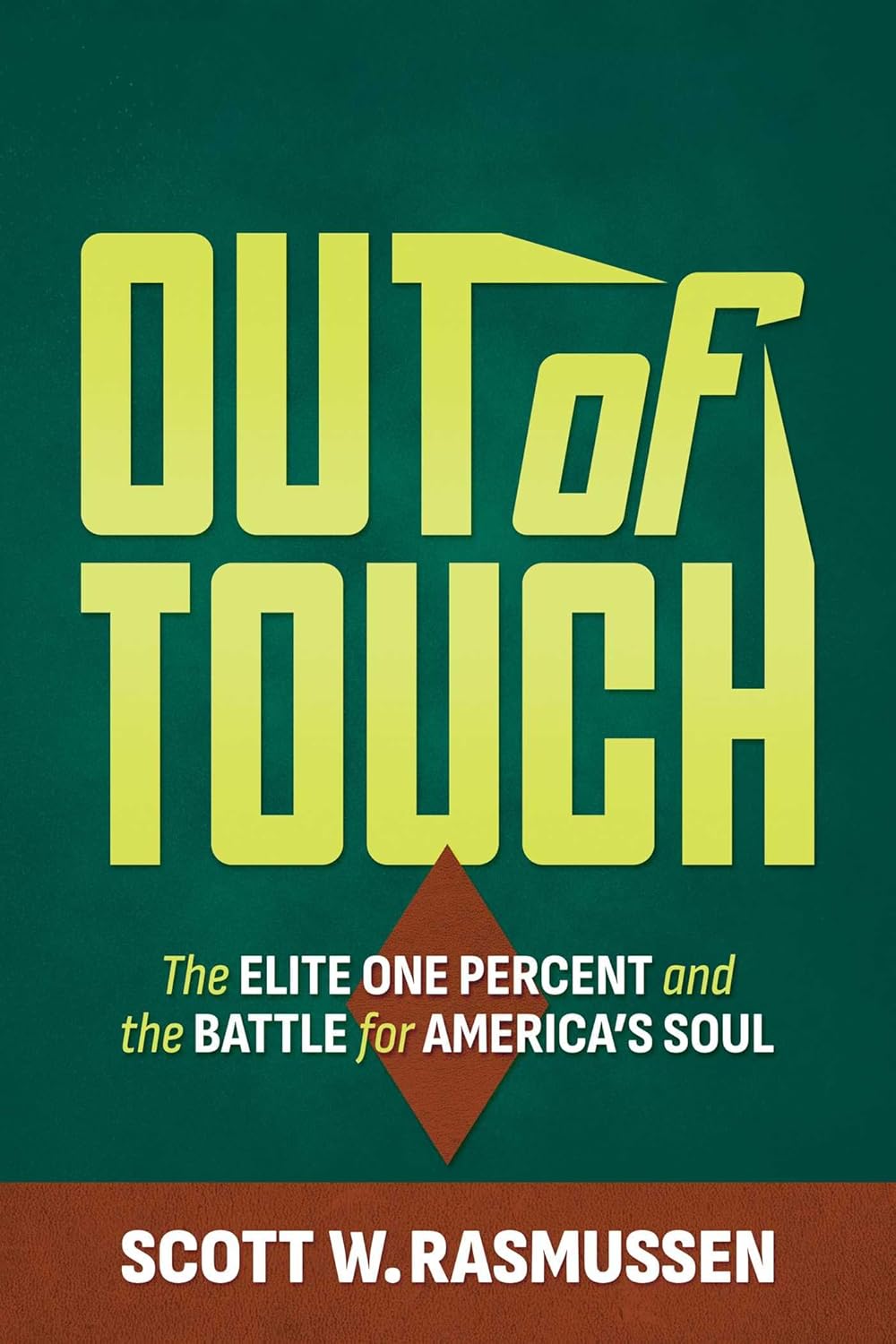
Out of Touch: The Elite One Percent and the Battle for America's Soul
by Scott Rasmussen
A data-driven indictment of how a tiny class of politically active elites hijacked America’s institutions, shattered national trust, and turned citizens against one another—and what the rest of us can do about it.
America feels divided beyond repair. Families stop talking, friends walk on eggshells, politics has become tribal, angry, and hopeless. But what if the story we’ve been told about our national divide is wrong?
In Out of Touch, legendary pollster Scott Rasmussen reveals the real source of America’s crisis: not ordinary voters, not even partisan extremists—but a powerful and insulated Elite One Percent who dominate media, universities, corporations, and government itself. Drawing on unprecedented national surveys, Rasmussen exposes a shocking reality: These elites trust government more than the public, believe Americans have too much freedom, and increasingly doubt whether everyday citizens should even be allowed to vote.
While Americans across party lines still agree on core values—freedom, equality, and self-governance—the ruling political culture has drifted far from those ideals. The result is a nation trapped in manufactured conflict while decisions are quietly centralized in elite hands.
This book doesn’t preach left or right; it follows the data. And what the data reveals should alarm anyone who cares about democracy.
Out of Touch is a wake-up call, a warning, and a roadmap for renewing the American promise before it slips away.

The Sun Is Still Rising: Politics Has Failed But America Will Not
by Scott Rasmussen

The People's Money: How Voters Will Balance the Budget and Eliminate the Federal Debt by Rasmussen, Scott
by Scott Rasmussen
Challenges government explanations for spending cut failures while drawing on historical events, budgetary documents and public opinion data to reveal that everyday voters are more willing than politicians to commit to actions to reduce federal spending, explaining how specific proposals supported by a majority of voters could solve the nation's financial problems. 150,000 first printing.
Scott Rasmussen
Featured Reviews
Scott Rasmussen
Featured Articles & Resources
Transcript for Scott Rasmussen Interview on the Beyond Speaking Podcast
Brian Lord sits down with Scott Rasmussen to discuss the complexities of opinion polling, the importance of asking questions from multiple perspectives and some surprising...
America's elites don't trust voters. That's the real crisis. | Opinion - USA TODAY
Scott W. Rasmussen - Opinion contributor
What would you want to happen if your preferred candidate lost a close election, but their campaign believed it could cheat its way...
In Depressing Campaign Season, Millennials Offer Hope
As I’ve watched the 2016 campaign unfold, I’ve come to realize that the Millennial Generation has a better grasp on reality than the nation’s top political journalists. The...
Topics:
Government & Politics
,
Political
,
Political
,
Politics & Current Issues
,
Top 10 Political
,
Coaches & Sports Media
,
Sports & Adventure
,
Sports Media
,
Business
,
Entrepreneurs
Will Trump and Cruz Ever Work Together?
Despite the fact that they are currently bitter opponents, there are a lot of reasons to believe Donald Trump and Ted Cruz could end up working together in the fall...
Turn Ferguson Tragedy Into Change
"Creativity, Inc.," a book by Pixar and Disney Animation President Ed Catmull, is aimed at teaching leaders how to foster collective creativity. Perhaps more precisely, it's...
Topics:
Government & Politics
Things Will Get Worse Before They Get Better
In 1913, an entrepreneur “said in many newspapers and over his signature that it would be possible to transmit the human voice across the Atlantic before many years.” For that...
Topics:
Government & Politics
Frequently Asked Questions
Quick answers to some of the most common questions about booking Scott Rasmussen for your event.
How do I book Scott Rasmussen for my event?
Booking Scott Rasmussen with Premiere Speakers Bureau is a streamlined 4-step process:
- Availability Check: Contact us with your event date and budget to verify if your desired speaker is available.
- Hold Date: We place a temporary "hold" on the speaker's calendar while you finalize internal approval.
- Contracting: We issue a contract outlining the fee, cancellation policy, and event expectations.
- Logistics: Once signed, our event management team handles all travel booking, itinerary, and AV requirements.
Why should I partner with Premiere Speakers Bureau rather than contacting speakers directly?
Partnering with Premiere Speakers Bureau provides a comprehensive safety net for your event that direct booking cannot match. You get the same speaker for the same price, but with a dedicated team with over 30 years of event experience handling contracts, logistics, and are prepared for any emergency. We know what it takes to run an excellent event.
What makes Premiere Speakers Bureau unique compared to other agencies?
Premiere Speakers Bureau distinguishes itself by having over 30 years of experience while partnering with more than 35,000 events. PSB has also built a streamlined, fully online process that makes booking a speaker, handling travel and payments extremely easy for anyone looking to plan a speaker led event.
How does Premiere Speakers Bureau's 'Zero Cost Service' model work?
Premiere Speakers Bureau operates on a 'Zero Cost Service' model for event planners. Our services—including research, booking, and logistics—are always free to the client. The speaker covers our commission from their standard honorarium as payment for our role in marketing and managing their engagements.
How are speaker fees structured, and what is typically included?
A speaker's fee typically covers the keynote presentation, a pre-event planning call, and standard customization. Travel expenses are usually billed separately.
What are the standard policies for speaker travel and expenses?
Travel expenses are negotiated during contracting. We generally recommend a flat travel fee for simplicity, though we also offer line-by-line invoicing when preferred. PSB ensures these expenses adhere to professional standards, and our Event Portal allows for easy tracking and invoicing.
Scott Rasmussen's Featured & Related Topics
Popular Speakers

Daymond John
Founder/CEO of FUBU, Presidential Ambassador for Global Entrepreneurship, Star of ABC's Shark Tank and CEO of The Shark Group

Candy Valentino
Founder, investor, WSJ Best-Selling Author and Serial Entrepreneur

Ryan Leak
Inspiring Workplace Cultures Rooted in Values, Passion and Risk-Taking

Alex Weber
Be Unstoppable! with Leadership & Performance Expert, American Ninja Warrior, & Acclaimed Author

Jon Acuff
One of INC's Top 100 Leadership Speakers, New York Times Bestselling Author of Soundtracks, Finish and Do Over

Kim Bearden
Best Selling Author, Co-founder at Ron Clark Academy, and National Teacher Hall of Fame; Organization Culture / Climate and Communication Specialist

Liz Bohannon
Top 1% VC-Backed Female Founder & CEO and Bestselling Author of Beginner’s Pluck: Build Your Life of Purpose & Impact Now

Ron Clark
"America's Educator", NYTimes Best Selling Author, Disney's American Teacher of the Year, and Founder of the Ron Clark Academy