I felt that his presentation was tailor-made for Quest. He reiterated a lot of what I have been discussing in our staff meetings and everyone was engaged from start to finish. I believe I speak for everyone when I say that we enjoyed him tremendously.

Premiere Exclusive
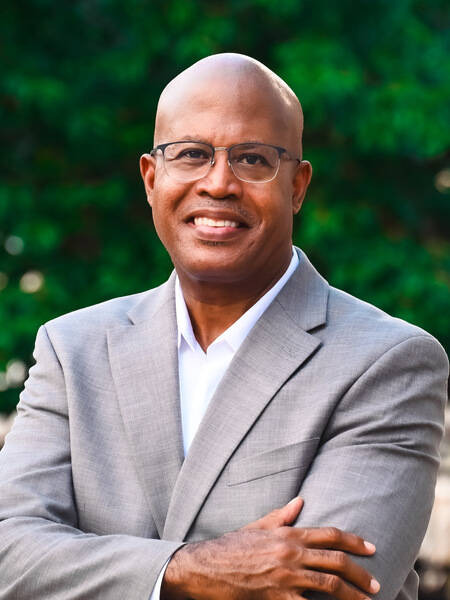
John Hodge
School Improvement Expert; Educating Students Socially, Academically and Morally
Profile Links
Fee Range
Please contact us for pricingTravels From
Newport News, VA, US
John Hodge
Biography
Dr. John W. Hodge is one of America's most sought-after speakers in K-12 education, renowned for transforming research into practical strategies that drive academic success. His career in education began after serving with distinction in the 7th Infantry Division of the United States Army, establishing a foundation of leadership and service that continues to define his work.
Dr. Hodge's expertise is grounded in rigorous academic training and extensive hands-on experience. After beginning his educational path at North Carolina A&T, he conducted groundbreaking research at Virginia Tech on student resilience and factors influencing academic outcomes for children from struggling families. Throughout his career, he has served as a reading and English teacher, school administrator, and education consultant, bringing a comprehensive understanding of the challenges facing today's schools.
As an AVID (Advancement Via Individual Determination) teacher and later Associate Director of AVID Center Eastern Division, Dr. Hodge helped expand the program to 13 states. His tenure as Director of An Achievable Dream Academy—a high-performing school in an economically challenged area—provided invaluable insights into effective interventions for schools serving disadvantaged communities. This experience led him to co-found the Urban Learning and Leadership Center (ULLC), dedicated to student achievement and closing the achievement gap.
Today, as Chief Inspirational Officer of AADULLC (formed through a strategic merger between ULLC and An Achievable Dream), Dr. Hodge leads efforts to assist school districts nationwide. His remarkable ability to bridge theory and practice has helped educators in rural, urban, and suburban settings implement meaningful changes that exceed rigorous academic standards.
Dr. Hodge's top-selling book, You Can Get in the Way: How You Can Be a Roadblock to Risk Factors, has guided thousands of educators in galvanizing entire school staffs to help students reach their full potential. This influential work unifies teams across all roles to focus on student success.
Dr. Hodge's work has inspired thousands of educators and positively impacted millions of students. His presentations and consultations serve as catalysts for continuous improvement, making him an indispensable resource and transformative figure in American education.
John Hodge
Featured Videos
Current: Dr John Hodge at the Virginia Association for Teaching, Learning, and Leading
Time 02:35
More Videos From John Hodge
John Hodge
Featured Keynote Programs
Higher Order Thinking
The Human Edge in the Age of AI
The jobs our students will hold may not exist yet. Memorization will not carry them. Thinking will.
The workforce is changing faster than the curriculum. Employers no longer reward recall. They reward analysis, problem solving, and the ability to learn something new under pressure. When schools teach to the bottom of the thinking scale, they graduate students into a market that has already moved on.
Dr. Hodge bridges theory and the classroom using the foundational work on cognitive rigor from Bloom, Costa, and Webb, updated for today's classrooms in Anderson and Krathwohl's revised taxonomy and in Hess's Cognitive Rigor Matrix. He shows teachers how to raise the level of thinking in any subject, and how to check for it.
Those same skills now decide who can work with artificial intelligence and who gets left behind. A weak thinker types a vague request and takes whatever the machine returns. A strong thinker frames the problem, asks the sharper question, and judges the answer against what good looks like. That is prompt engineering, and it is higher order thinking pointed at a new tool. When students learn to think at that level, they gain the productivity and efficiency today's job market rewards, and they put AI to work for them instead of being replaced by it.
This is not abstract for Dr. Hodge. He co-authored a 17.7 million dollar Workforce Development grant proposal for Hampton University, work built on preparing people to think for a modern economy. Higher order thinking was also a key ingredient in securing more than 5 million dollars in GEAR UP funding for a large urban school district, funding tied to raising the college and career readiness of low income students.
Teachers leave with question stems, task models, and quick assessment techniques they can drop into Monday's lesson in any content area. The shift is in the design of the questions, not in the purchase of a product. This keynote is designed to raise the level of thinking in every classroom, using questions teachers already have the power to ask.
Best for: Instructional staff, curriculum teams, CTE and college readiness programs.
Resilience by Design
Build unshakeable students by turning your school into a place where students lift each other.
Student mental health, chronic absenteeism, and educator burnout are all pulling in the same direction at once. Most responses ask exhausted adults to carry the burden alone. That approach burns people out. Resilience has to live in the culture, and culture is built by everyone in the building, students included.
Dr. Hodge's newest book, Resilience by Design: Build Unshakeable Students Through Intentional Practice (National Center for Youth Issues, 2026), gives schools a plan. Ten core values, taught and practiced through short structured sessions called Heart Huddles, across grades 3 to 5, 6 to 8, and 9 to 12. The approach rests on a finding most programs miss. When a national experiment followed more than 12,000 ninth graders across 65 schools, the effort to build student mindset worked best where peer norms carried the message (Yeager et al., 2019). That is the whole point. Adults set the tone, but students hold the culture in place, and when they reinforce the values with each other, the change lasts.
Heart Huddles are short, scripted, and grade banded conversations. A teacher can run one without a new curriculum or a new line on the budget. These conversations can take place during morning meetings, advisory periods or pre-dismissal activities. The schedule is up to you. The values give a school a shared language within the first month. Students become carriers of the culture, so the work does not depend on a few heroic adults to survive the year. This keynote is designed to provide staff with a shared language and a repeatable practice they can start the very first week, so resilience stops being a poster on the wall and becomes the way the building runs.
Best for: District and building leaders, full staff kickoffs, counselor and MTSS teams.
Goal-Setting is Just the Beginning
Turning Dreams into Reality
A three-part series that runs the whole year. Why? You cannot fix in the spring what you ignored in the fall.
Schools across the country make the same mistake. They wait. They notice chronic absenteeism in March, when a child has already missed forty days. They worry about test scores in April, when the year is nearly spent. By then the window has almost closed. Goals do not work as a one-time assembly. They work as a rhythm, set early and revisited often, and that is exactly how this series is built.
For students in grades 3 to 12, Dr. Hodge turns goal-setting into a year-long engine for the outcomes that matter most in today’s schools: attendance, achievement, and behavior. Students set personal and school-related goals, own them, and track them. The approach rests on the most established research in the field. Locke and Latham's goal-setting theory (1990) showed that specific, challenging goals drive higher performance than vague encouragement, a finding they reaffirmed across a half-century of study (Locke and Latham, 2019). And the case for acting early is settled. The research on early warning indicators and chronic absenteeism (Balfanz and Byrnes, 2012) makes clear that attendance, behavior, and course performance signal trouble long before the outcomes arrive, which is why the fall is when this work has to start.
The year at a glance:
Fall. You inspire the kids, name the targets and set the goals while there is still a full year to act on them. Chronic absenteeism gets addressed in September, not after the damage is done. Every student leaves with a goal and a reason to show up.
Winter. You revisit the goals, look at the data together, and recalibrate. Students see their own progress, adjust course, and recommit before the final stretch. Momentum is boosted here, on purpose.
Spring. You celebrate the wins out loud and channel that energy into a final push, maximum effort on state assessments, end-of-grade tests, and on-time graduation. The year finishes on a climb, not a coast.
This series is designed to put a real goal in front of every student and a plan behind every goal, then hold a whole school to it from the first month of the year to the last. It gives a district a structure it can run again next year, and the year after that.
Best for: District and school teams, attendance and MTSS committees, student assemblies with staff follow through, multi-visit engagements across a school year.
Please Stop Calling Me At-Risk
The label you put on a child becomes the ceiling you build over them.
Schools still sort children with deficit language. At-risk. Low. Bubble kids. The words feel harmless, but they are not. Children hear what we believe about them, and they perform to meet it.
Dr. Hodge challenges the deficit narrative and replaces it with a strengths based one grounded in evidence. Rosenthal and Jacobson's landmark study (1968) showed that student outcomes rise or fall to meet what educators genuinely believe, not what they say out loud, a finding affirmed by more recent reviews of teacher expectations (Aydın and Ok, 2022). Belief also travels student to student, which is why a strengths based culture spreads once it takes hold. This keynote hands educators a different lens and the language to match it by reframing circumstances with optimism about and for students.
Educators leave with concrete shifts they can make the next morning. How they frame a struggling reader. How they talk about a class in the teacher's lounge. How they build the belief that drives the behavior. There is no program to purchase. This is a change in practice that costs nothing and changes everything. This keynote is designed to change the way a staff talks about children by Monday morning, because the words come first and the outcomes follow.
Best for: Whole staff professional learning, equity teams, back to school events.
John Hodge
Featured Books

Standing in The Gap: 40 Days to Becoming a Deliberate Creator of abundance in Your Life
by John Hodge
We are all creators of the world we live in. What we are experiencing internally reflects into our outer world. Along with The Universe and God, we co-create everything that happens in our lives. We are in control, and our thoughts and feeling create what we attract.The reason I titled this book “Standing in The Gap” is because we are always in the gap. It’s the in-between part of where we are now and where we’d like to be. When we attract our desire, we have the next desire that we go after. When we attract that, we have another. We are constantly in that gap of getting there. We area always creating a new gap (the next gap) because we are designed this way to strive for more, want to be better or achieve something else. This is the gap we stand in every day.Journaling is one of the best ways to get clear about everything and anything and that’s why this book is created as a journal exercise. Writing things out by hand does so much to connect you to your true feelings and thoughts. Things will come up if you allow yourself to free flow and be uncensored. When you journal and just allow things to come, you’ll find blocks that you didn’t even know existed. The purpose of this book is to use these 40 days of journaling as a tool to create and attract what you want in your life. You will declare one thing that you desire to abundantly attract as your creation. Inevitably what will happen, if you stick to this daily, is that you will start to attract great things in other areas of your life as well. That’s just what happens when you’re at a high vibration.(Click BUY NOW to get this book today)

You Can Get in the Way: How You Can Become a ROADBLOCK to Risk Factors
by John Hodge
Is it possible for one person to make a noticeable difference in the life of a child?
Through stories, research, and strategies, Dr. John W. Hodge shows how children can be successful despite the risk factors that typically hold them back. Children who overcome usually have one thing in common: the presence of educators, counselors, social workers, community advocates, and family members - people just like you - who can see beyond demographic and social limitations to the unlimited potential that lies within the hearts and minds of all children.
This book will clearly explain how the actions of caring adults have been the difference between success and failure for children like the ones you see in your schools every day. As you read, you will gain a fundamental understanding of how the resilience phenomenon works and gain insight into ways you can foster resilience in students.
You'll Learn About:
- School Accountability and the Achievement Gap
- The Role of Resilience in Overcoming Obstacles
- Positive Actions that Can Reduce the Impact of Adversity
- The Long-Term Power of Relationships
- Developing a Collaborative Action Plan
The evidence is overwhelming that one person's willingness to act can enhance resilience in children to such an extent that they overcome obstacles and eventually thrive. That one person just might be YOU.
John Hodge
Featured Reviews
John Hodge
Featured Articles & Resources
What it Takes... creating excellent schools [VIDEO]
Video from Blue Ridge PBS.
Unravel the "how to" mystery of school improvement with the authors of "Standing in the Gap." Field experts, John Hodge and Harvey...
Nationally-known educator to address Ashdown teachers
Article from ArkLaTexHomepage.com;Written by Nancy Cook
Nationally known in educational circles as "one of America's most respected new voices in education," Dr. John W. Hodge...
Frequently Asked Questions
Quick answers to some of the most common questions about booking John Hodge for your event.
How do I book John Hodge for my event?
Booking John Hodge with Premiere Speakers Bureau is a streamlined 4-step process:
- Availability Check: Contact us with your event date and budget to verify if your desired speaker is available.
- Hold Date: We place a temporary "hold" on the speaker's calendar while you finalize internal approval.
- Contracting: We issue a contract outlining the fee, cancellation policy, and event expectations.
- Logistics: Once signed, our event management team handles all travel booking, itinerary, and AV requirements.
Why should I partner with Premiere Speakers Bureau rather than contacting speakers directly?
Partnering with Premiere Speakers Bureau provides a comprehensive safety net for your event that direct booking cannot match. You get the same speaker for the same price, but with a dedicated team with over 30 years of event experience handling contracts, logistics, and are prepared for any emergency. We know what it takes to run an excellent event.
What makes Premiere Speakers Bureau unique compared to other agencies?
Premiere Speakers Bureau distinguishes itself by having over 30 years of experience while partnering with more than 35,000 events. PSB has also built a streamlined, fully online process that makes booking a speaker, handling travel and payments extremely easy for anyone looking to plan a speaker led event.
How does Premiere Speakers Bureau's 'Zero Cost Service' model work?
Premiere Speakers Bureau operates on a 'Zero Cost Service' model for event planners. Our services—including research, booking, and logistics—are always free to the client. The speaker covers our commission from their standard honorarium as payment for our role in marketing and managing their engagements.
How are speaker fees structured, and what is typically included?
A speaker's fee typically covers the keynote presentation, a pre-event planning call, and standard customization. Travel expenses are usually billed separately.
What are the standard policies for speaker travel and expenses?
Travel expenses are negotiated during contracting. We generally recommend a flat travel fee for simplicity, though we also offer line-by-line invoicing when preferred. PSB ensures these expenses adhere to professional standards, and our Event Portal allows for easy tracking and invoicing.
John Hodge's Featured & Related Topics
Popular Speakers
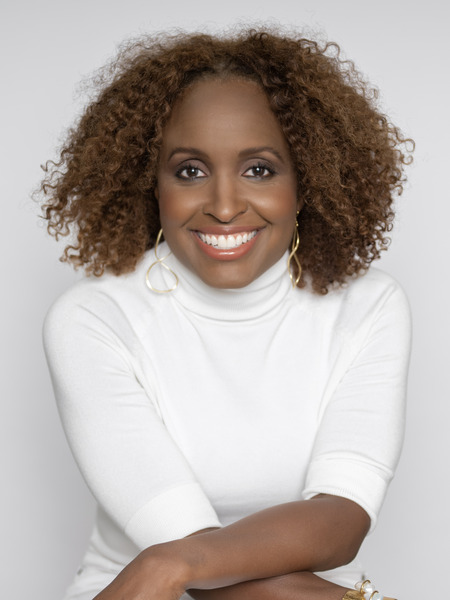
Valorie Burton
Best-Selling Author, President and CEO of The Coaching and Positive Psychology (CaPP) Institute, Personal and Executive Coach and International Speaker

Ryan Leak
Inspiring Workplace Cultures Rooted in Values, Passion and Risk-Taking

Jon Acuff
One of INC's Top 100 Leadership Speakers, New York Times Bestselling Author of Soundtracks, Finish and Do Over
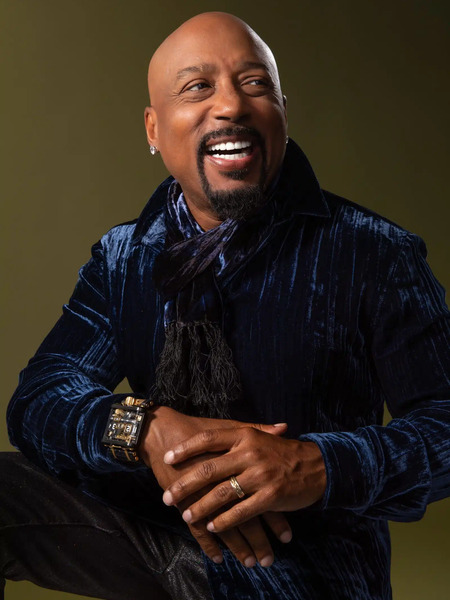
Daymond John
Founder/CEO of FUBU, Presidential Ambassador for Global Entrepreneurship, Star of ABC's Shark Tank and CEO of The Shark Group

Earvin “Magic” Johnson
Five-Time NBA Champion, Entrepreneur

Liz Bohannon
Top 1% VC-Backed Female Founder & CEO and Bestselling Author of Beginner’s Pluck: Build Your Life of Purpose & Impact Now

Ron Clark
"America's Educator", NYTimes Best Selling Author, Disney's American Teacher of the Year, and Founder of the Ron Clark Academy

Dr. Ben Carson
Former US Secretary of Housing and Urban Development / Conservative Political Thought Leader / Renowned Pediatric Neurosurgeon