If you want to lead the next generation of management, start here.


Bruce Tulgan
Founder of RainmakerThinking, Inc. and Top Expert on Leadership Development and Generational Issues in the Workplace
Profile Links
Fee Range
$15,000Travels From
New Haven, CT, US
Bruce Tulgan
Biography
Bruce Tulgan is an adviser to business leaders all over the world and a sought-after keynote speaker and seminar leader. He is the founder and CEO of RainmakerThinking, Inc., a management research and training firm, as well as RainmakerLearning, an online training resource. Bruce is the best-selling author of numerous books including Not Everyone Gets a Trophy (Third Edition, 2023), Bridging the Soft Skills Gap (Revised & Updated 2022), The 27 Challenges Managers Face (2014), and It’s Okay to be the Boss (Revised & Updated, 2014). His newest book, The Art of Being Indispensable at Work, is available now from Harvard Business Review Press. Bruce’s forthcoming memoir, The Karate Master and Me: A Scared Little Boy, an Enigmatic Old Man, and My Lifelong Quest for Strength and Wisdom, is due out in early 2027.
Bruce lectures at the Yale Graduate School of Management, as well as other academic institutions. He has written for the New York Times, the Harvard Business Review, HR Magazine, and writes regularly for Training Magazine, Forbes.com, and Psychology Today.
Since 1995, Bruce has worked with tens of thousands of leaders and managers in hundreds of organizations. In recent years, Bruce was named by Management Today as one of the few contemporary gures to stand out as a “management guru” and he was named to the 2009 Thinkers50 Rising Star list. On August 13, 2009, Bruce was honored to accept Toastmasters International’s most prestigious honor, the Golden Gavel. Bruce is a lifelong practitioner of Okinawan Uechi Ryu Karate Do and holds a seventh degree black belt, making him a Kyoshi master in that style. He lives in New Haven, CT with his wife Debby Applegate, Ph.D., who won the 2007 Pulitzer Prize for Biography for her book The Most Famous Man in America: The Biography of Henry Ward Beecher (Doubleday, 2006). Her new book, Madam: The Biography of Polly Adler, Icon of the Jazz Age, is available now from Doubleday.
Bruce Tulgan
Featured Videos
Current: 2025 Speaking Reel
Time 02:07
More Videos From Bruce Tulgan
Bruce Tulgan
Featured Keynote Programs
Strength and Wisdom
Karate Lessons for Life and Work
For more than 30 years, Bruce Tulgan has studied human performance and advised business leaders around the world. For 52 years, Bruce Tulgan has studied and taught classical Okinawan karate. Now, for the first time, he brings those two worlds together.
The deepest lessons of karate are not really about fighting. They are about how people become stronger, wiser, more disciplined, more resilient, and more capable of handling whatever comes next. In the dojo, progress comes from showing up, practicing the fundamentals, accepting corrections, building the right habits, learning from everyone, putting aside ego, teaching others, and beginning again, and again.
Bruce began studying karate at age seven in 1974. Today, he is a seventh-degree black belt and senior master in Okinawan Uechi Ryu Karate Do. From 2015 to 2022, he had the extraordinary honor, privilege, and responsibility of housing and caring for one of the world's most respected and beloved karate masters, his lifelong teacher.
In this new signature keynote, Bruce combines funny, candid, moving, and inspiring stories from a lifetime in karate with practical lessons drawn from decades of experience advising organizations on leadership and human performance. The result is a program designed to help people build strength and wisdom: Learning to face adversity, play the long game, learn from correction, develop others, and keep growing over a lifetime.
Drawing on themes from Bruce's forthcoming memoir, The Karate Master and Me: A Scared Little Boy, an Enigmatic Old Man, and My Lifelong Quest for Strength and Wisdom, Bruce takes the lessons beyond the dojo and applies them to how we work, lead, learn, teach, and live.
THE PROGRAM EXPLORES
• How do our origin stories - the stories we tell ourselves about who we are - shape who we become?
• How does deliberate practice turn into the right habits to make us smarter, faster, and better?
• How do we become strong enough to withstand pressure without becoming hard, rigid, or needlessly combative?
• How do we remain lifelong learners - following the fundamentals, making the lessons our own, teaching others, and beginning again, and again?
PARTICIPANTS WILL LEARN TO
• Examine the stories they tell themselves about who they are - their origin stories - and recognize how those stories shape who they become, and how to reshape those stories.
• Build mastery through deliberate practice, consistent fundamentals, and small improvements sustained over time. Practice makes permanent. Correct practice makes perfect.
• Develop resilience by learning to "take a punch" - conditioning themselves for setbacks, criticism, uncertainty, and adversity.
• Become strong without becoming too hard, balancing toughness with patience, flexibility, empathy, and restraint while playing the long game.
• Deepen their own mastery by learning from everyone, embracing correction, and teaching others.
• Become lifelong learners by putting aside ego and maintaining a beginner's mind.
TECHNIQUES AND BEST PRACTICES
• Create or find your dojo. Identify the place, routine, people, and standards that support consistent practice of your craft.
• Practice what you want to make permanent. Examine what your repetitions are teaching you and replace weak habits with better ones.
• Learn from everyone. Seek correction, reflect on it, and make the useful lessons your own.
• Condition yourself for pressure without becoming hard. Build the confidence and capability to absorb setbacks, avoid unnecessary fights, and respond rather than react.
• Teach. Deepen your knowledge, standards, and skill by helping someone else improve.
• Evolve Through Shu-Ha-Ri. First follow the form, then adapt it, and eventually make the principles your own.
Winning the Talent Wars
Recruiting and Retention for the New Hybrid Workplace
Recruiting and retention require a sustained strategy. Employers need a clear value proposition, a steady supply of applicants and managers who keep people engaged after they join.
Bruce breaks down six steps to gaining a strategic advantage as an employer, drawing on decades of workplace research and practical approaches to attraction, selection, onboarding, training, performance management, development and retention.
Participants will learn
• The short- and long-term factors affecting today's talent wars.
• The five costs of voluntary turnover.
• The top four causes of early voluntary departures.
• The top five causes of mid- and late-stage career departures.
• Why strong, highly-engaged management is more important than ever.
• The six steps to gaining a strategic hiring advantage in the new hybrid workplace.
Techniques and best practices
• Improving onboarding processes to reduce turnover among new hires
• Defining a clear and compelling employer value proposition
• Building and maintaining a steady supply chain of applicants
• Aligning communication up, down, sideways, and diagonal on the organization chart to improve outcomes-even in a hybrid work environment
• Creating an upward spiral of improvement for every employee in the organization through high-structure, high-substance communication
It's Okay to Be the Boss
Back-to-Fundamentals Leadership
Most managers spend a lot of time communicating with their direct-reports, but their communication is too often lacking in structure and substance. As a result, problems hide below the surface, until they blow up, and then everyone has to jump into firefighting mode. That's why so many managers are stuck in a vicious cycle of undermanagement.
The solution: Highly-engaged management.
In this program, Bruce Tulgan explains this approach, drawing on decades of workplace research and sharing true stories from real managers. With a blend of humor, insight, and concrete best practices, Bruce helps managers confront their own bad habits and teaches leaders a step-by-step approach back to the fundamentals of highly-engaged management that anyone can put into action.
Participants will learn
• How to build relationships of trust and confidence with direct reports.
• How to effectively delegate tasks, responsibilities, and projects.
• How to keep employees focused on what's important and moving in the right direction.
• How to increase productivity and quality for high-, mid-, and low-performing employees.
• How to increase retention of superstar talent.
• How to reduce waste, inefficiency, errors, downtime, and conflict.
Techniques and best practices
• Conducting regular one-on-ones with direct reports
• Communicating clearly and effectively, with an emphasis on coaching-style dialogue
• Tuning in to the particular strengths and weaknesses of every individual on the team
• Working through or around obstacles in order to hold employees accountable
• Making expectations clear
• Monitoring, measuring, and documenting employee performance
• Helping employees solve problems related to productivity, quality, and behavior
• Dealing with persistent performance problems
• Tying rewards to performance
The 27 Challenges Managers Face
Step-by-Step Solutions to (Nearly) All of Your Management Problems
In hundreds of advanced management seminars, Bruce Tulgan has taken experienced leaders through one problem-solving session after another, focusing on one real life case study after another: "Who are the employees you are really struggling with? What are the really tough cases?"
Like clockwork, the same basic cases come up over and over again-the same 27- maybe it's the superstar the manager is afraid of losing, the slacker the manager cannot figure out how to motivate, the one with an attitude problem, or the two who cannot get along. From decades of research, Bruce has identified the most frequent and toughest challenges managers face and the best step-by-step solutions.
In this program, Bruce draws on decades of research, sharing true stories from real managers, blending humor, insight, and concrete best-practices to show participants how to apply the management fundamentals to the challenges managers most often face.
Participants will learn
• How to identify and avoid the vicious cycle of undermanagement.
• The most common ways that managers spend their management time and techniques for gaining control of that time.
• The back-to-fundamentals approach to high-structure, high-substance communication.
• How to apply the fundamentals to their own daily management challenges.
Techniques and best practices
• Overcoming the challenges unique to new, first-time leaders
• Teaching self-management
• Managing performance, such as productivity and quality
• Managing employee attitudes and interpersonal conflicts
• Motivating and retaining superstars
• Developing new leaders
• Working around resource constraints, logistical hurdles, and rapid change
• Renewing commitment to strong, highly-engaged management
Bruce Tulgan
Featured Books
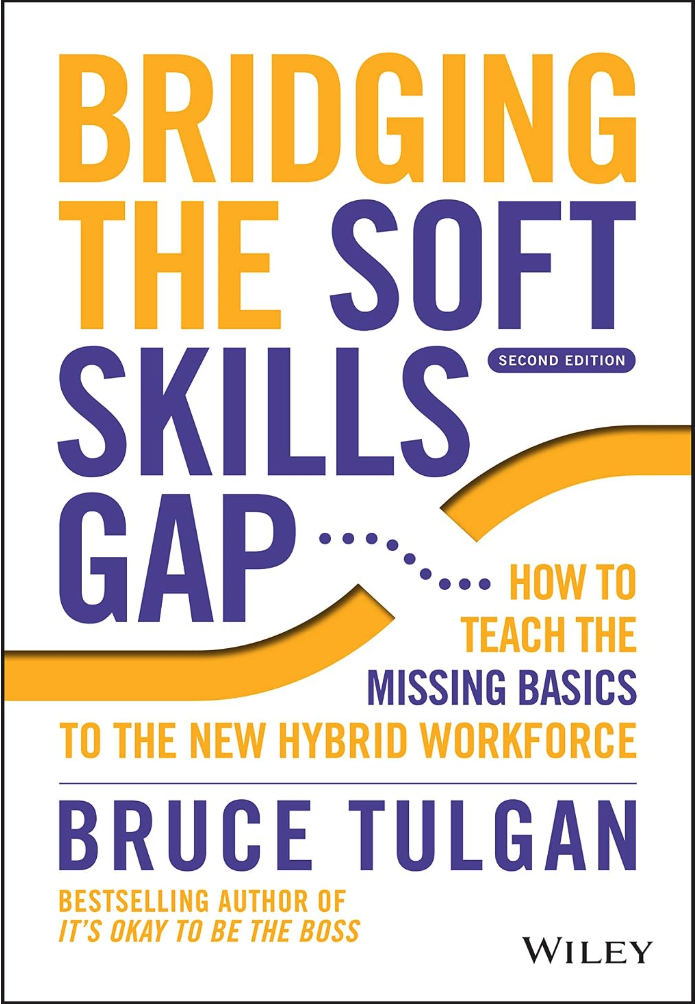
Bridging the Soft Skills Gap: How to Teach the Missing Basics to the New Hybrid Workforce
by Bruce Tulgan
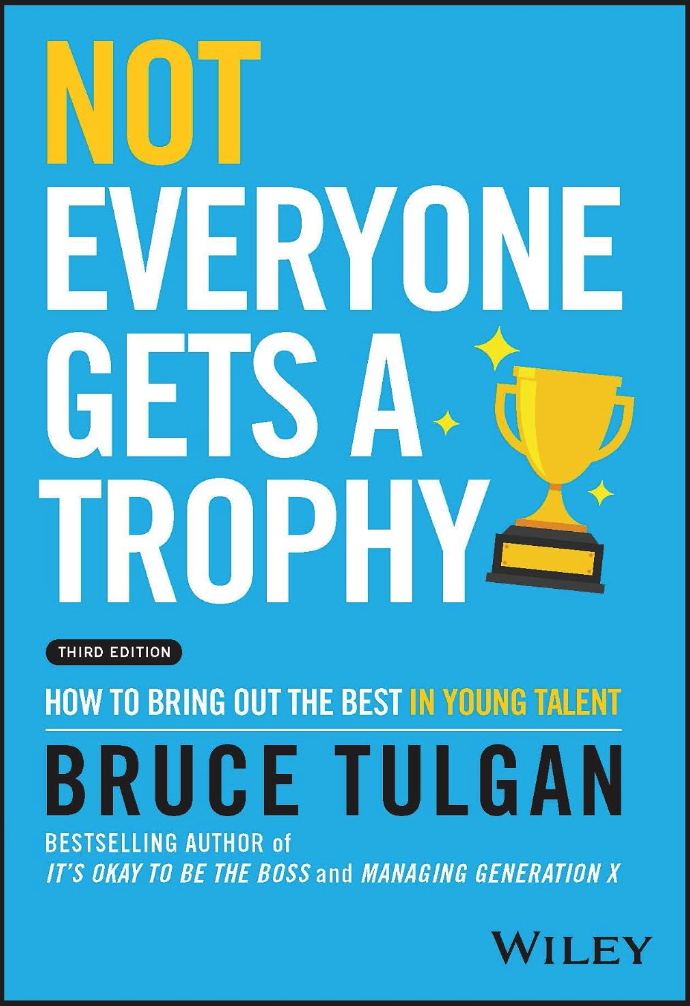
Not Everyone Gets a Trophy: How to Bring Out the Best in Young Talent
by Bruce Tulgan
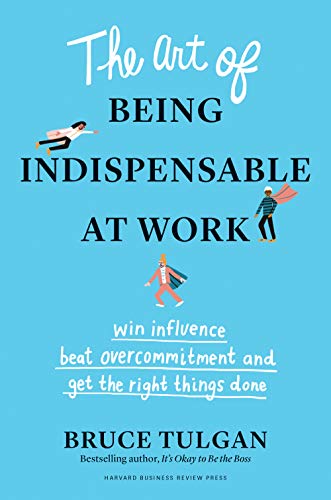
The Art of Being Indispensable at Work: Win Influence, Beat Overcommitment, and Get the Right Things Done
by Bruce Tulgan
What's the secret to being indispensable—a true go-to person—in today's workplace?
With new technology, constant change and uncertainty, and far-flung virtual teams, getting things done at work is tougher and more complex than ever. We’re in the midst of a collaboration revolution, working with everyone, all the time, across silos and platforms. But sometimes it feels like we're stuck in a no-win cycle—dealing with an overwhelming influx of asks, with unclear lines of communication and authority. Overcommitment syndrome looms larger than ever before.
But even amid the seeming chaos, there's always that indispensable go-to person who thrives on their many working relationships with people all over the organization chart. How do they do it? Go-to people consistently make themselves valuable to others, maintain a positive attitude of service, are creative and tenacious, and take personal responsibility for getting the right things done.
In this game-changing yet practical book, talent guru and bestselling author Bruce Tulgan reveals the secrets of the go-to person in our new world of work. Based on an intensive study of people at all levels, in all kinds of organizations, Tulgan shows how go-to people think and behave differently, building up their influence with others—not by trying to do everything for everybody but by doing the right things at the right times for the right reasons, regardless of whether they have the formal authority.
This book will teach you to:
- Understand the peculiar mathematics of real influence
- Lead from wherever you are—up, down, sideways, and diagonal
- Know when to say "no" or "not yet," and how to say "yes"
- Keep getting better and better at working together
And much more. The Art of Being Indispensable at Work is the new How to Win Friends and Influence People for an era in which the guardrails of traditional management have been pulled away.

Its Okay to Manage Your Boss
by Bruce Tulgan
Get what you need from your boss
In this follow-up to the bestselling It's Okay to Be the Boss, Bruce Tulgan argues that as managers demand more and more from their employees, they are also providing them with less guidance than ever before. Since the number one factor in employee success is the relationship between employees and their immediate managers, employees need to take greater responsibility for getting the most out of that relationship. Drawing on years of experience training managers and employees, Tulgan reveals the four essential things employees should get from their bosses to guarantee success at work.
- Shows employees how to ask for what they need to succeed in their high-pressure jobs
- Shatters previously held beliefs about how employees should manage up
- Outlines what employees must get from their managers: clear expectations; the skills needed to perform their jobs; honest feedback, recognition or rewards
A novel approach to managing up, It's Okay to Manage Your Boss is an invaluable resource for employees who want to work more effectively with their managers.

The 27 Challenges Managers Face: Step-by-Step Solutions to (Nearly) All of Your Management Problems
by Bruce Tulgan
For more than twenty years, management expert Bruce Tulgan has been asking, “What are the most difficult challenges you face when it comes to managing people?”
Regardless of industry or job title, managers cite the same core issues—27 recurring challenges: the superstar whom the manager is afraid of losing, the slacker whom the manager cannot figure out how to motivate, the one with an attitude problem, and the two who cannot get along, to name just a few.
It turns out that when things are going wrong in a management relationship, the common denominator is almost always unstructured, low substance, hit-or-miss communication.
The real problem is that most managers are “managing on autopilot” without even realizing it—until something goes wrong. And if you are managing on autopilot, then something almost always does.
The 27 Challenges Managers Face shows exactly how to break the vicious cycle and gain control of management relationships. No matter what the issue, Tulgan shows that the fundamentals are all you need. The very best managers hold ongoing one-on-one conversations that make expectations clear, track performance, offer feedback, and hold people accountable.
For every workplace problem—even the most awkward and difficult—The 27 Challenges Managers Face shows how to tailor conversations to solve situations familiar to every manager. Tulgan offers clear approaches for turning around bad attitudes, reducing friction and conflict, improving low performers, retaining top performers, and even addressing your own personal burnout.
The 27 Challenges Managers Face is an indispensable resource for managers at all levels, one anyone managing anyone will want to keep on hand. One challenge at a time, you’ll see how the most effective managers use the fundamentals of management to proactively resolve (nearly) any problem a manager could face.

It's Okay to Be the Boss: The Step-by-Step Plan to Becoming the Manager Your Employees Need
by Bruce Tulgan
Bruce Tulgan
Featured Reviews
Bruce Tulgan
Featured Articles & Resources
More Feedback Isn't Necessarily Better
The biggest takeaway from our research is this: The vast majority of managers do not provide feedback often enough. For the most part, micromanagement is a rare occurrence....
The Five Components of Hands-On Management
There are volumes of research that have attempted to distinguish between leaders, managers, and supervisors: Leaders focus on the big picture, managers focus on details, and...
Is Your Workplace Feedback Thoughtful, Balanced, and True?
Every time a manager provides feedback, their credibility is on the line. Giving feedback that is generally inaccurate--off-base, unfair, unbalanced, or factually wrong--is a...
Performance Improves When Managers Focus on Short-Term Results
The most powerful approach to coaching is one that focuses urgently on day-to-day, high-quality results. As basketball great Michael Jordan said, "I approach everything step by...
Seven Feedback Mistakes Managers Make
Most managers today would agree that feedback is key to employee success. But unless that feedback is high quality, performance will never improve, no matter how frequent your...
Your Team Can't Manage Itself
One of the most insidious pieces of advice in modern management is to "stay out of your employees' way" and "let them do their best work". The intention is to display trust in...
Frequently Asked Questions
Quick answers to some of the most common questions about booking Bruce Tulgan for your event.
How do I book Bruce Tulgan for my event?
Booking Bruce Tulgan with Premiere Speakers Bureau is a streamlined 4-step process:
- Availability Check: Contact us with your event date and budget to verify if your desired speaker is available.
- Hold Date: We place a temporary "hold" on the speaker's calendar while you finalize internal approval.
- Contracting: We issue a contract outlining the fee, cancellation policy, and event expectations.
- Logistics: Once signed, our event management team handles all travel booking, itinerary, and AV requirements.
Why should I partner with Premiere Speakers Bureau rather than contacting speakers directly?
Partnering with Premiere Speakers Bureau provides a comprehensive safety net for your event that direct booking cannot match. You get the same speaker for the same price, but with a dedicated team with over 30 years of event experience handling contracts, logistics, and are prepared for any emergency. We know what it takes to run an excellent event.
What makes Premiere Speakers Bureau unique compared to other agencies?
Premiere Speakers Bureau distinguishes itself by having over 30 years of experience while partnering with more than 35,000 events. PSB has also built a streamlined, fully online process that makes booking a speaker, handling travel and payments extremely easy for anyone looking to plan a speaker led event.
How does Premiere Speakers Bureau's 'Zero Cost Service' model work?
Premiere Speakers Bureau operates on a 'Zero Cost Service' model for event planners. Our services—including research, booking, and logistics—are always free to the client. The speaker covers our commission from their standard honorarium as payment for our role in marketing and managing their engagements.
How are speaker fees structured, and what is typically included?
A speaker's fee typically covers the keynote presentation, a pre-event planning call, and standard customization. Travel expenses are usually billed separately.
What are the standard policies for speaker travel and expenses?
Travel expenses are negotiated during contracting. We generally recommend a flat travel fee for simplicity, though we also offer line-by-line invoicing when preferred. PSB ensures these expenses adhere to professional standards, and our Event Portal allows for easy tracking and invoicing.
Bruce Tulgan's Featured & Related Topics
Find Similar Speakers Management








Popular Speakers

Candy Valentino
Founder, investor, WSJ Best-Selling Author and Serial Entrepreneur

Brett Culp
Award-winning documentary filmmaker helping leaders and teams rediscover clarity, courage, and connection in times of transformation

Daymond John
Founder/CEO of FUBU, Presidential Ambassador for Global Entrepreneurship, Star of ABC's Shark Tank and CEO of The Shark Group

Ryan Leak
Inspiring Workplace Cultures Rooted in Values, Passion and Risk-Taking

Jon Acuff
One of INC's Top 100 Leadership Speakers, New York Times Bestselling Author of Soundtracks, Finish and Do Over

Liz Bohannon
Top 1% VC-Backed Female Founder & CEO and Bestselling Author of Beginner’s Pluck: Build Your Life of Purpose & Impact Now

Alex Weber
Be Unstoppable! with Leadership & Performance Expert, American Ninja Warrior, & Acclaimed Author

Dr. Ben Carson
Former US Secretary of Housing and Urban Development / Conservative Political Thought Leader / Renowned Pediatric Neurosurgeon