Prof. Solomon . . . was able to make us think of new ways to use consumer behavior to frame our own activities. . . . He was able to inject humor to maintain our attention yet did not deviate from the basic task at hand--to educate and provoke thought.


Michael R. Solomon
A leading expert with cutting-edge approaches to sales and consumer psychology.
Profile Links
Fee Range
$15,000Travels From
Philadelphia, PA, US
Michael R. Solomon
Biography
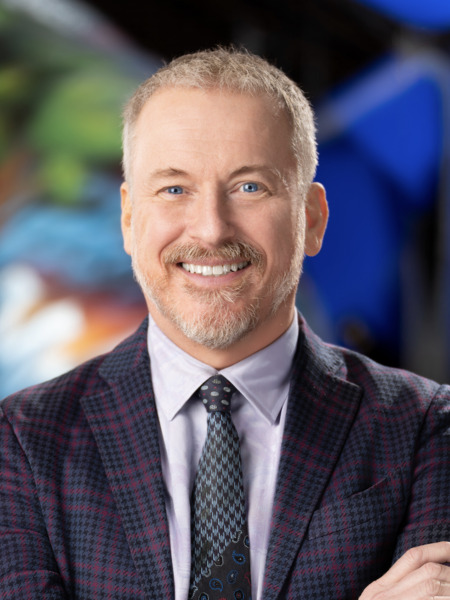
A leading expert with cutting-edge approaches to sales and consumer psychology. He works with major marketers to help them understand what their brands really mean to the people who buy them.
Michael is passionate about the extraordinary world of the ordinary consumer. He brings humor and arresting visuals to his keynotes to show how everyday behaviors are much more meaningful than you thought - and an essential pathway to grabbing the attention and loyalty of your customers. The marketing guru Philip Kotler summed it up when he stated, "Solomon has the mind of a scientist and the writing flair of a journalist.
Michael "wrote the book" on understanding consumers. Literally. Hundreds of thousands of business students have learned about Marketing from his books including Consumer Behavior: Buying, Having, and Being -- the most widely used book on the subject in the world.
Michael's mantra: We don't buy products because of what they do. We buy them because of what they mean. He advises global clients in leading industries such as apparel and footwear (Calvin Klein, Levi Strauss, Under Armour, Timberland), financial services and e-commerce (eBay, Progressive), CPG (Procter & Gamble, Campbell's), retailing (H&M), sports (Philadelphia Eagles), manufacturing (DuPont, PP&G) and transportation (BMW, United Airlines) on marketing strategies to make them more consumer-centric. He regularly appears on television shows including The Today Show, Good Morning America and CNN to comment on consumer issues, and he is frequently quoted in major media outlets such as The New York Times, USA Today, Adweek and Time.
As a Professor of Marketing (in the Haub School of Business at Saint Joseph's University in Philadelphia) and an industry consultant, Michael combines cutting edge academic theory with actionable real-world strategies. He helps managers get inside the heads of their customers so they can anticipate and satisfy their deepest and most pressing needs - today and tomorrow. An executive at Subaru said it best: "The man is a scholar who is current and street-wise."
Michael R. Solomon
Featured Keynote Programs
Walk a Mile in Your Customer’s Shoes
The customer is king (or queen). Yet the best product or service will fail if consumers don’t have a positive encounter when they consume it. That’s because what you sell is NOT a product – it’s an experience that consists of the core offering plus everything that goes with it. This includes the physical or digital environment where shoppers find it, the people who sell it, and even how others react to the purchase. This experience is what attracts – or repels – the customer. With so many options available, he or she will quickly walk away from a negative encounter. But he or she also will reward organizations that provide satisfying experiences with long-term loyalty.
At the end of the day, it’s vital for marketers to become more consumer-centric – to understand the experience from the customer’s perspective rather than just the manager’s perspective. And, that challenge is even more daunting when we understand that today’s consumer is changing dramatically as he or she finds new ways to interact with companies.
This fundamental insight is what is drives increased interest in customer experience management (CEM or CXM). A growing number of organizations now recognize the importance of tracking every interaction with customers as if it is their last – because it could be. You’ll get a through overview of today’s consumer, and the major issues we need to understand in order to create and maintain a positive customer experience over the long-term.
At the end of this presentation, you will understand:
1. Today’s consumer experience and how it is changing due to technological and cultural disruptions.
2. What determines a shopper’s level of satisfaction with a consumer experience and how to increase engagement with the organization.
3. How an organization can gather insights about its customers’ experiences in order to improve them.
4. How to design an outstanding customer experience and emerging techniques that will help you to bond with your customers for the long-term.
Be the First Choice!
Everything is a choice. From making someone a leader of an organization or team to deciding which company to work for. Preparing for change management in an organization or buying one brand over another or even responding on a dating site, a choice is a problem to be solved. Some economists tell us that we are like robots – calm, cool, collected decision-making machines that carefully weigh all the evidence and make the best objective choice.
The real world doesn’t work that way!
Have you ever asked yourself:
How do I convince my team that the choice I made is best for us?
Why in the world did I pick this toxic place to work?
What genius responded to a downturn in the market by selecting this really lame strategic option for us?
On what planet is this the best brand?
What was I thinking when I decided to go out with him?
Our choices and other behaviors often seem “irrational” after the fact, but there’s often a method to our madness — even if we don’t know what it is.
So, what drives our choices? To answer that question, we need to understand the hidden forces that bias our decisions.
Don’t be #2! I can help you to identify the hidden triggers that drive our choices. BE THE FIRST CHOICE.
Postmodern Shoppers, Post-Coronavirus
Consumer Behavior in The New Normal
The pandemic will change our world for years after the virus disappears, causing consumers to rethink their purchase decisions (both large and small).
Marketers will need to respond to life in the new normal and the significant shifts in consumer behavior.
This presentation will help you to develop an engagement strategy for authentically talking to customers now and in the future.
After this session, you’ll be able to:
- Identify the three basic drivers of consumer behavior that will determine what people look for in products and services post-virus
- Approach consumer personas with a new mindset, as the traditional labels we use to classify consumers no longer work
- Understand why customers rely on your brand to tell them who they are
- Market products and services that will succeed in a postmodern, post-virus world.
Consumer Behavior in The New Normal
Step on the G.A.S. (Gratification, Agency & Stability)
The Pandemic will change our world for years after the virus disappears. We’ll have to rethink and modify our purchase decisions, large and small. Some disruptions in consumer/marketer relationships that already were looming will come faster and more decisively. How do we define brand value? How should companies talk to customers? How do people function in an emerging gig economy where every encounter might be fatal? How do we redefine what it means to go to work or to socialize?
The virus poked the bear, and now marketers need to respond to life in The New Normal.
The changes that started well before the Pandemic reflect the transition in our society from a modernist to a postmodern culture. Postmodern consumers don’t always follow the rules that marketers decree. That’s because we don’t buy products because of what they do… we buy them because of what they mean. Today’s consumers define themselves by the brands they choose. Their idiosyncratic choices create a pastiche of meaning that gets updated 24/7. Marketers no longer drive the train, even though they can still ride it.
This means that the firm categories we love to use to understand our world – and our customers – are no longer valid. In particular, the traditional labels we use to segment consumers have stopped working. Today’s consumers are like chameleons, who change color constantly. They no longer sit passively in the tidy cages we put them in. The convenient dichotomies we rely upon, such as Male vs. Female, Young vs. Old, I vs. We, Consumer vs. Producer, Offline vs. Online, and many others, no longer mean very much.
In the New Normal, we’ll see these cages open even faster as people are exposed both to new possibilities and to new constraints on their daily lives. Many of us for example will rediscover the value of community, and others will rethink the value of commuting to work every day. In this presentation, we’ll explore some of these comfortable cages, and show why marketers need to ignore them in order to prosper.
You’ll learn why you need to step on the GAS to modify your offerings in light of the new drivers of consumer behavior.
Michael R. Solomon
Featured Books

The New Chameleons
by Michael R. Solomon

Marketers Tear Down These Walls
by Michael R. Solomon
Michael R. Solomon
Featured Reviews
Frequently Asked Questions
Quick answers to some of the most common questions about booking Michael R. Solomon for your event.
How do I book Michael R. Solomon for my event?
Booking Michael R. Solomon with Premiere Speakers Bureau is a streamlined 4-step process:
- Availability Check: Contact us with your event date and budget to verify if your desired speaker is available.
- Hold Date: We place a temporary "hold" on the speaker's calendar while you finalize internal approval.
- Contracting: We issue a contract outlining the fee, cancellation policy, and event expectations.
- Logistics: Once signed, our event management team handles all travel booking, itinerary, and AV requirements.
Why should I partner with Premiere Speakers Bureau rather than contacting speakers directly?
Partnering with Premiere Speakers Bureau provides a comprehensive safety net for your event that direct booking cannot match. You get the same speaker for the same price, but with a dedicated team with over 30 years of event experience handling contracts, logistics, and are prepared for any emergency. We know what it takes to run an excellent event.
What makes Premiere Speakers Bureau unique compared to other agencies?
Premiere Speakers Bureau distinguishes itself by having over 30 years of experience while partnering with more than 35,000 events. PSB has also built a streamlined, fully online process that makes booking a speaker, handling travel and payments extremely easy for anyone looking to plan a speaker led event.
How does Premiere Speakers Bureau's 'Zero Cost Service' model work?
Premiere Speakers Bureau operates on a 'Zero Cost Service' model for event planners. Our services—including research, booking, and logistics—are always free to the client. The speaker covers our commission from their standard honorarium as payment for our role in marketing and managing their engagements.
How are speaker fees structured, and what is typically included?
A speaker's fee typically covers the keynote presentation, a pre-event planning call, and standard customization. Travel expenses are usually billed separately.
What are the standard policies for speaker travel and expenses?
Travel expenses are negotiated during contracting. We generally recommend a flat travel fee for simplicity, though we also offer line-by-line invoicing when preferred. PSB ensures these expenses adhere to professional standards, and our Event Portal allows for easy tracking and invoicing.
Michael R. Solomon's Featured & Related Topics
Find Similar Speakers Customer Relationships





Popular Speakers

Kim Bearden
Best Selling Author, Co-founder at Ron Clark Academy, and National Teacher Hall of Fame; Organization Culture / Climate and Communication Specialist

Earvin “Magic” Johnson
Five-Time NBA Champion, Entrepreneur

Deion Sanders
Pro Football Hall of Famer, Two-Time Super Bowl Champion and Coach

Dr. Jessica Kriegel
CEO Advisor and Doctor of Leadership, Best-selling Author

Jon Acuff
One of INC's Top 100 Leadership Speakers, New York Times Bestselling Author of Soundtracks, Finish and Do Over
Valorie Burton
Best-Selling Author, President and CEO of The Coaching and Positive Psychology (CaPP) Institute, Personal and Executive Coach and International Speaker

Liz Bohannon
Top 1% VC-Backed Female Founder & CEO and Bestselling Author of Beginner’s Pluck: Build Your Life of Purpose & Impact Now
Ron Clark
"America's Educator", NYTimes Best Selling Author, Disney's American Teacher of the Year, and Founder of the Ron Clark Academy