Governor Leavitt was well received by our group (4.82 out of 5) and couldn't be more personable. His insights were valuable and his data will be shared throughout our organization. I am very happy we chose him.


Gov. Michael Leavitt
Former Governor of Utah and Secretary of Health and Human Services in the Bush Administration
Profile Links
Fee Range
Please contact us for pricingTravels From
Washington, DC, United States
Gov. Michael Leavitt
Biography
Mike Leavitt is the founder of Leavitt Partners where he helps clients navigate the future as they transition to new and better models of care. In previous roles, Mike served in the Cabinet of President George W. Bush (as Administrator of the Environmental Protection Agency and Secretary of Health and Human Services) and as a three-time elected governor of Utah. Mike grew up in Cedar City, Utah, where his upbringing was rooted in the values of the American West, with its emphasis on hard work and common sense. He earned a bachelor's degree in business while working in the insurance industry. In 1984, he became chief executive of The Leavitt Group, a family business that is now the nation's second largest, privately held insurance brokerage. In 1993, Mike was elected governor of Utah. He served three terms (1993-2003). In 2003, he joined the Cabinet of President George W. Bush, serving in two positions: first as administrator of the Environmental Protection Agency (2003-2005) and then as secretary of Health and Human Services (2005-2009). At HHS, he administered a $750 billion budget -- nearly 25 percent of the entire federal budget -- and 67,000 employees. He led the implementation of the Medicare Part D Prescription Drug Program. The task required the design, systematization, and implementation of a plan to provide 43 million seniors with a new prescription drug benefit. By the end of the first year, enrollments exceeded projections, prices were lower than projected, and seniors expressed high levels of satisfaction. Mike's strategic ability can be seen in his redesign of the nation's system of quality and safety standards for imported goods. In the spring of 2006, President Bush assigned him to lead a government-wide response. Within months, he commended a major strategic shift in U.S. policy on import regulation and trade. A pattern of innovation runs throughout Mike's career. When he was elected governor, Utah's major freeway system was dangerously inadequate. Taking what some thought was a significant political and financial risk, Mike instigated a design-build system, creating cost and quality incentives between the state and its contractors. The project was finished in half the originally projected time and well under budget. Mike is, at heart, an entrepreneur. As governor, he organized a group of his colleagues to form Western Governors University. At WGU, degrees are earned based on competency rather than credit hours. WGU now has more than 90,000 students who reside in each of the 50 states and several foreign countries. Enrollment is growing at 35 percent a year. In November 2008, TIME magazine named WGU "the best relatively cheap university you've never heard of." Collaborator is a word that comes up repeatedly when one examines Mike's background. His skill led his colleague governors to elect him as chairman of the National Governors Association, the Republican Governors Association and Western Governors' Association. His book--Finding Allies, Building Alliances--was released in September 2013 by Jossey-Bass Publishers and chronicles his expertise and passion for collaboration. Mike is a seasoned diplomat, leading U.S. delegations to more than 50 countries. He has conducted negotiations on matters related to health, the environment, and trade. At the conclusion of his service, the Chinese government awarded him the China Public Health Award - the first time this award has ever been given to a foreign government official. He and his wife Jacalyn S. Leavitt lead a full life with five children and 15 grandchildren. Mike is an avid golfer. He got his first hole in one on his 60th birthday.
Gov. Michael Leavitt
Featured Video
Current: Western Governors University
Time 02:56
Gov. Michael Leavitt
Featured Keynote Program
Health Care Reform in the 21st Century
Healthcare policy is no longer just an exercise in reform; it has become a question of economic policy. One of the greatest lessons Michael Leavitt learned during his time as Secretary of Health and Human Services is that if you are going to reform the healthcare system, you have to change Medicare -- the only system that pervades the entire healthcare environment. Using the lessons of Part D's Medicare drug benefit, Leavitt shares how to improve the country's health care system so that it delivers scorable savings, higher quality, and better value to all Americans.
Gov. Michael Leavitt
Featured Review
Frequently Asked Questions
Quick answers to some of the most common questions about booking Gov. Michael Leavitt for your event.
How do I book Gov. Michael Leavitt for my event?
Booking Gov. Michael Leavitt with Premiere Speakers Bureau is a streamlined 4-step process:
- Availability Check: Contact us with your event date and budget to verify if your desired speaker is available.
- Hold Date: We place a temporary "hold" on the speaker's calendar while you finalize internal approval.
- Contracting: We issue a contract outlining the fee, cancellation policy, and event expectations.
- Logistics: Once signed, our event management team handles all travel booking, itinerary, and AV requirements.
Why should I partner with Premiere Speakers Bureau rather than contacting speakers directly?
Partnering with Premiere Speakers Bureau provides a comprehensive safety net for your event that direct booking cannot match. You get the same speaker for the same price, but with a dedicated team with over 30 years of event experience handling contracts, logistics, and are prepared for any emergency. We know what it takes to run an excellent event.
What makes Premiere Speakers Bureau unique compared to other agencies?
Premiere Speakers Bureau distinguishes itself by having over 30 years of experience while partnering with more than 35,000 events. PSB has also built a streamlined, fully online process that makes booking a speaker, handling travel and payments extremely easy for anyone looking to plan a speaker led event.
How does Premiere Speakers Bureau's 'Zero Cost Service' model work?
Premiere Speakers Bureau operates on a 'Zero Cost Service' model for event planners. Our services—including research, booking, and logistics—are always free to the client. The speaker covers our commission from their standard honorarium as payment for our role in marketing and managing their engagements.
How are speaker fees structured, and what is typically included?
A speaker's fee typically covers the keynote presentation, a pre-event planning call, and standard customization. Travel expenses are usually billed separately.
What are the standard policies for speaker travel and expenses?
Travel expenses are negotiated during contracting. We generally recommend a flat travel fee for simplicity, though we also offer line-by-line invoicing when preferred. PSB ensures these expenses adhere to professional standards, and our Event Portal allows for easy tracking and invoicing.
Gov. Michael Leavitt's Featured & Related Topics
Find Similar Speakers Nashville Healthcare




Popular Speakers

Jon Acuff
One of INC's Top 100 Leadership Speakers, New York Times Bestselling Author of Soundtracks, Finish and Do Over

Earvin “Magic” Johnson
Five-Time NBA Champion, Entrepreneur

Liz Bohannon
Top 1% VC-Backed Female Founder & CEO and Bestselling Author of Beginner’s Pluck: Build Your Life of Purpose & Impact Now

Dr. Jessica Kriegel
CEO Advisor and Doctor of Leadership, Best-selling Author

Deion Sanders
Pro Football Hall of Famer, Two-Time Super Bowl Champion and Coach

Dr. Ben Carson
Former US Secretary of Housing and Urban Development / Conservative Political Thought Leader / Renowned Pediatric Neurosurgeon
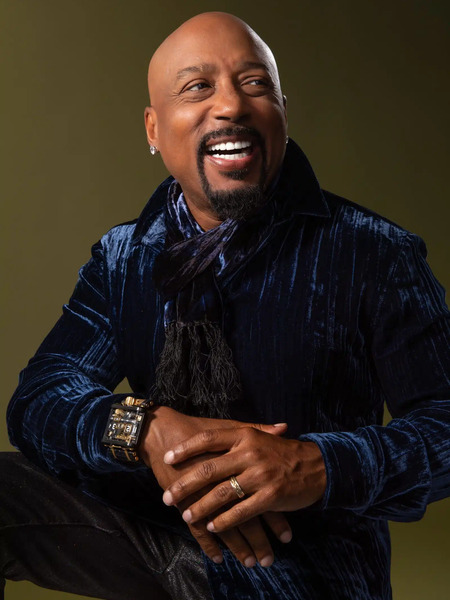
Daymond John
Founder/CEO of FUBU, Presidential Ambassador for Global Entrepreneurship, Star of ABC's Shark Tank and CEO of The Shark Group

Kim Bearden
Best Selling Author, Co-founder at Ron Clark Academy, and National Teacher Hall of Fame; Organization Culture / Climate and Communication Specialist